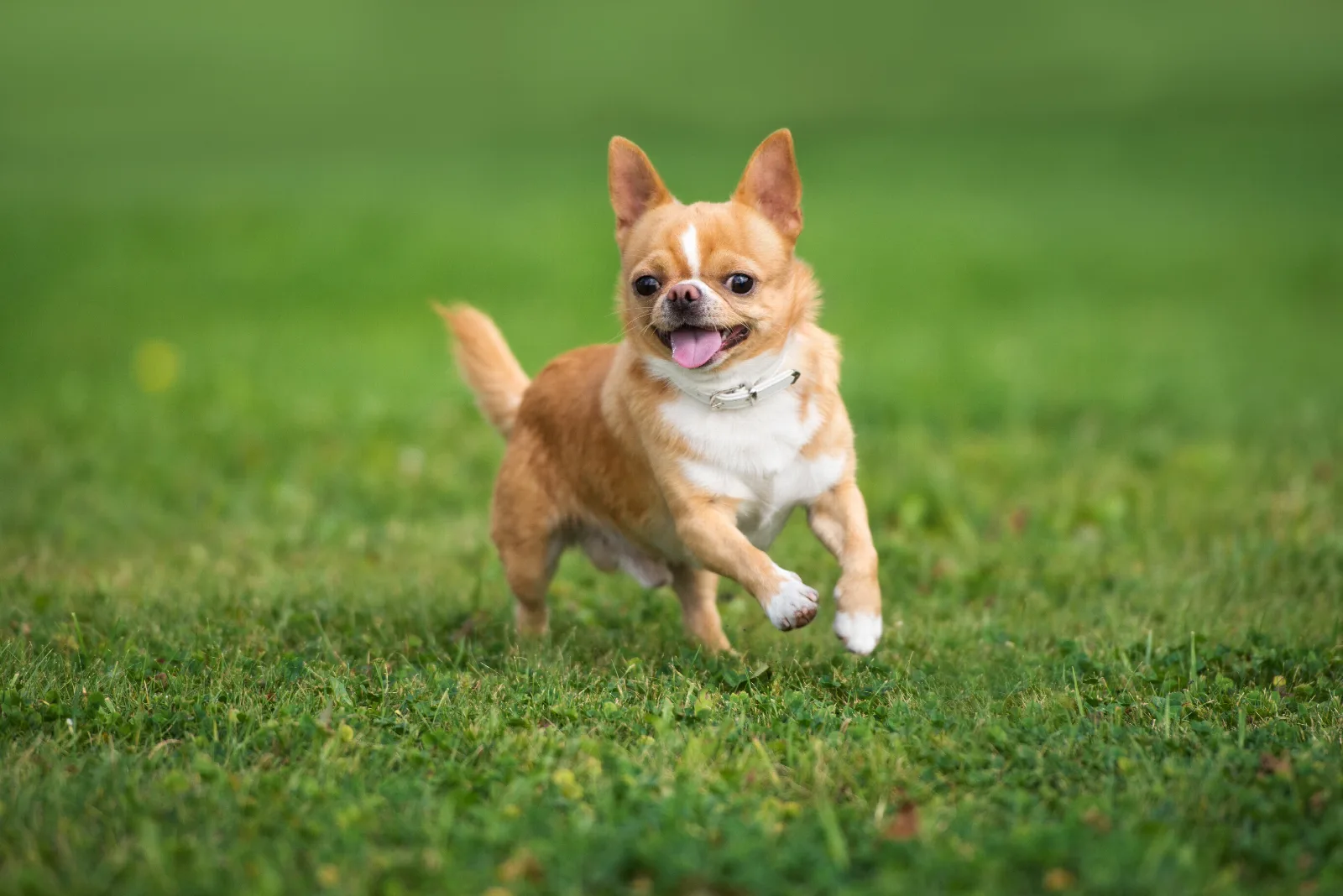
Around thirty minutes of intentional exercise a day, split into two or three chihuahua-sized installments, keeps most adults of this breed fit, sane, and pleasant to live with. That is the short answer, and it surprises in both directions: more than the purse-dog stereotype budgets, far less than a working breed demands. The useful version of the answer is the structure, because at four pounds the how matters more than the minutes: leg length changes the walk math, weather changes the rules entirely, and the breed's busy brain needs a workout the leash alone does not provide.
| Component | Daily amount | Note |
|---|---|---|
| Walks | 2–3 × 10–15 minutes | Y-front harness, never a collar |
| Play | 5–10 minutes | Hallway fetch or tug is real cardio at this size |
| Mental work | ~10 minutes | Sniff walks, food puzzles, cue rehearsal |
| Bad weather | Indoor sessions substitute fully | Hallway and stairs are a gym at this size |
| Puppies | Short play sessions only | No forced marches while growing |
| Seniors | Same habit, smaller installments | Morning-after stiffness says trim |
Quick answer: Around thirty minutes of intentional exercise a day, split into two or three short installments, keeps most adult chihuahuas fit and settled, with twenty to thirty minutes of walking suiting most. Your stroll is her workout, since a pace that barely registers on your tracker is a trot at her stride. Indoor exercise genuinely can cover the budget in bad weather, which is rare in dogdom. Mental work matters more than most owners budget, and puppies need short frequent play rather than distance.
The walk math at six-inch legs
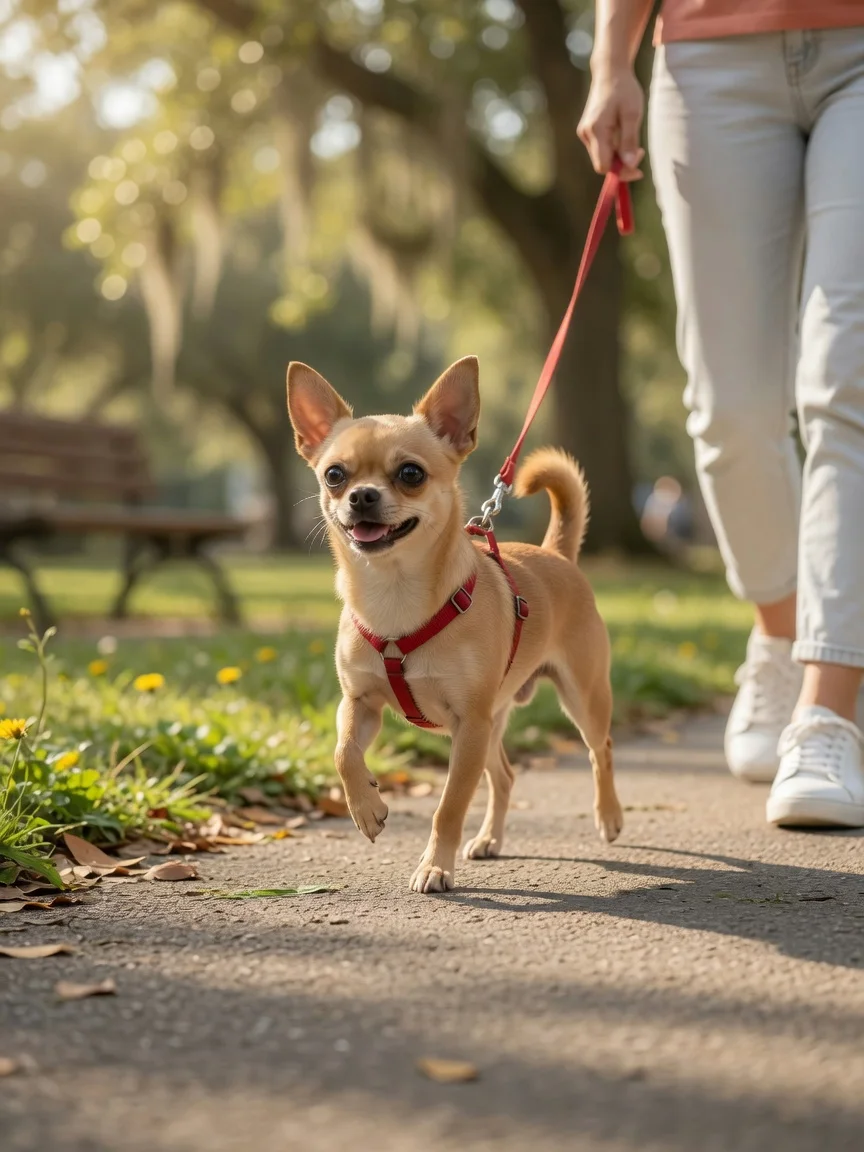
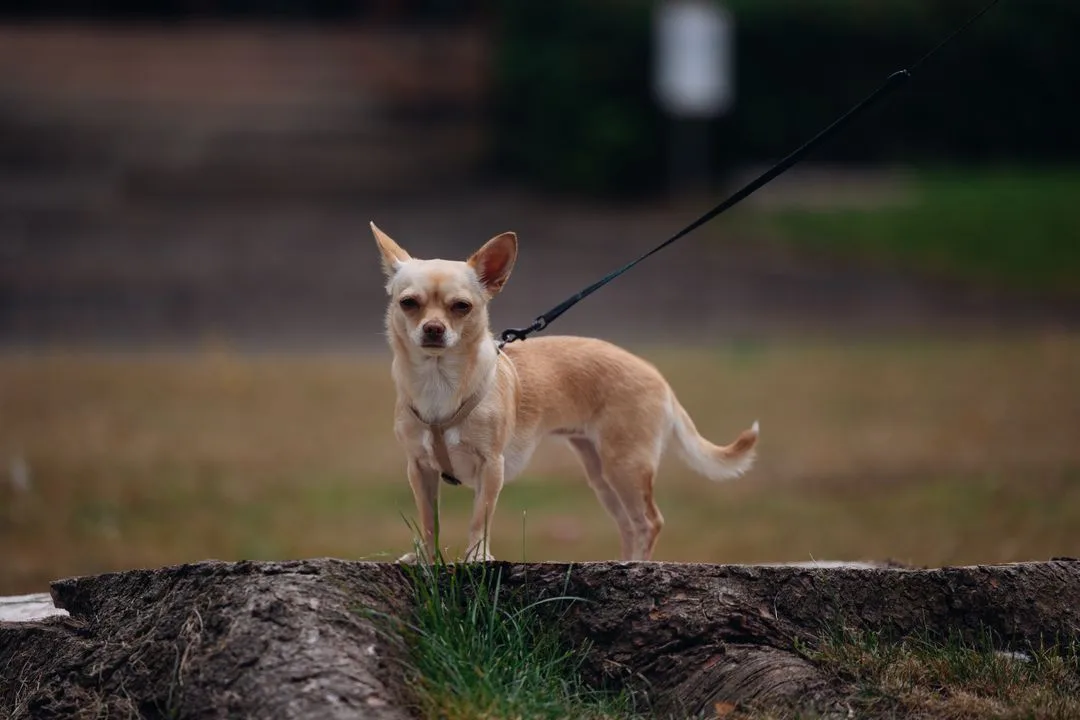
The American Kennel Club's breed profile describes a graceful, compact dog whose exercise needs are real but modest: brisk walks and active play, not mileage. Your stroll is her workout; a pace that barely registers on your fitness tracker is a trot for a dog whose stride is a fraction of yours. Two walks of ten to fifteen minutes beat one long march, matching a small dog's energy pattern and bladder while dodging the fatigue that arrives quietly, because a chihuahua at her limit does not announce it, she just slows, lags, or sits.
When that happens, the walk is over; carry her home and shorten the next one. Equipment matters more at this size than any other: a Y-front harness, never a collar, protects a trachea that our coughing guide explains is the breed's fragile plumbing, and the full case lives in the harness guide. Loose-leash manners, taught per the leash-training guide, turn the daily installments from a dragging contest into actual exercise.
The weather rules are not optional
A four-pound body has the worst surface-to-volume ratio in dogdom, which makes weather a hard constraint rather than a preference. Cold is the famous enemy: shivering at the door is a no-go signal, the sweater is legitimate equipment per our clothes guide, and the full threshold math lives in the temperature guide.
Heat is the underrated one: small dogs run close to the pavement, and asphalt that passes the seven-second back-of-hand test is still radiating at chihuahua altitude, so summer walks move to mornings and evenings. On the genuinely bad days, indoor sessions substitute completely, which is one of the breed's honest luxuries: a hallway fetch course and a flight of stairs constitute a gym at this size.
Play that counts, and the jobs her brain wants
The second installment of the daily budget is play, and it counts fully: five minutes of hallway fetch, tug with a small rope, or chase-the-toy is cardio at this scale. The overlooked third installment is mental work, because this is a clever, underemployed breed, per our intelligence guide, and a bored chihuahua invoices her unemployment in barking and mischief, per the chewing guide.
Give her jobs: sniff walks where she sets the route and reads the neighborhood, food puzzles and snuffle mats that make dinner a project, scatter-feeding in the yard, a daily cue rehearsal from the cues guide, or a slow introduction to trick training, which the breed takes to with theatrical enthusiasm. Ten minutes of nose-and-brain work tires her as thoroughly as a second walk, and on weather-locked days it carries the whole load.
Puppies, seniors, and the overdoing-it signs
Puppies self-regulate in play but should not be marched: forced distance stresses growing joints, so keep organized exercise to short play sessions and let the zoomies do the rest, per the growth timeline in our growth guide. Seniors keep the habit but shrink the installments, stiffness the morning after being the signal to trim.
At every age, watch for the overexertion set: lagging, sitting down mid-walk, heavy panting out of proportion to effort, or the honking cough that says the trachea has had enough, per the coughing guide. A dog with a diagnosed knee, heart, or airway condition gets her exercise prescription from the veterinarian, not from this page, with our patella guide explaining why jumping is the movement to ration in this breed regardless. The walking matters to you as well as the dog, and the evidence on dog ownership and heart health is large, consistent, and entirely observational.
Frequently asked questions
How long should I walk my chihuahua each day?
Twenty to thirty minutes total, split into two or three short walks, suits most healthy adults. Watch the dog, not the clock: lagging, sitting, or heavy panting ends the session early, and a brisk human stroll is already a genuine trot at her stride.
Can a chihuahua get enough exercise indoors?
Genuinely yes, which is rare in dogdom: hallway fetch, tug, stair repeats, and food-puzzle work can cover the daily budget in an apartment or in bad weather. Outdoor walks still earn their place for sniffing, socialization, and sunlight, so treat indoor-only as the exception plan, not the default.
Do chihuahuas need mental stimulation too?
More than most owners budget: this is an alert, clever breed that invents projects when unemployed. Sniff walks, food puzzles, scatter feeding, and short training rehearsals count toward the daily total and are the cheapest behavior insurance the breed sells.
How much exercise does a chihuahua puppy need?
Short, frequent play sessions rather than walks: a few minutes of play several times a day, with rest honored the moment she flops. Forced-march distance waits until the skeleton finishes, per the growth guide, and the socialization outings that matter most in puppyhood are about experiences, not mileage.
Thirty minutes, split small, weather-checked, and topped with a job for the brain: that is the entire prescription. She will campaign daily for more couch and less cardio, then sprint the hallway at bedtime like an athlete in contract negotiations, and both performances, as the running guide notes, are fully in character.

No comments yet
Leave a comment