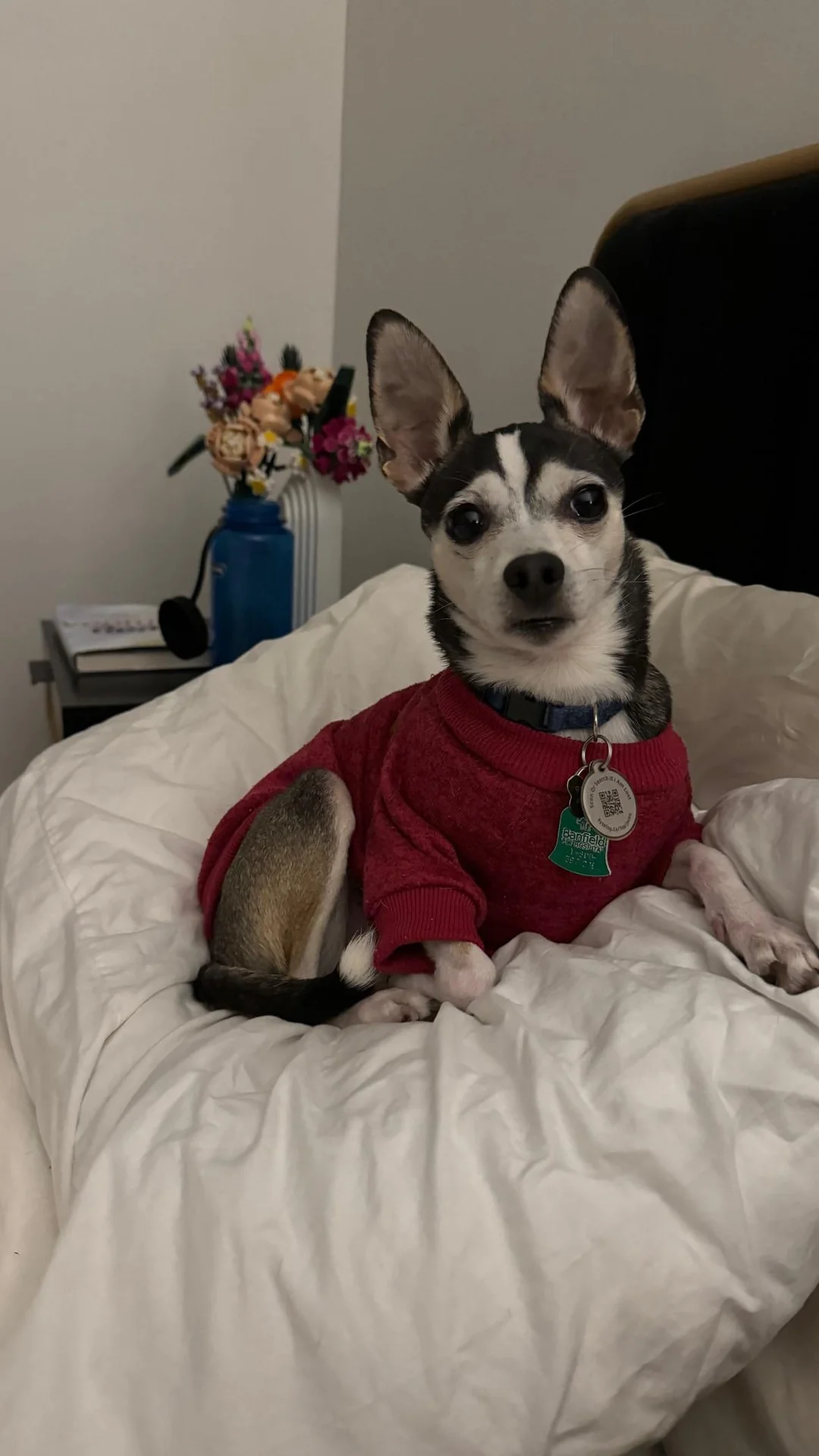
The chihuahua in a sweater is a running joke to people who do not own one and standard equipment to people who do. The joke misses the engineering: this is a breed with minimal body fat, a thin coat even in its long-haired version, and the worst surface-to-mass ratio in dogdom, which means it sheds heat the way a teaspoon of coffee goes cold.
For a chihuahua, clothes are not fashion. They are the difference between a dog who can take her walk in January and a dog shivering at the door. This guide covers when clothing genuinely helps, how to fit it on a four-pound frame, and when to leave the wardrobe closed.
Quick answer: For a chihuahua, clothes are function rather than fashion: minimal body fat, a thin coat even in the long-haired variety, and the worst surface-to-mass ratio in dogdom mean this breed loses heat faster than almost any other. AKC guidance puts small, thin-coated dogs first in line for coats. A raincoat is one of the more defensible purchases, since wet cold is the worst case. Introduce clothing the way you would a harness: drape, treat, remove, repeat over several days.
When clothes are equipment
The American Kennel Club's winter-coat guidance puts small, short-haired, and lean breeds at the top of the list of dogs that benefit from a coat, with cold-weather gear earning its keep as temperatures approach freezing. The American Veterinary Medical Association's cold-weather guidance makes the same point from the clinical side: cold tolerance varies enormously by coat, body fat, and size, short-haired and small pets feel cold sooner, and a sweater or coat is a reasonable aid for them. A chihuahua checks every vulnerability box on that list at once.
The working rules this site uses, mapped in degrees in our temperature guide: below about 45 degrees Fahrenheit she wears something for anything longer than a bathroom sprint, near freezing the outing itself gets short, and wind and rain drop every threshold further. Indoors counts too: in a cool house, a sweater on a dog who seeks blankets and radiators all day is comfort, not costume, and the burrowing instinct our burrowing guide describes is the same thermostat talking.
What to buy: two garments cover almost everything
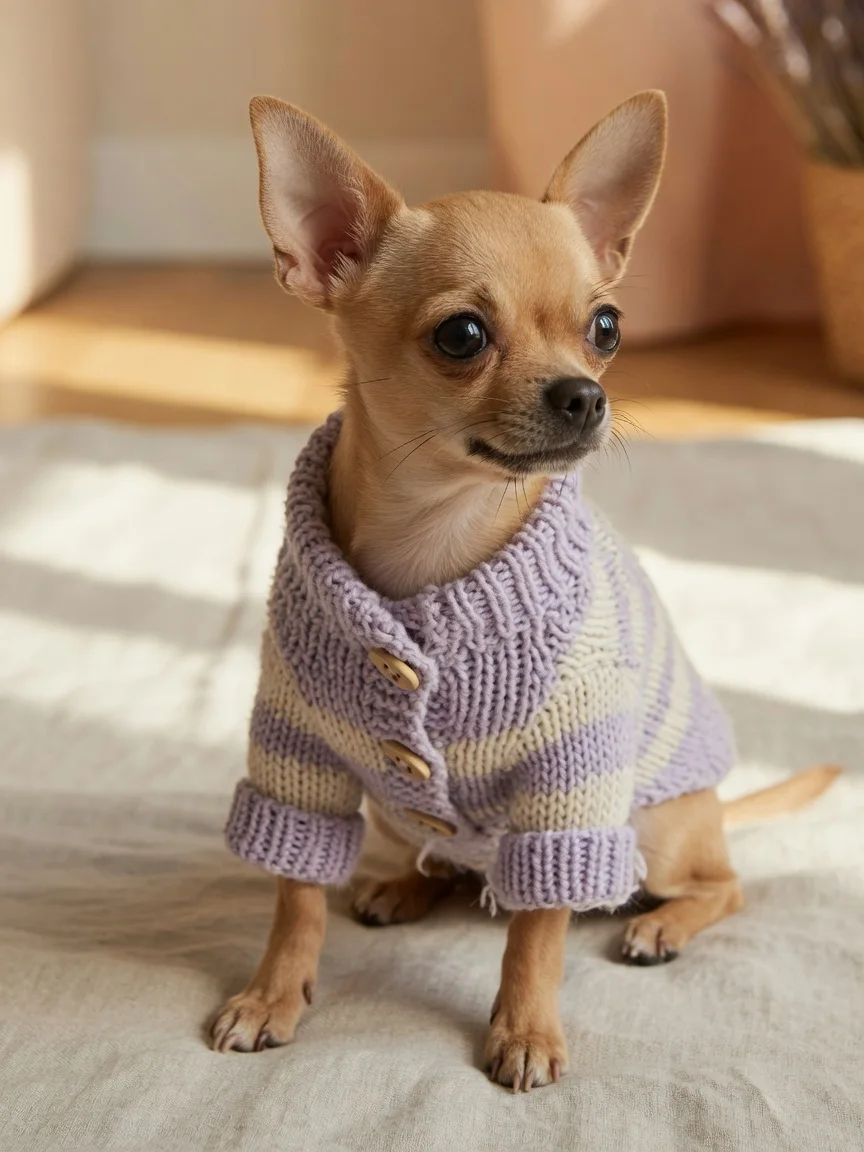
A knit sweater handles dry cold, indoors and out: snug, stretchy, covering chest and belly, nothing dangling. A waterproof or windproof coat handles wet and windy weather, where the sweater alone fails, because a damp chihuahua loses heat catastrophically fast, the physics behind the shivering in our shaking guide.
Beyond those two, everything is optional. Booties help on salted or icy sidewalks if she tolerates them; the realistic alternative is the post-walk paw rinse from our grooming guide. Costumes, dresses, and novelty outfits are for brief, supervised, treat-funded photo sessions if she is relaxed in them, and for the drawer if she is not.
Fit at four pounds
Measure three things with a soft tape: neck circumference, chest girth at the widest point, and back length from collar to tail base, then trust the size chart over the size name, since one brand's XS is another's XXS. The fit checks, in order. Two fingers slide under the garment everywhere.
Full leg movement, front and back, with nothing cutting into the armpits, the classic rub point. No coverage or restriction of the face, ears, or the business end under the tail. Nothing she can chew off and swallow: buttons, bows, and dangling zipper pulls disqualify a garment at this scale.
Watch the first wear for rub marks and for overheating indoors, since a heated living room plus a wool sweater can overshoot in the other direction: panting or restlessness means the sweater comes off. And clothes come off for unsupervised time and for sleep, both for safety and because a garment worn around the clock mats long coats and hides the skin problems our skin guide teaches you to catch early. Harness users should size outerwear to work with the harness, per the harness guide, either over it with a leash slot or under it without bunching.
The refusers
Some chihuahuas freeze theatrically at the first sleeve and stand like condemned prisoners until it is removed. That is trainable in most cases: the same gradual pairing that works for harnesses, short sessions, treats flowing while the garment is on, off before she panics, escalating over days.
If she still hates clothes after honest work, respect it and route around it: shorter winter outings, carried transit to the car per the cold-weather playbook, heated bed, and blankets she can burrow into on her own schedule. A dog stressed by her sweater is spending more on cortisol than she is saving on heat. Costumes are a different question from warmth, and the Tompkins Square Halloween parade is where small dogs turn up in them by the hundred.
Frequently asked questions
Do chihuahuas actually need sweaters or is it just fashion?
For cold weather, they are among the breeds that genuinely benefit: AKC guidance puts small, thin-coated dogs first in line for coats, and AVMA cold-weather guidance says the same from the veterinary side. Below roughly 45 degrees, for anything longer than a quick bathroom trip, a sweater or coat is equipment.
Should my chihuahua wear a sweater indoors?
If the house runs cool and she spends the day burrowed in blankets or glued to radiators, a light indoor sweater is reasonable comfort. Watch for overheating in warm rooms, take it off for sleep and unsupervised time, and let her behavior vote: seeking blankets says yes, panting says off.
Do chihuahuas need raincoats?
They are one of the more defensible purchases: wet cold is the worst-case scenario for a coat this thin, and a dog who refuses to potty in rain often reconsiders when she stays dry. A simple waterproof shell with belly coverage does the job; skip anything with a hood over the ears.
How do I get my chihuahua used to wearing clothes?
The same way as a harness: drape it briefly, treat, remove, repeat, then progress to fastening, then to wearing it through dinner, over several days. Start with the stretchiest, simplest garment you own, keep sessions short, and never chase her down to dress her, which teaches exactly the wrong lesson. The socialization guide's gradual-exposure playbook applies stitch for stitch.
Two garments, three measurements, and a treat pouch: that is the entire chihuahua wardrobe program. Everything past that point is for your camera roll rather than her comfort, which she will tolerate, on the record, at standard rates.

No comments yet
Leave a comment