Grooming a chihuahua is a small job that pays out twice: once in a comfortable, presentable dog, and again as a weekly hands-on health inspection that catches problems while they are still cheap. Nothing here requires a professional for most dogs of this breed. This guide runs the routine by station, coat, ears, nails and paws, teeth, with the schedule attached to each, and closes with the scent-product question that keeps arriving in the inbox.
Quick answer: Grooming a chihuahua pays out twice: a comfortable dog, and a weekly hands-on health inspection that catches problems while they are cheap. The schedule is weekly for a brushing pass plus a lip-lift look at the teeth, every three to four weeks for nails, and monthly to every couple of months for a bath. Ears get cleaned only when discharge or odor says so, not on a calendar. Neither coat needs a haircut, so professional grooming is optional for most of the breed.
The coat: mostly brushing, occasionally water
Smooth-coat chihuahuas need a once-weekly pass with a soft bristle brush or grooming mitt: it lifts loose hair, spreads coat oils, and doubles as the inspection, your hands covering every inch of a body small enough to cover. Long coats need several sessions a week with attention behind the ears, in the armpits, and on the trousers and tail, the tangle zones our long-coat guide maps in detail, and neither variety should ever be shaved.
Both coats shed steadily, more in spring and fall. Baths run monthly to every couple of months on the evidence-based schedule in our bathing guide, and the ASPCA's grooming guidance makes the point that regular brushing is what actually keeps a coat healthy between baths. During any brushing session, note lumps, flakes, redness, fleas, or thin patches, and route findings through our skin guide.
The ears: clean only when they need it
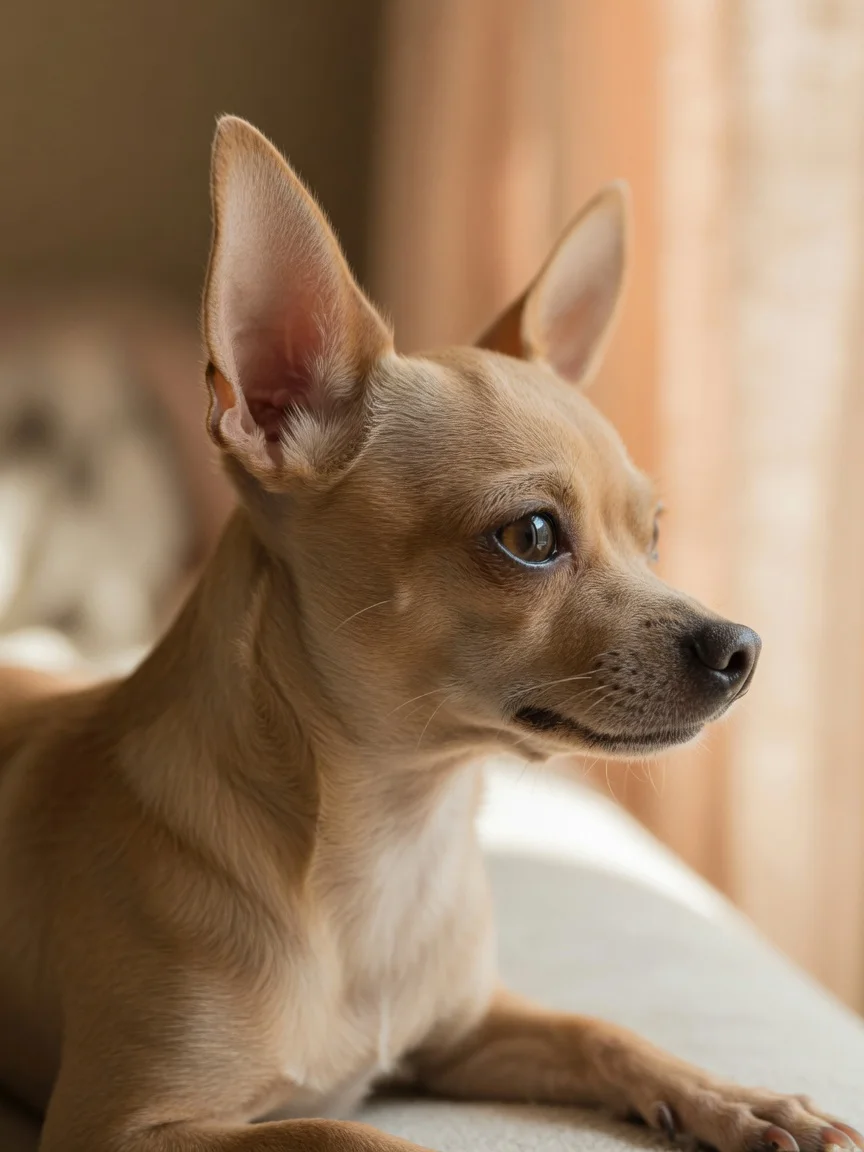
Those satellite-dish ears self-ventilate better than the floppy competition, and a healthy chihuahua ear often needs nothing at all. The rule from VCA Animal Hospitals' ear-cleaning instructions: clean when you see discharge or smell an odor, not on a schedule, because over-cleaning irritates the canal and can set up the very infection you were preventing. Use a veterinary ear cleaner, never hydrogen peroxide or alcohol, which VCA flags as irritants for the canal.
Technique in one sentence: fill the canal with cleaner, massage the base until it squishes, let her shake, then wipe what you can reach with cotton or gauze, never pushing anything into the canal itself. Red, painful, or head-shaking ears skip the home routine and go to the veterinarian. If she hates ear handling, VCA's cooperative-care approach rebuilds tolerance by pairing tiny, controlled touches with things she loves, the same desensitization logic that runs through our socialization guide.
Nails and paws: the station nobody enjoys
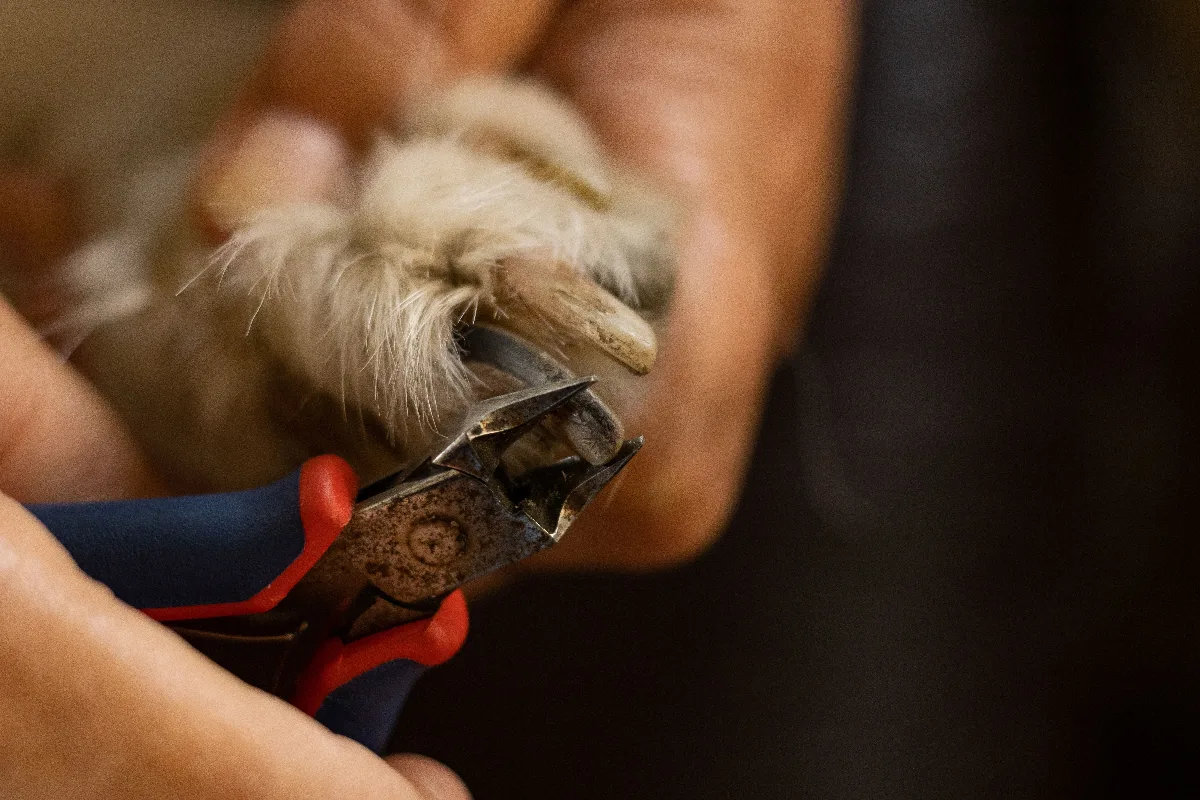
Nails are the most neglected item in small-dog grooming because the dog objects and the quick is easy to hit. The full technique, angles, tools, and the cooperative training that makes it boring, lives in our nail guide; the schedule is every three to four weeks for most indoor chihuahuas, and the test is sound: clicking on the floor means overdue.
While you are down there, run the paw check: pads intact and uncracked, nothing lodged between toes, no redness from licking, per the licking guide if that habit has appeared. In winter, rinse or wipe paws after salted sidewalks, since road salt burns pads and gets licked off otherwise, and in summer remember that pavement hot to your palm is too hot for her pads entirely.
Teeth: the grooming step that is actually medical
Daily tooth brushing does more for a chihuahua's long-term health than every other station combined, because periodontal disease is this breed's most common health problem and it starts young. The brushes, pastes, and realistic routines live in our dental guide; the grooming-session version is a weekly lip-lift to look for brown tartar lines, red gums, or breath that could strip paint, each of which books a veterinary visit rather than a harder brushing.
Perfumes and scent products: skip them
The questions arrive steadily: dog perfumes, scented sprays, whether your own fragrance harms her. The service answer is to keep fragrance off the dog. A chihuahua's nose is her primary sense and vastly more sensitive than yours; products designed to please humans sit inches from it all day, can irritate skin already prone to the problems in the skin guide, and get licked off besides.
A clean, brushed, dry chihuahua smells like a clean dog, and persistent bad odor is a symptom for the veterinarian, usually dental, skin, or ear trouble, not a fragrance gap. Your own perfume, worn by you, is fine; just skip spraying anything scented onto her coat or bedding.
Frequently asked questions
Do chihuahuas need professional grooming?
Usually not: no haircuts, no stripping, no breed trim exists for either coat. A groomer earns their fee for owners who cannot manage nails, for thorough deshedding visits, or for long-coat tidying around the sanitary areas. Everything else is home-scale work with a brush, a nail tool, and treats.
How often should I clean my chihuahua's ears?
Only when they need it: visible discharge or an odor is the trigger, per VCA guidance, not a calendar. Many chihuahuas go months needing nothing. Use a veterinary ear cleaner, never peroxide or alcohol, and let a veterinarian see any ear that is red, painful, or driving head-shaking before you clean it.
What grooming schedule should a chihuahua be on?
Weekly: brushing pass with health check and a lip-lift look at the teeth. Every three to four weeks: nail trim. Monthly to every couple of months: bath. Daily if you can manage it: tooth brushing, which outranks everything else on this list for health returns.
Why does my chihuahua fight grooming, and can that change?
Because handling was never trained, only imposed, a common story in a breed small enough to overpower. It changes with cooperative care: tiny exposures paired with treats, sessions that end before she panics, the approach VCA describes for ears and our nail guide applies paw by paw. Weeks of patience, then a lifetime of easy maintenance.
One brush, one bottle of ear cleaner, one nail tool, one toothbrush, and no perfume: the entire chihuahua salon fits in a shoebox, and the weekly session it powers is really a health exam that happens to leave the patient shinier.

No comments yet
Leave a comment