
The first days with a chihuahua puppy run on preparation more than instinct, because a toy-breed puppy arrives with one safety consideration that bigger puppies simply do not have, and it outranks the cute logistics. This is the in-order playbook: what to set up before she arrives, how to run the first night so everyone sleeps eventually, the blood-sugar vigilance that is the whole reason toy-breed puppyhood gets its own article, and the week-one appointments and habits that set up the next fifteen years.
Quick answer: A toy-breed puppy arrives with one safety consideration bigger puppies do not have, and it outranks everything else: low blood sugar. Feed four or more small meals a day in the early months, and know the signs, weakness, wobbling, glassy or vacant staring, unusual trembling, or collapse, which mean corn syrup or honey on the gums and a drive to the clinic. Sleep her in a crate or pen in your bedroom, warm and within earshot, and start training on day one in seconds-long doses.
Before she arrives: the setup list
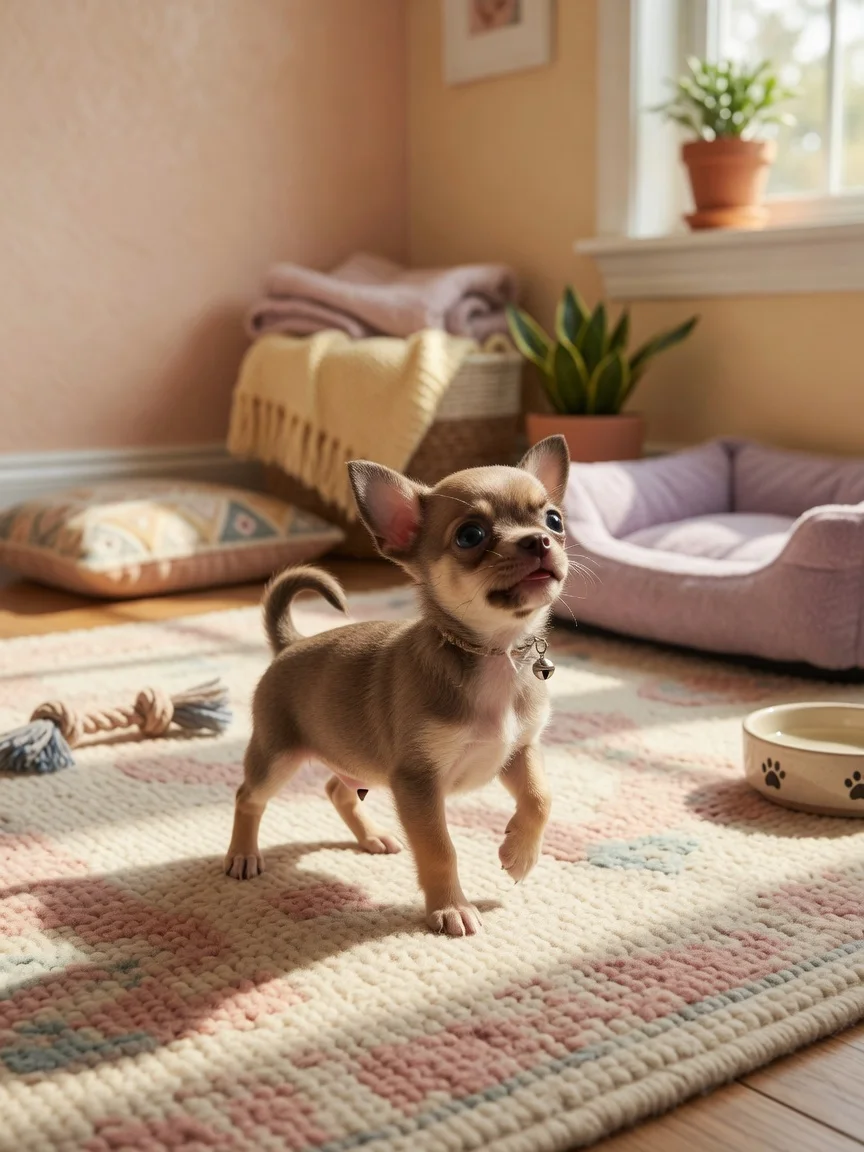
The shopping is short and covered in detail by our gear guide: a crate or pen sized for a dog that will finish under six pounds, bedding with a blanket she can burrow into, which the breed treats as a birthright per the burrowing guide, shallow bowls, a Y-front harness and light leash, chew toys scaled to a tiny jaw, and the same food the breeder or rescue was feeding, because a diet switch on top of a home switch is a diarrhea appointment waiting to happen.
Puppy-proof at floor level: cords, gaps behind furniture, and anything swallowable, remembering that a chihuahua puppy fits into spaces you have not considered spaces. Set the puppy zone in a lived-in room, not a laundry room; this breed's entire job description is proximity to you.
The first night, honestly
She will probably cry the first night or three, and the plan is written before bedtime, not negotiated at 2 a.m. The crate or pen goes in or near the bedroom, close enough that she can hear you breathe: a puppy leaving littermates for the first time finds solitary silence genuinely frightening, and the near-you arrangement shortens the protest by nights, per the settling science in our crying guide.
Warmth is half the battle at four ounces per pound: a wrapped warm-water bottle or a heartbeat-mimic toy under the blanket stands in for the pile of siblings. Expect one or two overnight potty trips in the early weeks, boring and business-only, lights low, straight back to bed. What the first night is not: the night she joins your bed. The bed-sharing guide makes the case for waiting until she is house-trained and big enough to survive a sleeping human's roll.
The toy-breed rule: watch the blood sugar
Here is the paragraph that separates chihuahua puppyhood from puppyhood in general. Toy-breed puppies carry minimal glucose reserves, and a missed meal, a stressful transition, or an over-exercised afternoon can drop a tiny puppy into hypoglycemia, the low-blood-sugar crash whose signs are weakness, wobbliness, glassy staring, trembling beyond the breed's normal shiver, or, at the severe end, collapse.
The American Kennel Club's puppy feeding guidance flags the risk specifically in the smallest breeds, and the house protocol is simple: four or more small meals a day in the early months, no skipped meals ever, calm rest after play, and a tube of corn syrup or honey in the cupboard for emergencies, rubbed on the gums en route to the veterinarian if symptoms appear.
The full symptom-and-response playbook is our blood sugar guide, and it is the single most important link on this page. A transition week is exactly the stress window where it matters most: watch her eat, every meal, every day.
Week one: the vet, the schedule, the first lessons
Book the veterinary visit for the first few days: a baseline exam, the vaccine schedule mapped, parasite prevention dosed by her actual gram count, and your questions answered while they are cheap. Bring the breeder or rescue paperwork and a stool sample, and use the visit to start the clinic-is-fine conditioning that pays off for fifteen years of appointments. At home, the schedule is the curriculum: meals, potty trips after every meal, nap, and play at predictable hours teach her the world is reliable.
House-training starts on day one, small bladder and all, with the routine from our potty guide; expect it to run slower than big-dog folklore suggests. Handling practice, paws, ears, mouth, a few seconds daily with treats, quietly pre-trains the grooming and vet care of the grooming guide. And the socialization clock is already running: the prime window closes in early puppyhood, so the gentle-exposure program in the socialization guide starts now, calibrated to her vaccine status per your vet. Teething arrives within weeks, per the teething guide; the chew-toy supply is not optional.
Frequently asked questions
Where should a chihuahua puppy sleep the first night?
In a crate or pen in or near your bedroom, warm blanket, wrapped heat source, within earshot of you. Close beats far for a puppy fresh from a litter pile, and the arrangement can migrate later. Your bed itself waits until house-training and size make it safe.
How often should a chihuahua puppy eat?
Four or more small meals a day in the early months, stepping down gradually across the first year, per the feeding fundamentals and our blood sugar guide. In this breed the schedule is a safety system, not a convenience: skipped meals are how tiny puppies crash.
What are the signs of low blood sugar in a chihuahua puppy?
Weakness, wobbling, glassy or vacant staring, unusual trembling, or collapse. Rub corn syrup or honey on the gums and head for the veterinarian; treat it as the emergency it is. Prevention is meals on schedule, rest after play, and calm transitions.
When can I start training my chihuahua puppy?
Day one, in seconds-long doses: her name, coming when called across a room, sit for a piece of kibble. Formal sessions from the cues guide can wait a few weeks; the habit of earning good things from you starts at the door.
Set up small, sleep close, feed on schedule like it is a safety system, and see the veterinarian in week one: that is the entire first-days playbook. The chaos is real but brief, and somewhere in the middle of it a four-pound stranger will decide you are her entire biography, which is the part no checklist can take credit for.


No comments yet
Leave a comment