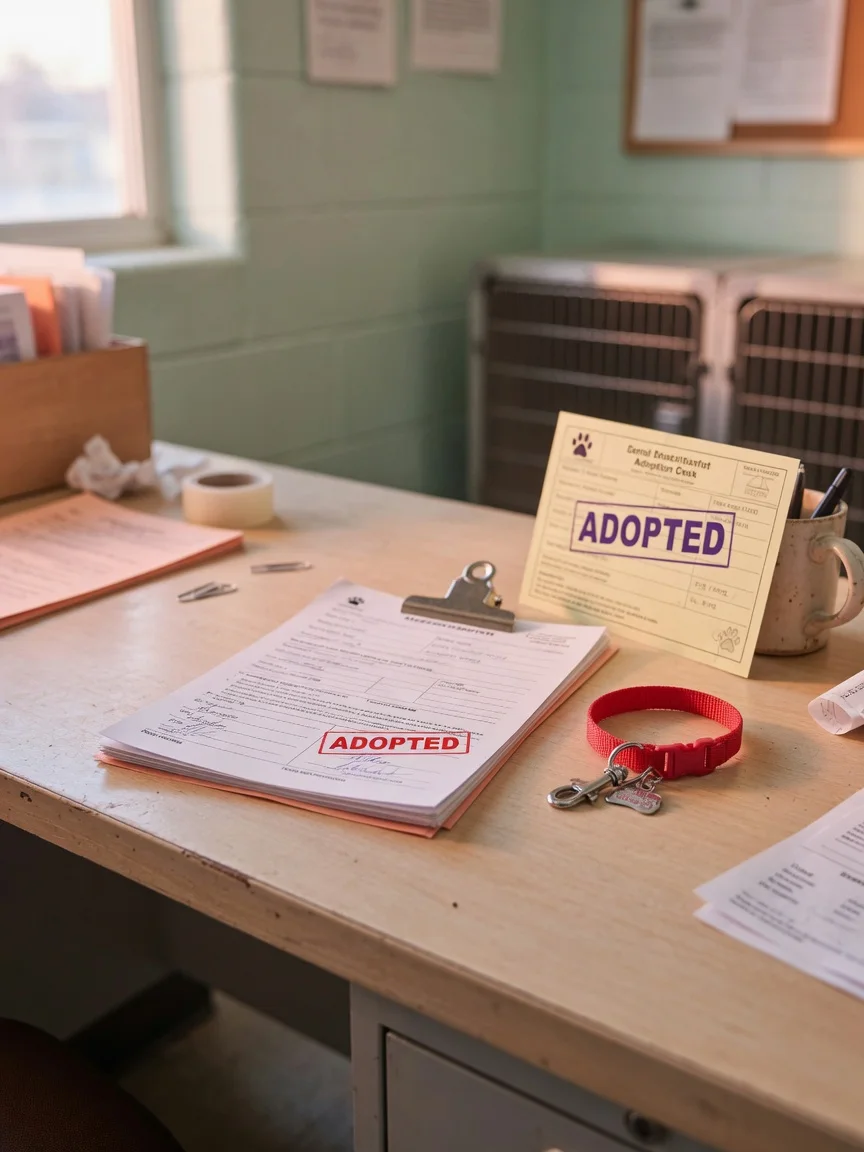
A foster volunteer's car pulled up in Moss Beach, California, on September 2, 2022, and an eleven-year-old chihuahua mix was carried to the door. Inside, Johanna Carrington was sitting in her chair. She was one hundred years old. The dog crossed the room, climbed into her lap, and settled in, and by every published account since, that was the entire negotiation.
"He came to the house like he'd been here before. It was remarkable," Carrington told TODAY's Jen Reeder in a story published on September 23, 2022. "He saw me sitting on my chair, jumped up on me and sat on my lap." The dog's name was Gucci. At the rescue he had been called Gnocchi. He had no teeth, and he had come out of a hoarding case involving 22 dogs.
Quick answer: A foster volunteer delivered an eleven-year-old chihuahua mix to a house in Moss Beach, California on September 2, 2022. Inside, Johanna Carrington was one hundred years old. The dog crossed the room, climbed into her lap, and settled, and by every published account that was the entire negotiation. Senior-to-senior matches like this one exist precisely because older dogs wait longest in shelters and ask least of the household that takes them.
Before Gucci, the house had gone quiet
Carrington had lived with dogs for most of a century, though not at the beginning of it. According to TODAY's reporting, she grew up in an orphanage in Germany and had no pets as a child; later, she and her late husband kept eight Pekingese at one point. The dog before Gucci was named Rocky, and after Rocky died the house changed. "It was quiet and sad, and then Gucci brought joy into the house," her daughter, Debbie Carrington, then 64, told TODAY.
When her mother said she wanted another dog, Debbie ran straight into the obstacle that shapes this entire story. She was not confident any shelter would approve an adopter who was one hundred. That is not an unreasonable worry, and rescue groups field it constantly. The question underneath it is not really about the adopter's capability at all. It is about what happens to the dog afterward.
The program that answers that question directly
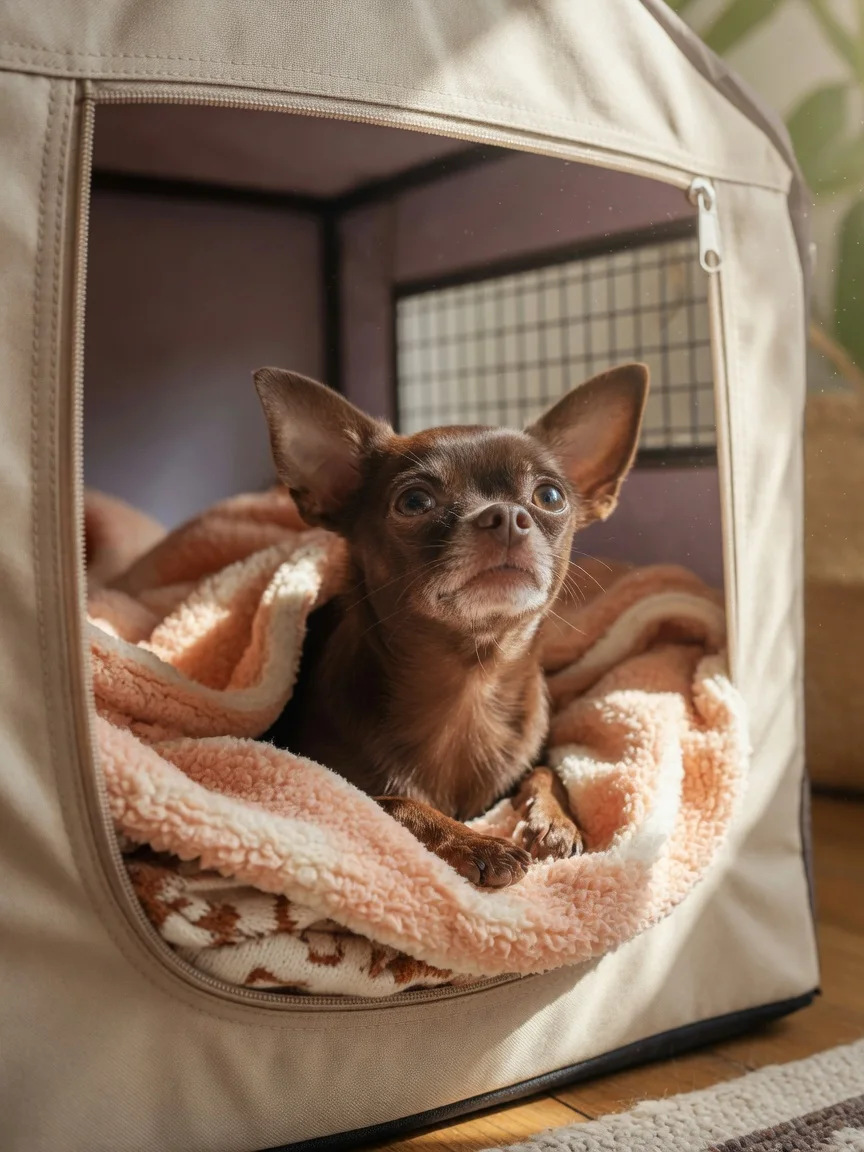
A neighbor in Moss Beach volunteered with Muttville Senior Dog Rescue in San Francisco and made the introduction. Muttville was founded in 2007 by Sherri Franklin and operates what it describes as the first cage-free senior dog shelter in the country. Its Seniors for Seniors program places older dogs with adopters aged 62 and up, waives the standard $250 adoption fee, and sends the dog home with a starter kit: harness, collar, leash, bowls, food, medication, a bed, and gates or pet stairs where the home needs them.
The provision that mattered most here is the one that costs the organization the most. If an adopter dies or is hospitalized and can no longer care for the dog, Muttville takes the dog back. Staff stay in contact and offer temporary fostering when an adopter needs it.
That single commitment turns an age question into a logistics question, which is the kind of problem a rescue can actually solve, and it belongs on the list of things worth asking about when you are choosing a rescue organization. Per TODAY's reporting, Seniors for Seniors accounts for roughly 32 percent of Muttville's adoptions in a given year. The group marked its fifteenth anniversary in August 2022 with its ten-thousandth rescue; its own cumulative count now stands above 14,000 dogs.
What the matching actually involves
Alice Ensor, then 62 and an adoptions coordinator at Muttville, described the placement process to TODAY in unromantic terms. The team looks for a dog small enough to be lifted but not so small that it becomes a fall hazard underfoot, a dog that is unbothered by a walker or a wheelchair, a dog whose energy suits the household. "It really is a matchmaking process," Ensor said of Gucci, whom she called "a very soulful little guy." Staff also work around the technology gap, running meet-and-greets and home checks over video calls for adopters who do not navigate adoption portals.
The Carrington placement carried one more practical condition. Eddie Martinez, Carrington's caregiver, agreed to walk Gucci daily and help with his care. That detail is easy to read past, and it is a large part of why the adoption held. A hundred-year-old adopter and an eleven-year-old dog both needed someone reliable to handle two walks a day, and the arrangement named that person before the dog arrived rather than after something went wrong.
Gucci's file, before Moss Beach
Gucci's own history is thin, the way shelter histories usually are. What the reporting establishes is that he was pulled from a hoarding situation involving 22 dogs, that he was renamed from Gnocchi, that he arrived housetrained, and that he had no teeth. Debbie Carrington pointed out the practical upside of that last fact to TODAY: no messes to clean and no dental bills coming.
Toothlessness is common in small senior dogs and is usually the end point of years of untreated periodontal disease, which is why dental care in this breed matters more than it appears to. What no published account establishes is what Gucci's life looked like before the hoarding case, or how long he spent inside it.
What the record shows, and where it stops
The story was picked up again in January 2023 by Best Friends Animal Society's magazine, and again on May 12, 2023, when the Washington Post photographed Carrington at home in Moss Beach, by then 101, with Gucci. The routine described in those accounts is domestic and unspectacular: Gucci in the recliner collecting back rubs while the television runs, Gucci burrowed under the blankets at night, which is ordinary chihuahua behavior rather than evidence of anything.
Carrington turned 101 in December 2022. Steven Feldman, president of the Human Animal Bond Research Institute, told TODAY by email that the human-animal bond "can have a positive impact for people of all ages, including older adults," which is the research case the program rests on.
After May 2023 the public record stops. I could not find later reporting on Carrington or Gucci, and no obituary; whether the two are still together is not something I can establish from the sources, and guessing would be worse than saying so. Both were old when the story was written. That is not a tragedy waiting offstage, it is the premise the program was built around.
The reason this adoption reached a national newspaper is that it looks like an exception, and mostly it is not. Shelters everywhere hold senior dogs that get passed over for younger ones, and chihuahuas fill more of those kennels than almost any other breed; the case for taking home an older one has never depended on the adopter being extraordinary.
What Muttville supplied was not sentiment. It was a written promise about where the dog goes if the adopter cannot keep him, and a caregiver's name on the walking schedule. With those two things settled, a hundred-year-old woman in a recliner and a toothless eleven-year-old dog were simply a sensible match, and on the afternoon of September 2 he climbed up and stayed.



No comments yet
Leave a comment