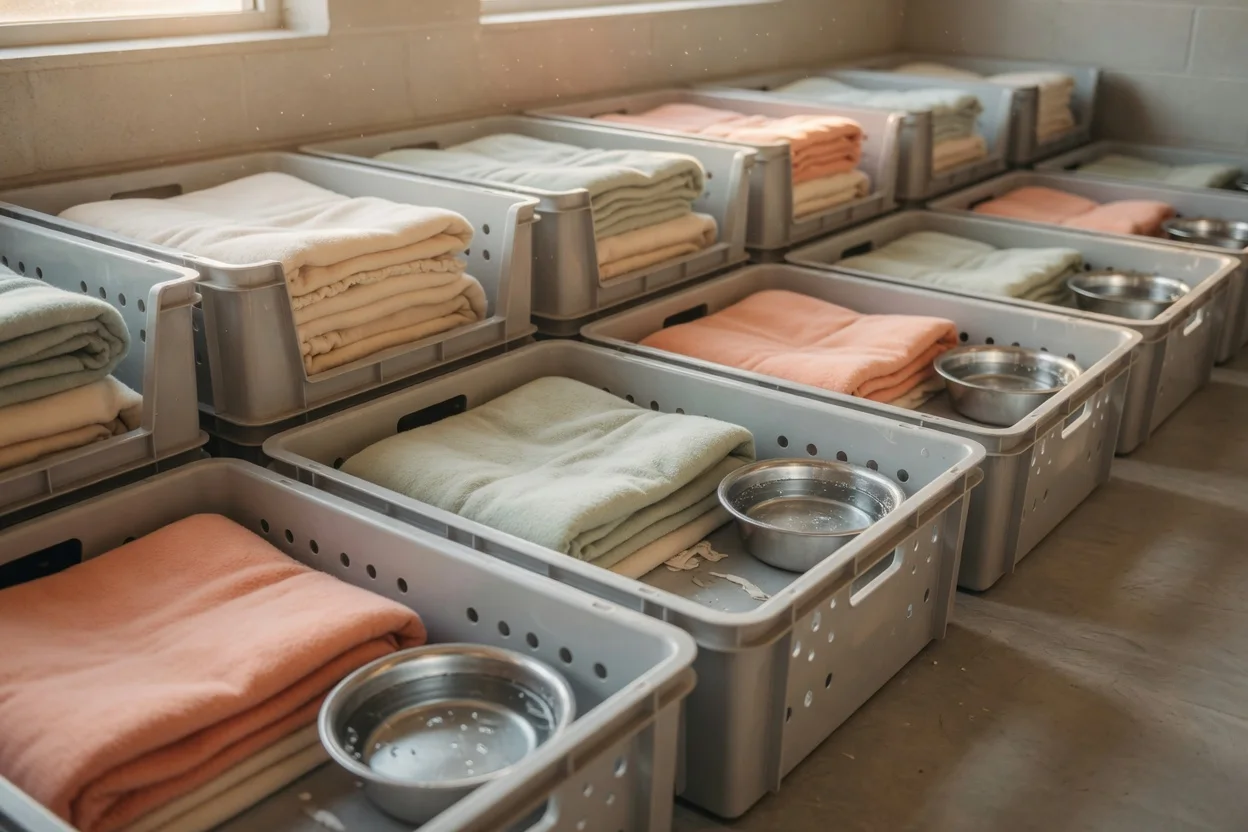
The detail that stayed with me from the Arizona Humane Society's account was not the warrant or the arrest. It was the sentence about dinner. Thirty-one chihuahuas had spent a first night in the organization's care, and the statement the group put out, quoted by Fox 10 Phoenix, marked it as the dogs' first night with air conditioning and their first meal from actual food bowls. Most rescue statements lead with the number. This one led with the bowls.
The removal took place on Thursday, July 28, 2022, at a house in Tempe, Arizona, where animal cruelty investigators and behavior specialists worked alongside Tempe police, according to KTAR News. The dogs ranged from week-old puppies to adults of roughly eight years. The case is worth walking through slowly, because everything that happened after that door opened ran on the same machinery that handles the cases nobody reports.
Quick answer: Thirty-one chihuahuas were removed from a house in Tempe, Arizona on Thursday, July 28, 2022, by Arizona Humane Society cruelty investigators and behavior specialists working alongside Tempe police. The dogs ranged from week-old puppies to adults of roughly eight years. It is one of the better-documented hoarding rescues involving the breed, and the organization's own account is the primary source for what happened next.
What brought investigators back to the house
July 28 was not the first contact. Tempe police said the homeowner had an extensive history with the Arizona Humane Society, which had already taken more than 20 dogs from the same address over the previous two years, as Arizona's Family reported. The immediate trigger came eight days earlier. On July 20, 2022, the homeowner turned a dead dog over to Tempe police investigators; police said the animal had not been given medical care, and that the lack of care caused its death.
Officers returned with a warrant on July 28 and arrested the homeowner on suspicion of animal cruelty. ABC15 Arizona reported that she was booked and released the same day. How the criminal case was finally resolved does not appear in any coverage I could verify, so this account stops where the public record does. The 2022 reporting names her. I have not repeated the name here, because an arrest is not a conviction and I cannot confirm what a court concluded.

Thirty-one dogs arriving at once
A seizure this size is not one problem repeated 31 times. It is a capacity event. The dogs went in for medical examinations and testing, and because of the conditions described inside the house, veterinarians screened them for highly contagious disease, distemper among them, KTAR reported. That screening governs everything downstream. Until a dog is cleared it cannot share air with the general population, which means isolation space, separate handling, and staff hours that were already committed somewhere else.
Only after that does the behavior work start. The Arizona Humane Society said several of the dogs were shy and fearful, and that its behavior team would begin with them once they were medically cleared. The sequence sounds bureaucratic and is closer to a kindness. A frightened four-pound dog carrying an unconfirmed infection cannot be socialized in a shared room, and rushing that order would put the rest of the intake at risk.
Scale is the other half of it. KTAR noted the organization responds to more than 6,900 suspected animal cruelty cases in a year, and Arizona's Family put its annual intake above 15,000 animals. Thirty-one dogs landed inside that volume, not beside it. Each one needed a kennel, then a foster placement, then an adopter, which is why a group facing a mass intake puts out a foster call before it puts out an adoption list. Our guide to fostering a chihuahua covers what those calls actually ask of a household.
Why these cases fill up with small dogs
The ASPCA's guidance on animal hoarding defines it as housing more animals than a person can adequately care for, with an inability to meet minimum standards of nutrition, sanitation, shelter, and veterinary care. It also notes that these situations often involve over-breeding, and that detail explains the arithmetic in Tempe better than any single moment does. There were one-week-old puppies in the house on the day it was emptied, which means the population was still growing when investigators arrived.
Small breeds accelerate that math. Chihuahuas take up almost no room, and an unaltered group behind a closed door can multiply well before anyone outside notices anything. The same pressures that put them at the center of hoarding cases keep them in shelter kennels across the Southwest, which I wrote about in why so many chihuahuas end up in shelters.
The ASPCA also warns that large-scale hoarding sometimes operates under the banner of rescue, which is worth remembering before handing any dog to an organization you have not checked; our notes on how to choose a chihuahua rescue list what a legitimate one will let you see.
What the record shows, and what it does not
Several things about this case stayed open. Early accounts did not agree exactly on the count. The humane society and the major Phoenix stations reported 31 chihuahuas, while at least one smaller local outlet described 32 dogs found during the warrant service; I have used the figure the humane society itself gave. What became of the dogs individually is not documented in any follow-up I could find. There is no published tally of how many were adopted, how long the fearful ones needed, or whether any were lost to illness after intake.
What is documented is the shape of the work. Thirty-one dogs were examined, tested, isolated where necessary, and queued for behavior support inside a building that was already full. The ones described as shy would have needed the slow version of everything, the approach in our guide to helping a fearful chihuahua regain her confidence, and whoever eventually took them home would have walked into the week described in what to expect the first week with a rescue chihuahua: a very small dog declining to leave the crate, and a person learning not to take it personally.
I keep returning to that first-night statement, and to how little it claims. It does not say the dogs were saved, or that the story ended well. It reports cooled air and food in bowls, which on that particular night was the entire achievement. Most of this work looks like that, and only occasionally like the footage that runs at six o'clock.




No comments yet
Leave a comment