
On July 7, 2023, Paris Hilton introduced a new chihuahua puppy to her Instagram followers. Within hours, the animal rights group PETA published a response calling the purchase problematic and announcing plans to run advertisements in Los Angeles criticizing her. Hilton did not reply publicly.
The exchange was short and one-sided, but it was at least the second time PETA had gone after Hilton over where her dogs came from, and the argument underneath it had been running since long before either post. For chihuahua owners the useful part is not the celebrity friction. It is the question of what happens to a breed after it becomes fashionable.
Quick answer: On July 7, 2023, Paris Hilton introduced a new chihuahua puppy on Instagram, and within hours PETA published a response calling the purchase problematic and announced plans to run critical advertisements in Los Angeles. Hilton never publicly replied. It was at least the second time PETA had targeted her over where her dogs came from. The useful part for owners is not the celebrity friction but the question underneath it: what happens to a breed after it becomes fashionable.
What happened in July 2023
Hilton announced the puppy on Instagram on July 7, 2023, writing that she was "absolutely in love" with him and noting that he was related to a previous dog, Harajuku, who had died earlier that year, according to PA Media. The puppy came from a breeder. Contemporary reporting did not identify the breeder or state what the dog cost.
PETA responded the same day. In a post published on its website on July 7, 2023, the group described the transaction as a "problematic purchase," said Hilton had "apparently been living under a rock" if she believed buying animals was compassionate, and said it would run advertisements in Los Angeles in response. Its position was stated directly: buying from a breeder or a pet store makes the buyer "responsible for the death of an animal in a shelter who needed a home." PA reported that representatives for Hilton were approached for comment and did not provide a statement.

PETA had made the same argument before
This was not a first offense in PETA's telling. In a post dated October 18, 2016, the organization accused Hilton of supporting the breeding industry after she posed with a puppy it said had cost $8,000. PETA wrote that it had contacted her privately on two occasions before taking the campaign public with billboards in Los Angeles, which used the phrase "puppy pimp." Neither the 2016 nor the 2023 campaign produced a documented public response from Hilton.
The association between Hilton and the breed is older still. Her chihuahua Tinkerbell was a fixture of her public image through the 2000s, carried in her handbag and featured in her reality television work. Tinkerbell went missing for a week in 2004 and was returned for a $5,000 reward, and she died of old age in April 2015 after 14 years with Hilton, The Hollywood Reporter reported.
Hilton said at the time that her "heart is broken." That handbag era is the origin of a great deal of what the breed is still assumed to be, a subject we take up in our look at the pampered chihuahua economy.
The shelter numbers behind the argument
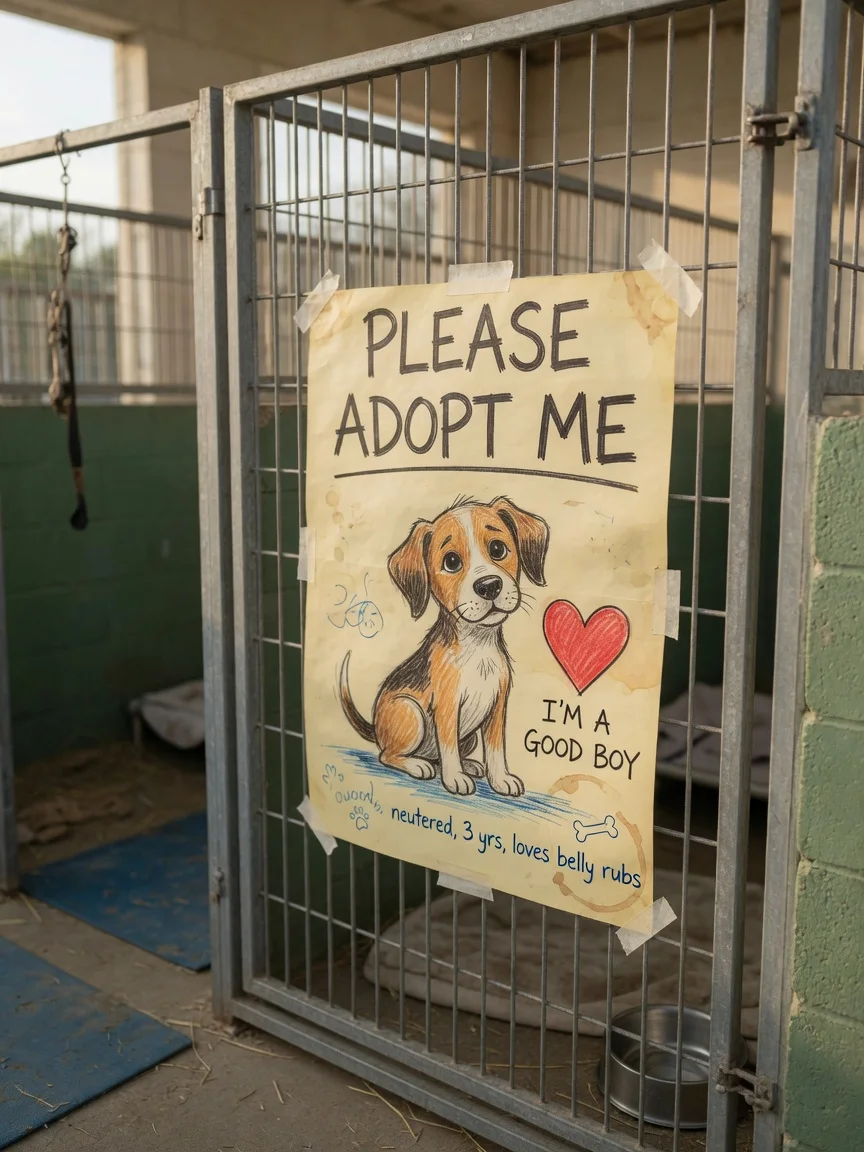
Welfare groups single out chihuahuas for a documented reason. On December 10, 2009, CBS News and the Associated Press reported that chihuahuas made up 30 percent or more of the dog population at many California shelters. Oakland Animal Services shipped roughly 100 dogs to Washington, Oregon and Arizona to relieve the pressure, and on some days took in as many as 10 chihuahuas.
Gail Buchwald, then senior vice president of the ASPCA Adoption Center in New York City, told the AP that shelters had a name for the pattern: "the Paris Hilton syndrome." The same report cited the 2008 film Beverly Hills Chihuahua and chihuahua-carrying celebrities as drivers of the demand that preceded the surrender wave.
The national picture has improved since. The ASPCA, drawing on data compiled by Shelter Animals Count, reports that 5.8 million dogs and cats entered US shelters and rescues in 2025, including 2.8 million dogs, with roughly 4.2 million animals adopted and about 597,000 euthanized. Those figures are better than the ones PETA was citing in 2016. They are also not zero, and chihuahuas remain heavily represented in shelter intake, which is the subject of our piece on why so many chihuahuas end up in shelters.
What remains unclear
Several details from 2023 were never resolved, and they should not be filled in by assumption. Hilton has not publicly answered PETA's criticism, and her representatives did not comment when asked. The seller and the price of the 2023 puppy were not confirmed by independent reporting. Whether PETA's announced Los Angeles advertisements actually ran, and where, was not documented in the coverage reviewed here.
Most importantly, "the Paris Hilton syndrome" is a characterization offered by a shelter executive in 2009, not a measured finding. No study reviewed for this article establishes how much any individual celebrity purchase changes shelter intake. What the record does support is the slower pattern: breeds that become fashionable tend to arrive at shelters a few years later, in numbers.
Frequently asked questions
Did Paris Hilton ever respond to PETA?
No public response has been documented. PA Media reported in July 2023 that representatives for Hilton were approached for comment and did not provide a statement, and PETA said in 2016 that it had contacted her privately twice before going public. The silence is the confirmed fact, and it should not be read as either agreement or refusal.
Are chihuahuas really overrepresented in shelters?
In California this has been documented for years. CBS News and the Associated Press reported in December 2009 that chihuahuas were 30 percent or more of the dog population at many California shelters, and transport programs moved dogs out of state to find adopters. National breed-level intake figures are published less consistently, so treat any single nationwide percentage with caution.
Is buying from a breeder the same as supporting a puppy mill?
Not automatically, and PETA's framing does not draw the distinction. Responsible breeders, high-volume commercial operations, and online resellers are different things, and telling them apart in person is the buyer's job. If adoption is the route you want, our guide to choosing a chihuahua rescue covers the vetting questions, and adopting a rescue chihuahua covers what the process actually looks like.
Fourteen years separate the first shelter reports blaming celebrity fashion for a chihuahua surplus from PETA's most recent billboard campaign against Hilton, and the shape of the argument has barely moved in that time. What has moved is the intake data, slowly and in the right direction. The episode is a reminder that a four-pound dog acquired as a look tends to outlive the trend that produced her by a decade or more, which is why the breed's long lifespan belongs in the conversation every time this argument comes back around.


No comments yet
Leave a comment