Headlines often reduced the story to two girls, but the detailed report named three children. Bell’s familiar nose helped a coordinated search reach them safely.
The headline usually says two girls. The detailed report names three.
In 2012, eight-year-old Carlie Parga, five-year-old Lacey Parga, and their friend Victoria Baker went into wooded terrain near Newnan, Georgia, with a dog named Lucy and became lost. Police officers, firefighters, and neighbors searched for more than two hours.
Neighbor Carvin Young then brought Bell, his three-year-old Chihuahua. Bell knew the children. The account says she picked up their scent and led searchers to them. All three were frightened but safe.
The correction does not make the story less remarkable. It makes the children visible and Bell’s role more precise.
Quick answer: No, headlines often reduced the 2012 search near Newnan, Georgia, to two girls, but the detailed report named three children: eight-year-old Carlie Parga, five-year-old Lacey Parga, and their friend Victoria Baker. After more than two hours of effort by police, firefighters, and neighbors, Carvin Young brought his three-year-old Chihuahua, Bell, who knew the children. Bell picked up their scent and led searchers to the frightened but safe group. The account credits the familiar dog’s nose with aiding the coordinated effort.
Reconstructing the known sequence
The Borneo Post’s English-language report provides the fullest accessible narrative. It names the sisters, their friend, the dogs, Young, the approximate search duration, and the location near Newnan.
The children had apparently planned a short outing but could not find their way back. Adults mobilized a community search. Bell was introduced after the effort was already underway because she was familiar with the girls.
The report credits the Chihuahua with following their scent to the group. It does not identify Bell as a certified search-and-rescue dog, describe a formal scent article, or document a trained indication.
A second article uses the simpler “two little girls” framing. That may have centered the sisters while leaving the friend out of the headline, but the fuller account establishes three children.
Familiar scent is not the same as certification
Dogs possess extraordinary scent ability, and a familiar animal may notice a person’s recent trail. That does not make every pet ready for a wilderness search.
Trained search teams work within an incident command structure. They consider terrain, wind, contamination, the missing person’s last known point, hazards, communications, and the capabilities of each dog-and-handler team.
Bell’s reported success should be described as an unusual contribution from a dog who knew the children. It should not be used to encourage families to release pets into the woods after a missing person.
An untrained Chihuahua could become lost, injured, overheated, attacked by wildlife, or distracted. The handler could also enter unsafe terrain and create another rescue.
Call authorities before organizing a search
When a child is missing, contact emergency services immediately. Provide the child’s name, age, physical description, clothing, medical needs, last known location and time, likely destinations, companions, and recent photograph.
Do not wait for a self-imposed period. Do not assume the child will return because the area is familiar.
Preserve the last known area. Avoid having many people and pets trample possible tracks or scatter into the woods without coordination. Follow instructions from law enforcement and search leaders.
Gather scent items only if requested. Handling them casually can contaminate material that a trained team may need. Keep doors, gates, water hazards, vehicles, outbuildings, and nearby roads in the initial factual check.
Teach children what to do when lost
The U.S. Forest Service and outdoor-safety educators emphasize simple, memorable behavior. A child who realizes they are lost should stop moving, stay together with companions, and make themselves easier to find.
They can choose a safe open spot away from cliffs, fast water, roads, and unstable trees. Bright clothing or an item placed where searchers can see it may help. A whistle carries farther with less effort than continuous shouting.
Children should answer rescuers and should not hide because they fear punishment. Adults can practice that message before a hike: getting lost is an emergency, not misbehavior.
Older children who have a working phone should call emergency services, preserve battery, share location when possible, and follow instructions. A phone is helpful, but it is not a substitute for supervision and a trip plan.
Prevent the short outing from becoming a search
Tell a responsible adult the route, group, destination, and return time. Match the outing to the youngest child’s abilities and use direct adult supervision where terrain or age requires it.
Carry water, weather-appropriate clothing, identification, a whistle, a simple light, and needed medication. Mark boundaries children can understand. Check forecasts, daylight, trail conditions, and local hazards before leaving.
Dogs should be leashed or controlled according to local rules. A family pet may pull children farther from the route, chase wildlife, or make it harder to turn back.
Teach children that following a roaming dog can be dangerous. If the pet runs, they should call an adult rather than pursue it into unknown terrain.
Protect both the missing person and the story
Once children are found, medical evaluation and family privacy come before interviews. Avoid publishing precise home locations, school details, or information that could identify a routine.
Do not ask frightened children to recreate events for a video. Do not imply they were irresponsible without knowing what instructions, supervision, signage, or environmental conditions were present.
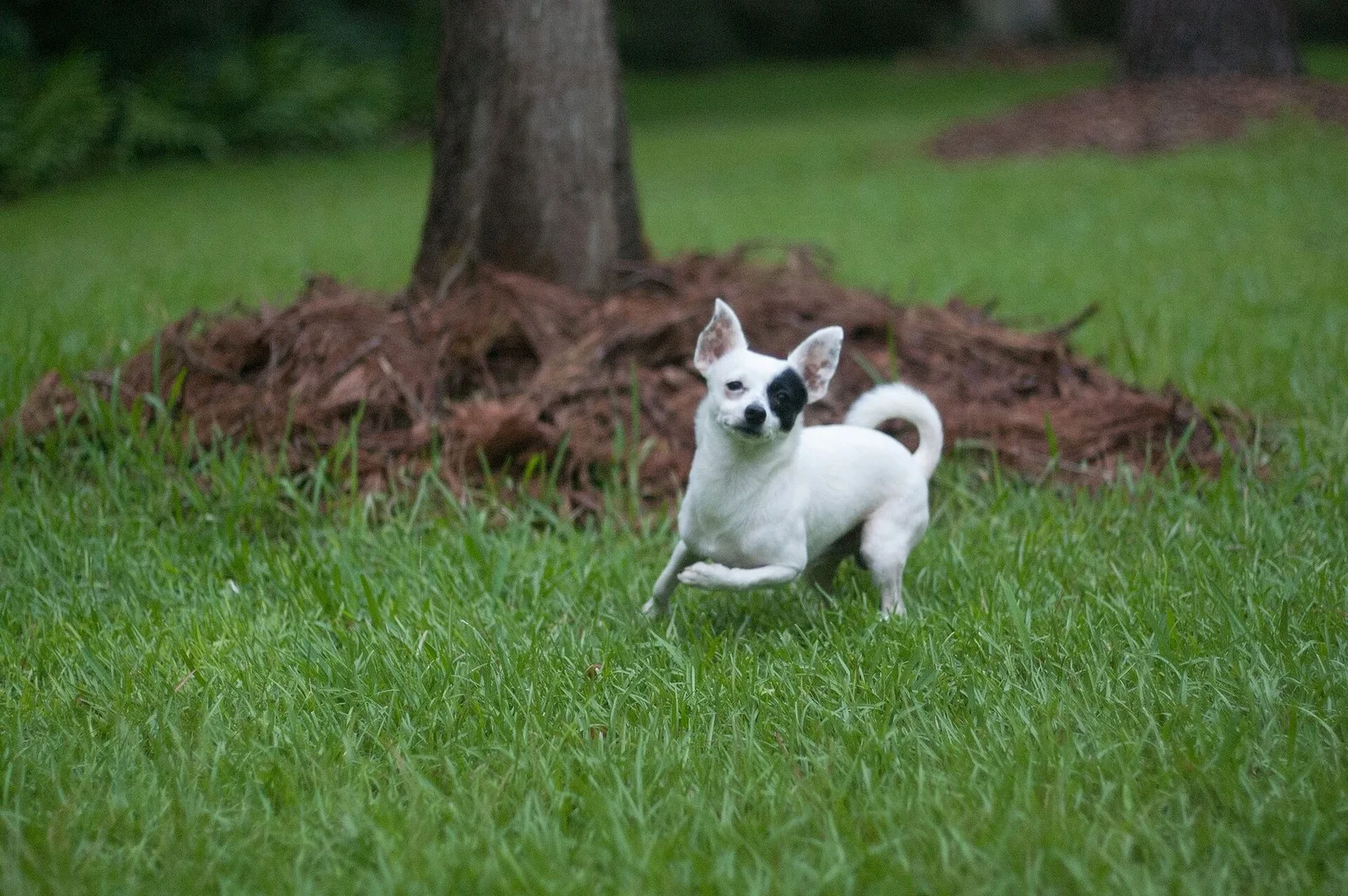
The original report media remains copyrighted and reference-only. The licensed Chihuahua photos in this package do not show Bell, the children, or Georgia.

Bell’s role can be told accurately
Bell did not conduct the whole operation. Police, firefighters, neighbors, and the person who handled her were part of the search. The Chihuahua’s reported contribution was specific: she knew the children, followed a familiar scent, and helped the group reach them.
That precision protects the difference between a wonderful one-time event and the disciplined work of search-and-rescue teams.
Three children went into the woods. A community looked for them. A neighbor thought of a small dog with a useful connection. Bell’s nose helped bring the search to a safe ending.
Featured photograph: Nolegolferpimp / Wikimedia Commons (CC BY-SA 3.0), via Wikimedia Commons. It is an illustration and does not depict the animals described in this article.


No comments yet
Leave a comment