
A birthday post can honor a very old dog without proving a world record. Bobo’s story shows why records need documents spanning the animal’s life.
In April 2022, dog-focused social accounts celebrated a Chihuahua named Bobo as turning 23. Posts gave his birth date as April 5, 1999 and said he had moved to a senior-dog community after his longtime people entered assisted living.
The celebration collided with another headline: Guinness World Records had just certified a 21-year-old Chihuahua named TobyKeith as the oldest living dog.
If Bobo was older, why did he not automatically hold the record? Because a reported age and a verified record are different claims.
Quick answer: Bobo the Chihuahua was celebrated as turning 23 in April 2022, but the claim lacks the continuous documentary proof a formal record requires. Posts cited an April 5, 1999 birth date and long ownership by one couple before he moved to a senior-dog home, yet no public file of birth records, veterinary history or registration spans his life. Guinness had just certified a different Chihuahua, TobyKeith, as the oldest living dog at 21.
What was reported about Bobo
Secondary coverage said Bobo lived with the same couple from birth until early 2022, then joined a home with other senior dogs associated with the Mr. Mo Project.
WeRateDogs posts repeated the April 5, 1999 birth date and celebrated his 22nd and 23rd birthdays. Rocky Kanaka’s articles called attention to the apparent conflict with Guinness’s announcement.
Those sources document that the claim circulated and identify its stated basis. They do not provide a public file of contemporaneous birth, veterinary, registration, and ownership documents spanning 23 years.
This article therefore says Bobo “reportedly” turned 23. It does not call him a verified record holder or assume his later status.
Guinness certified a different Chihuahua
Guinness said TobyKeith, born January 9, 2001, was verified at 21 years and 66 days on March 16, 2022. Its feature described his adoption as a puppy and long life with owner Gisela Shore.
A record authority evaluates submitted evidence under its rules. It does not search every household for an older candidate. A dog can be older than the current holder yet remain uncertified if no application is made or the documentation is insufficient.
Likewise, certification is not a scientific guarantee beyond all possible doubt. It is a conclusion based on the evidence available under a defined process.
That distinction protects both the record and the dogs from a popularity contest.
What strong age evidence looks like
The ideal file begins near birth: breeder or shelter intake records, dated veterinary examinations, vaccination records, licensing, registration, microchip data, photographs, and ownership documents.
Evidence should form a continuous timeline. A veterinarian estimating that an adult dog is “about ten” establishes an estimate on that date, not a precise birth date ten years earlier.
Witness statements are stronger when independent, specific, and supported by records. Recent memories of events decades ago should not carry the whole claim.
Microchips identify animals, but the registration date may be years after birth, and historical databases may accept an owner-entered age without proof.
The Bobi review changed the conversation
In 2024, Guinness withdrew support for Bobi’s oldest-dog-ever record after a review found no conclusive evidence proving the claimed birth date.
Guinness explained that the central microchip data did not require proof of age for dogs born before a certain year and that a veterinary statement relied on that data. It said future claims would need documentary evidence for all years, veterinary and witness statements, and relevant microchip information.
The review was not about Bobo, but it illustrates the standard a 23-year Chihuahua claim should meet. Exceptional ages deserve exceptional documentation.

Celebrate without turning age into a prescription
Very old dogs are individuals. An owner’s favorite meal, supplement, exercise routine, or home arrangement does not prove a longevity formula.
Genetics, disease, preventive care, weight, environment, chance, and access to treatment interact. Copying one record claimant’s diet can unbalance another Chihuahua’s nutrition or conflict with medical needs.
Senior care should be based on veterinary examinations and changes in the dog: appetite, weight, thirst, urination, breathing, sleep, mobility, pain, vision, hearing, confusion, dental disease, and social behavior.
Age is not a reason to dismiss treatable problems as “just getting old.”
Protect the welfare of a celebrated senior
Birthday content should not require a frail dog to wear heavy clothing, stand for long photographs, eat unsafe cake, travel, or interact with strangers.
Use a quiet setting, short session, normal meal plan, and the dog’s preferred contact. Stop when the Chihuahua turns away, trembles, pants, cannot settle, or tries to leave.
Avoid flash close to impaired eyes. Provide nonslip surfaces, warmth, easy water, frequent toilet access, and medication on schedule.
The most respectful celebration may be an ordinary nap beside a trusted caregiver.
Publishers should keep a claim table
For every longevity story, record the name, claimed birth date, source of that date, earliest dated document, microchip timing, continuous veterinary evidence, living-status confirmation, certifying body, and unresolved gaps.
Use “reported,” “estimated,” and “verified” accurately. Put the evidence limit near the headline, not in a footnote after calling the dog the oldest in the world.
Update or correct the article when new documents, a certification, or a death announcement changes the record. Do not let an old social caption masquerade as current status.
The Bobo media linked in secondary coverage remains copyrighted and reference-only. The licensed images in this package do not show him.

Bobo’s birthday still mattered
A dog does not need a certificate to be loved or to deserve recognition. If the reported date was accurate, 23 years was extraordinary. If the public record cannot prove it, the caregivers’ bond remains real.
The honest headline can hold both ideas: Bobo was celebrated as turning 23, and the available sources do not establish a formal record.
Proof protects history. Care protects the dog. The second matters every day, whether or not the first is complete.
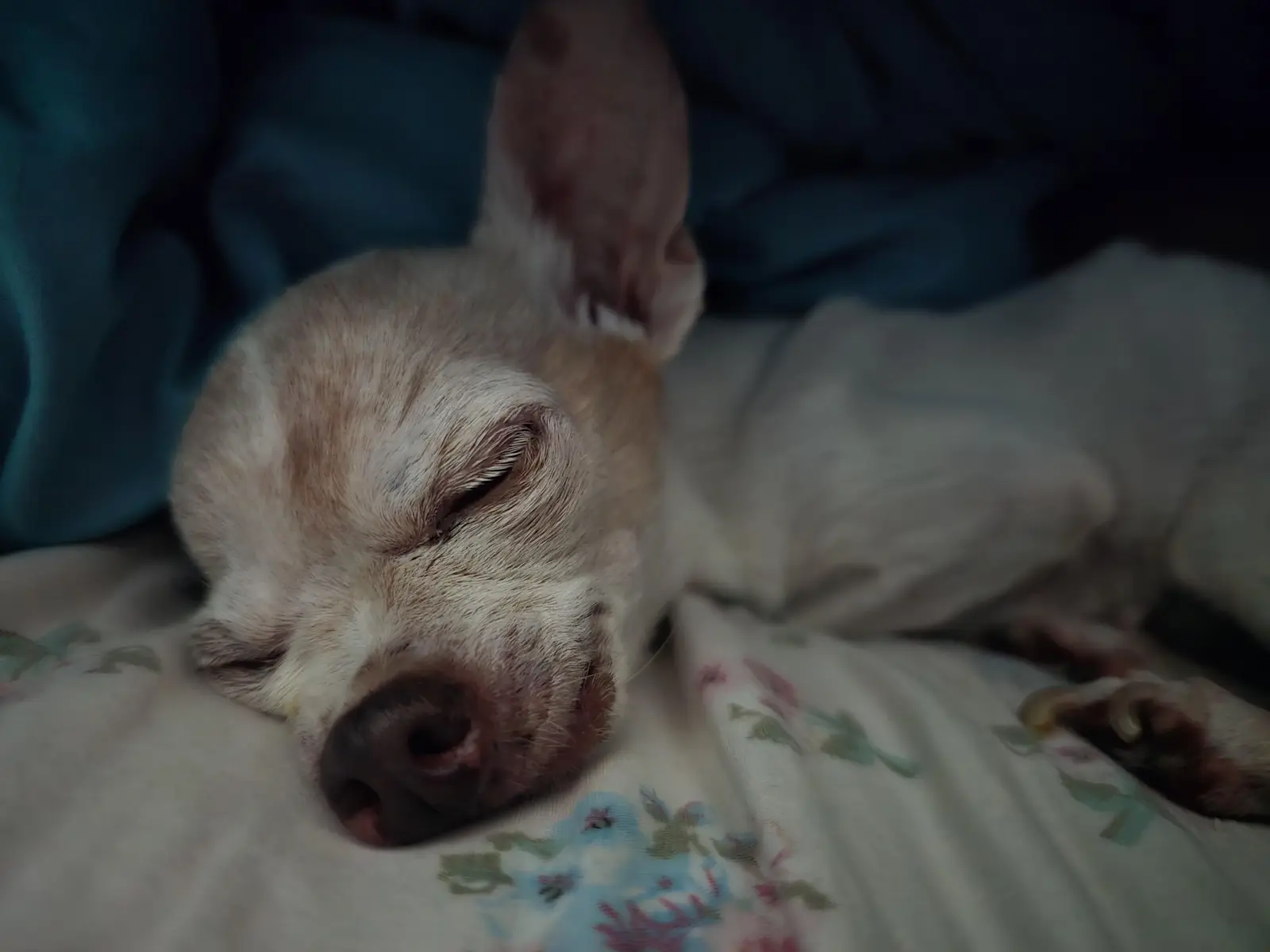
Featured photograph: Alanruiz45 / Wikimedia Commons (CC BY-SA 4.0), via Wikimedia Commons. It is an illustration and does not depict the animals described in this article.



No comments yet
Leave a comment