
A Chihuahua who is quieter, eating less, or simply “off” may have a minor problem or an urgent one. ADR names the uncertainty; an exam finds the cause.
ADR is veterinary shorthand for “ain’t doing right.” It describes the owner’s valid observation that a dog is different without pretending the cause is already known.
A Chihuahua who skips breakfast, hides, moves slowly, or stops greeting you could have a brief upset—or the first visible sign of a serious problem. ADR is not the diagnosis. It is the reason to look more closely and decide how quickly veterinary care is needed.
This article is general education. If your dog is in distress or you are unsure about urgency, contact a veterinarian or emergency clinic now.
Quick answer: ADR is veterinary shorthand for ain't doing right, and describes a Chihuahua who is quieter, eating less, hiding, moving slowly or simply off, without identifying the cause. It signals the need for a prompt examination to separate a minor upset from pain, dental disease, infection, or an organ or endocrine problem. Collapse, breathing difficulty, seizures, uncontrolled bleeding or suspected poisoning need immediate care. For steadier changes, bring the veterinarian a precise timeline plus diet, medication and environment details.
Treat emergency signs as emergencies
Do not wait for an ADR pattern to become clearer if a Chihuahua has trouble breathing, collapses, cannot stand, has a seizure, is unresponsive, has uncontrolled bleeding, repeatedly tries to vomit without producing anything, or shows severe pain.
Other urgent signs include pale, blue, or gray gums; a swollen abdomen; suspected poisoning; major trauma; heat exposure with weakness or abnormal breathing; repeated vomiting or diarrhea with marked weakness; inability to urinate; or a sudden change in consciousness.
Call the veterinary clinic while preparing to leave. Staff can give transport instructions and prepare for arrival. Do not give human medication unless a veterinarian specifically directs it; common products can be dangerous to dogs, and a Chihuahua’s small size leaves little margin for dosing errors.
Merck Veterinary Manual’s “When to See a Veterinarian” table separates immediate problems from signs that should be assessed within a shorter time. Use professional guidance, not an online symptom score, when the dog’s condition is changing.
For non-emergencies, call with a precise timeline
A dog who is stable but persistently different still deserves attention. Contact your regular veterinarian promptly if appetite, energy, thirst, urination, stool, gait, sleep, breathing, or social behavior has changed.
Small details can change the triage decision:
- When was the dog last completely normal?
- Was the change sudden or gradual?
- Has the dog eaten and kept food down?
- Is water intake higher, lower, or unchanged?
- Are urination and bowel movements normal?
- Is there coughing, vomiting, diarrhea, limping, trembling, or panting?
- Could the dog have reached medication, food waste, plants, chemicals, or a foreign object?
- Has any medication or supplement recently changed?
Give actual times and amounts where possible. “Ate half the normal breakfast at 8 a.m.” is more useful than “not eating much.” A short video of an unusual movement or breathing pattern may help the veterinary team, but do not delay care to record it.
Vague signs have many possible causes
Decreased appetite and listlessness can accompany pain, dental disease, gastrointestinal problems, infection, organ disease, endocrine disorders, medication effects, stress, and many other conditions. The overlap is exactly why ADR cannot be diagnosed from appearance alone.
Cornell’s canine health guidance notes that pain may appear as reduced activity, reluctance to move, posture changes, altered sleep, panting, irritability, or withdrawal. Those behaviors are information, not proof of a specific source of pain.
Dental pain deserves particular attention in Chihuahuas because small dogs can develop significant oral disease. A dog may approach food and then retreat, chew on one side, drop pieces, resist face handling, or develop strong mouth odor. Do not force the mouth open if the dog is painful or likely to bite.
Serious internal disease can also begin with nonspecific changes. Cornell describes Addison’s disease as one example with signs that may wax and wane. The point is not to make owners fear one rare diagnosis. It is to show why an examination and appropriate testing matter when a dog is repeatedly “off.”
What the veterinarian may need to do
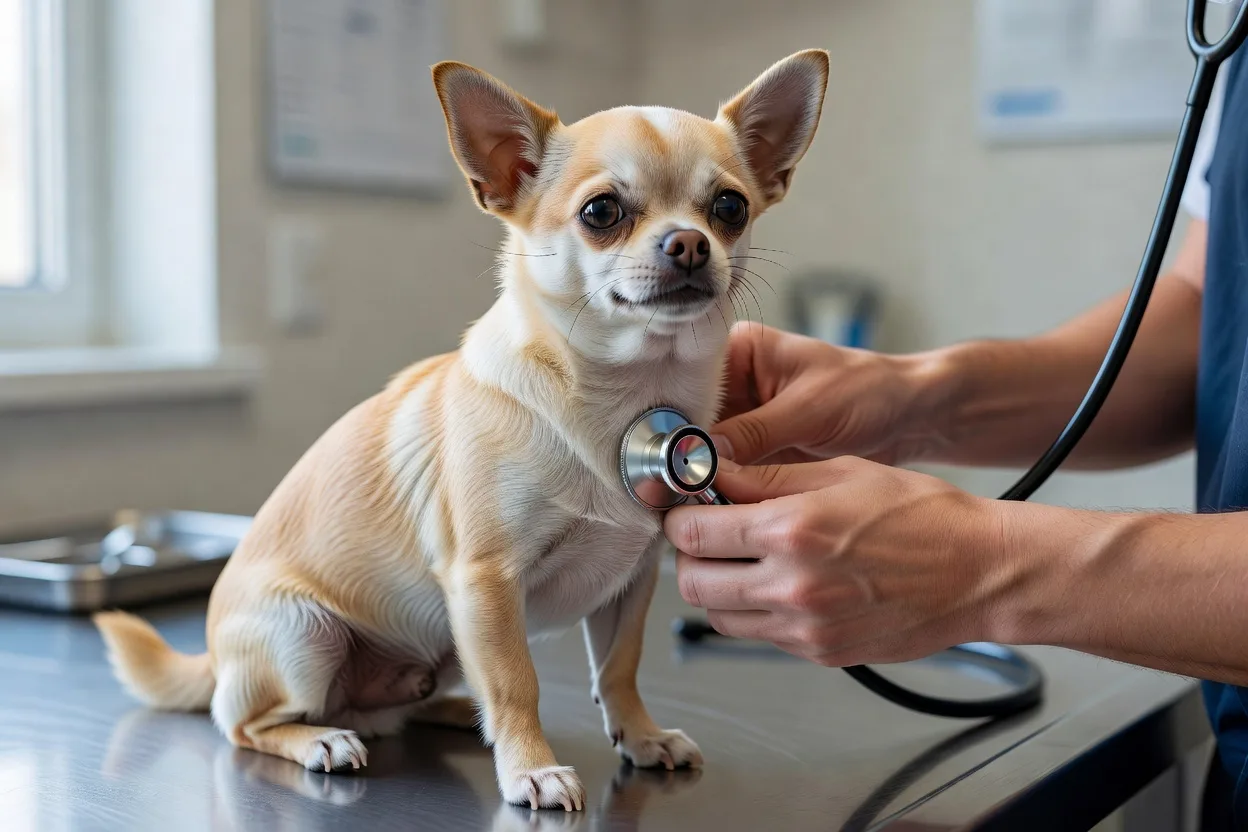
The visit usually begins with history and a physical examination. The veterinarian may check temperature, hydration, gum color, heart and lung sounds, abdomen, mouth, joints, neurologic responses, and areas of pain.
Testing depends on the findings. VCA explains that a dog with decreased appetite and listlessness may need a complete blood count, chemistry panel, urinalysis, imaging, or other targeted tests. Not every dog needs every test, and a normal result can still help narrow the possibilities.
Bring medication containers or a complete list with doses and schedules. Mention flea, tick, and heartworm prevention; recent travel; diet changes; access to human food; falls; new animals; and changes in the household.
Do not stop a prescribed medication without veterinary advice unless emergency staff instruct you to do so. If you suspect an adverse effect, call the prescribing clinic and describe the timing.
Chihuahua size changes the safety margin
A small dog can lose a meaningful portion of body fluid through vomiting or diarrhea more quickly than a large dog. A small amount of a toxin or human medication may also represent a larger dose per pound.
That does not mean every missed meal is an emergency. Age, health history, duration, and accompanying signs matter. A healthy adult who declines one meal but remains bright and comfortable is different from a puppy, a dog with diabetes, or a frail senior who is weak and vomiting.
Puppies, seniors, pregnant dogs, and Chihuahuas with chronic conditions need a lower threshold for veterinary advice. Ask your clinic in advance which signs should trigger an emergency visit for your individual dog.
For behavior changes involving snapping or bite risk, see A Toothless Chihuahua Can Still Bite—Here’s Why. Pain must be considered before a new behavior is treated as disobedience.
Observe without “watching and waiting” blindly
If a veterinarian says home monitoring is appropriate, ask what to track, what the dog may eat or drink, which changes require a call, and when the dog must be rechecked.
Use a simple log:
| Time | Food and water | Urine and stool | Energy and movement | Symptoms or medication | |---|---|---|---|---| | 8:00 a.m. | Half breakfast, normal water | Normal urine | Walked slowly | No vomiting |
Monitoring has an endpoint. “Call if vomiting occurs, if she refuses the next meal, or if energy declines; recheck tomorrow by 10 a.m.” is a plan. “See how it goes” is not.

Trust the observation, not a guessed diagnosis
Owners often notice a meaningful change before a symptom fits a tidy label. That observation is valuable. Write it down, compare it with the dog’s normal routine, and give the veterinary team a clear timeline.
ADR means the problem has not yet been named. It should never mean the problem does not matter.
Featured photograph: Nuclearblitz12 / Wikimedia Commons (CC BY-SA 3.0), via Wikimedia Commons. It is an illustration and does not depict the animals described in this article.




No comments yet
Leave a comment