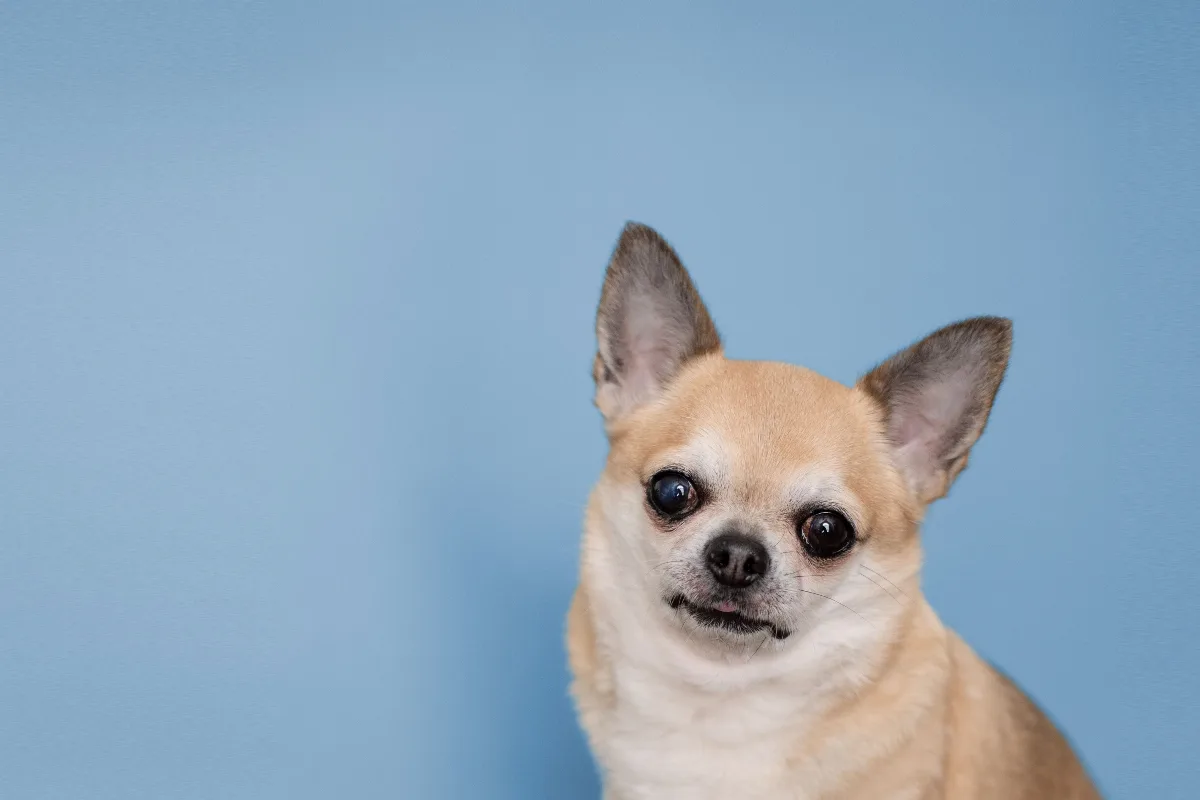
Run your thumb over a chihuahua's nose mid-afternoon and it may be warm and dry. Try again after dinner: cool and damp. Nothing changed except a nap, a drink, and some licking. That is the first thing to know: nose moisture is weather, not climate. It shifts hourly in healthy dogs, and a dry nose by itself, in a dog who is eating, playing, and pestering you on schedule, is almost never a medical event.
The useful question is not whether the nose is dry but what else is true. A dry nose on a flat, food-refusing dog deserves attention. So does a nose that stays dry for days and starts to crack, crust, or change color. Here is how to tell one from the other.
Quick answer: Nose moisture is weather, not climate: it shifts hourly in healthy dogs with naps, licking, indoor heating, and hydration, so a dry nose by itself, on a dog who is eating and behaving normally, is almost never a medical event. What matters is the company it keeps, dryness plus lethargy or appetite loss, or a nose that stays dry for days and starts to crack, crust, or change colour. Skip human balms, since whatever goes on a nose is licked off within minutes.
Why the nose is wet in the first place
The hairless leather at the tip of the muzzle, which veterinarians call the nasal planum, stays damp for working reasons. Glands inside the nose supply a thin film of mucus, licking tops it up, and scent particles stick to a moist surface far better than to dry skin, as the AKC's guide to dry dog noses explains. A wet nose is a tool, not a health certificate.
Which is why the old folk test fails in both directions: a dry nose does not prove fever and a wet one does not rule it out. If illness is the actual worry, the behavior clusters and thermometer rules in our fever guide are the honest instruments.
When a dry nose is normal
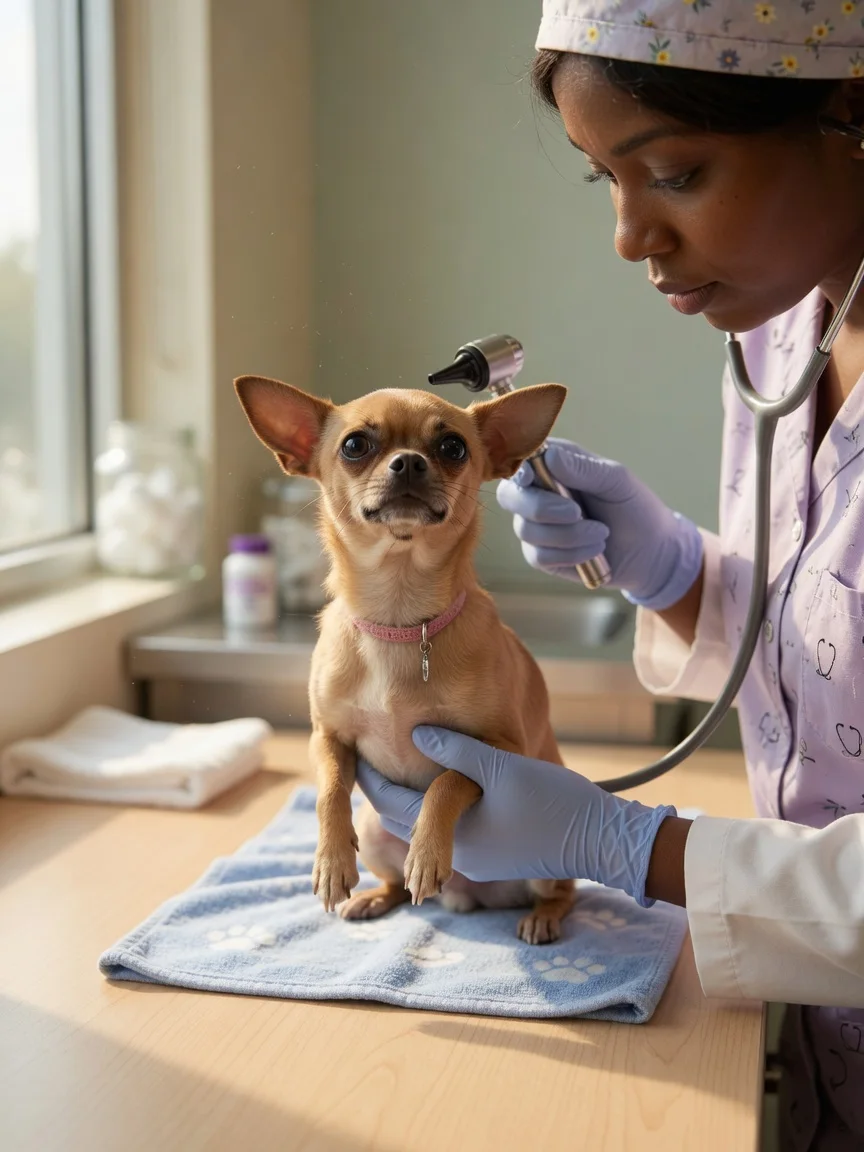
Most dry noses have boring explanations. Sleeping dogs do not lick their noses, so a chihuahua surfacing from her third nap of the morning wakes up dry and re-wets within minutes. Winter heating dries indoor air, which matters for a breed that treats every heat vent as assigned seating and spends the cold months burrowed under blankets. Sun and wind chap the surface on walks. A hard play session costs a small body a little water, and the nose reflects it.
Age belongs on the list too: older dogs simply run drier, one of the small shifts covered in our senior care guide. The common thread: these noses still look normal. The pebbled texture and color hold, the dog is herself, and moisture returns when the nap ends or the air changes.
When a dry nose is not normal
Trouble announces itself two ways: the nose itself changes, or the dog around it changes.
Surface changes worth a closer look: crusts or scabs that persist or return, cracks that deepen or bleed, raw patches, fading color, or texture going from pebbled cobblestone to smooth and shiny. Some are minor, such as wind chapping or sunburn on a pink nose. A heaped-up horny crust has its own name, nasal hyperkeratosis, an overgrowth of the nose's outer layer seen especially in older dogs.
A small group of autoimmune skin diseases also starts exactly here, where the immune system attacks the nose's own skin. The VCA overview of autoimmune skin disease describes discoid lupus erythematosus and pemphigus as causes of crusting, scales, ulcers, and pigment loss around the nose, worsened by sunlight and diagnosed by biopsy, not by eye. None of this is couch-diagnosable: a changed nose surface earns an appointment, not a guess. Crusting alongside itchy skin elsewhere overlaps with the patterns in our skin problems guide.
The second pattern is a normal-looking dry nose on an abnormal dog: flat energy, refused meals, vomiting, trembling. Here the nose is a bystander; the sick-dog signs run the show. One cluster matters extra at chihuahua size: dehydration. The AKC's dehydration guide lists a dry nose alongside sticky gums, thick saliva, sunken eyes, low energy, and skin that has lost its snap. A four-pound body has very little fluid reserve to lose.
Discharge changes the subject entirely. Thick, colored, or bloody discharge, especially from one nostril, is an airway problem in its own right, a close cousin of the congestion in our breathing problems guide, and it earns a same-day call.
The two-minute check that tells you more
Before calling, gather what the clinic will ask about. Look at the nose in good light: texture, color, crusts, cracks, discharge, and take a phone photo, because photos beat memory. Lift her lip: gums should be pink and slick, not sticky. Lift the skin over her shoulders and let go; it should spring flat almost instantly. Then rate the dog: appetite, water, energy, when the dryness started, and whether it comes and goes.
Most days that exam settles it: normal surface, slick gums, snappy skin, and a dog demanding dinner on time is a weather report, not a warning. When it is less clear, the same notes make your call to the clinic short and productive.
When to call your veterinarian
Emergency care now: not for a dry nose alone, but for the company it keeps: collapse, labored breathing, repeated vomiting, suspected heatstroke, or nose bleeding that does not stop. Same-day call: the dehydration cluster of sticky gums, slow skin snap, and low energy; thick, colored, bloody, or one-nostril discharge; a raw, bleeding, or fast-changing nose surface; or a dry nose alongside refused meals, vomiting, or fever signs.
Routine appointment: a nose that stays dry, rough, crusty, or is losing color over days to weeks in an otherwise well dog, and any balm or sunscreen question. Monitor at home: the post-nap, post-heat-vent, post-beach dry nose in a dog acting like herself; recheck over a day or two.
Frequently asked questions
Does a dry nose mean my chihuahua is sick?
By itself, no. Moisture swings with naps, licking, weather, and indoor heating in healthy dogs. Concern starts with clusters: dryness plus lethargy, refused food, or vomiting, or a surface that is cracking, crusting, or losing color.
Can I put Vaseline or lotion on my chihuahua's dry nose?
Skip human products unless your veterinarian approves one; whatever goes on a nose is licked off and swallowed within minutes. For plain weather or age dryness, ask the clinic to recommend a dog-specific nose balm. For a cracked, crusted, or raw nose, the balm question is the reason for a visit, not a substitute for one.
Why is my older chihuahua's nose dry and crusty?
Seniors run drier noses, and some develop nasal hyperkeratosis, a thickened horny buildup of the outer layer that is often manageable once diagnosed. Crusting can also belong to infections and autoimmune disease, so have a veterinarian confirm the boring explanation before you assume it.
Can a chihuahua's nose get sunburned?
Yes, especially pink or lightly pigmented noses, and chihuahuas are committed sunbathers. Redness, flaking, or chapping after sunny days deserves a mention at your next visit; shade, walks outside peak sun, and a veterinarian-recommended dog-safe sunscreen are the usual fixes.
The nose makes a poor thermometer and a decent skin report. Stop reading the moisture and start reading the surface and the dog: texture, color, crusts, and discharge on one side; appetite, energy, gums, and skin snap on the other. Today, while everything is boring and normal, take one clear photo of that nose; six months from now you will compare against evidence instead of memory.


No comments yet
Leave a comment