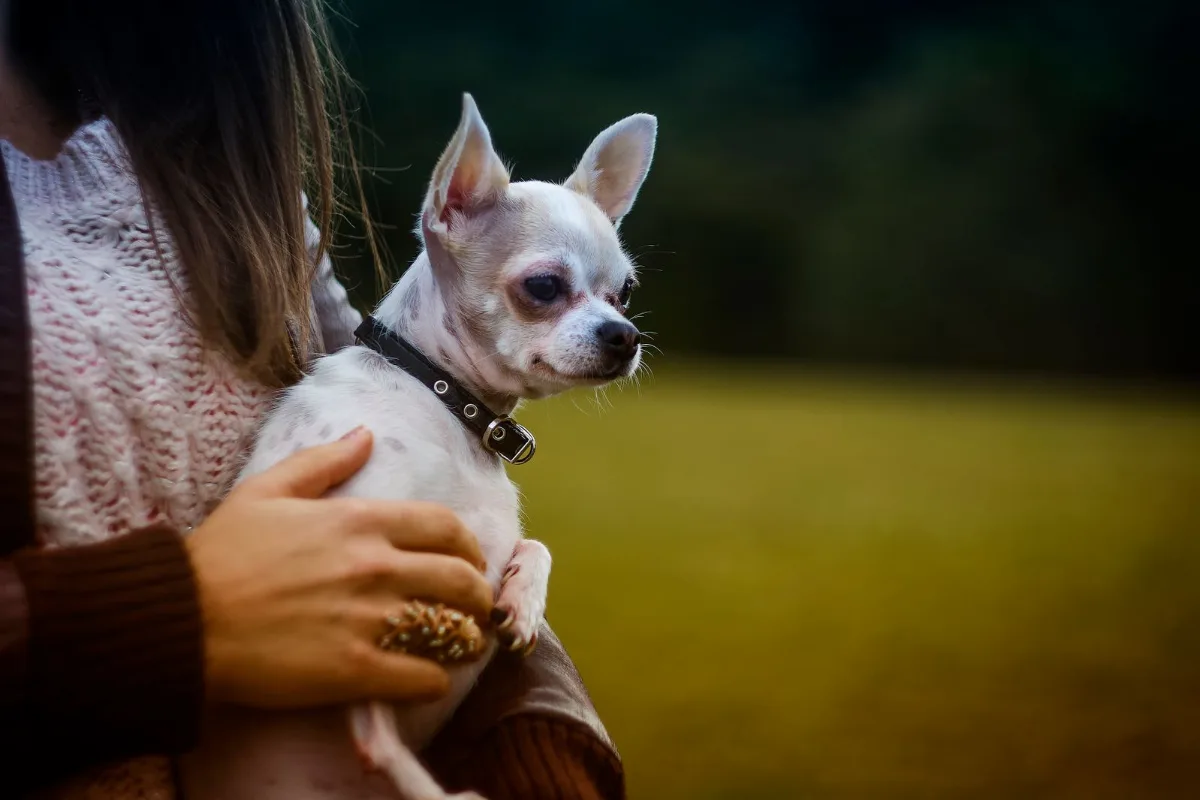
Start with the number that reframes the subject: roughly one in four dogs develops cancer at some point, and for dogs aged ten and over that rises to about one in two, according to the AVMA's guidance on cancer in pets. Chihuahuas are not known as a cancer-prone breed. They are unusually long-lived, and that is the connection owners rarely make: a dog who reaches fourteen or fifteen spends years inside the bracket where the second number applies.
The other honest fact is less comfortable. Early cancer almost never looks like cancer. It looks like a dog slowing down, a lump you assume is fat, an appetite gone fussy, a smell you blame on teeth. Nearly every sign below appears more often in ordinary, treatable problems, which is exactly why they deserve examining rather than interpreting at home.
Quick answer: Roughly one in four dogs develops cancer at some point, rising to about one in two for dogs aged ten and over, and chihuahuas are not counted among the high-risk breeds, though their long lives put many of them squarely in the age bracket where risk climbs. The hard part is that early cancer almost never looks like cancer: it looks like a dog slowing down, a lump you assume is fat, a fussy appetite, or a smell you blame on teeth. A new lump earns an appointment within a week or two.
The signs worth acting on
The Flint Animal Cancer Center at Colorado State University publishes a ten-item warning list for pet owners that has held up well, largely because it describes what people notice at home rather than what shows up on a scan.
- A lump or swelling that persists, grows, or changes texture
- A sore or wound that will not heal
- Weight loss with no change in diet
- Loss of appetite
- Difficulty picking up food, chewing, or swallowing
- Bleeding or discharge from anywhere it does not belong, including persistent vomiting or diarrhea
- A new offensive odor from the mouth, ears, or rear
- Loss of stamina, or reluctance to do things she used to enjoy
- Persistent lameness with no obvious injury behind it
- Difficulty breathing, urinating, or passing stool
No single item there is a diagnosis. What matters is persistence and company: a sign lasting beyond a week or two, or several arriving together in a dog who is subtly not herself. The AVMA notes these signs also accompany many noncancerous diseases and still deserve attention.
What a four-pound body changes
Scale works in your favor here. A five-pound chihuahua who loses half a pound has shed ten percent of herself, without looking dramatic across a room. A kitchen scale once a month, paired with the hands-on body condition habit, catches that slide early.
Lump checks are easier on a small dog too, there being less dog to search. Once a month, with your chihuahua relaxed on your lap, run both hands slowly over her while she assumes she is being adored. Cover the throat and jaw, the shoulders, armpits, ribs and spine, the belly and mammary chain in females, the groin, the toes, and the tail base. Note anything new: where it sits, its size against a lentil, a pea, or a grape, and the date.
One breed-specific confounder deserves flagging. Chihuahuas have famously poor dental odds, so foul breath usually means periodontal disease rather than an oral tumor, and our dental care guide covers that routine. What raises concern is a visible mass on the gum, a tooth loosening alongside swelling, bleeding from the mouth, or a jawline gone quietly asymmetric.
The last size-related risk is not physical at all. Because chihuahuas live so long, "she is just getting old" becomes the default explanation for everything after age nine. Old age is not a diagnosis. It is a stretch of years in which diagnosable things grow more likely.
What the appointment involves
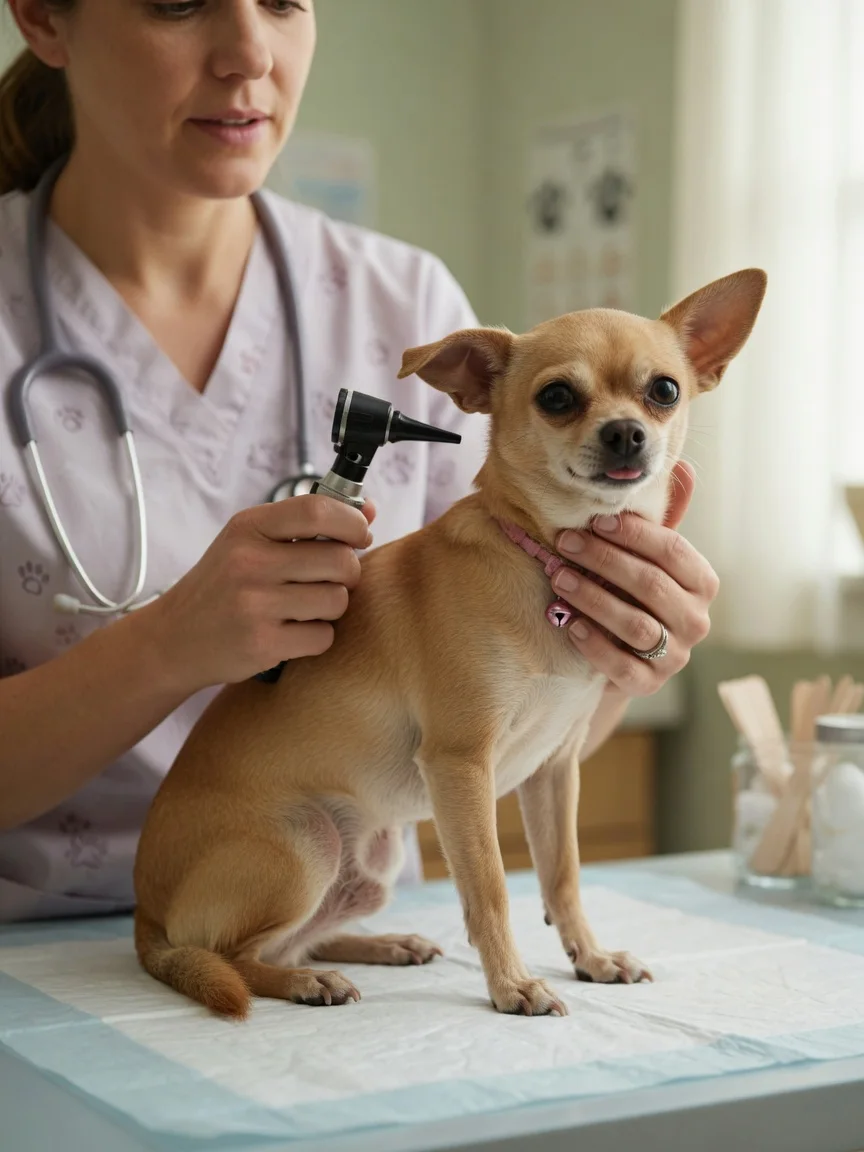
For most lumps the first step is a fine needle aspirate, or FNA: a very thin needle draws a few cells from the mass, generally in the exam room and without sedation. Those cells go to cytology, the microscopic study of individual cells, which is quick and often answers the question on the spot.
It has limits worth knowing. As VCA's explainer on cytology and biopsies puts it, cytology is less definitive than histopathology and can mislead in both directions: cells that look benign may come from a malignant tumor, and the reverse happens as well. When the answer must be firmer, a biopsy takes tissue rather than scattered cells, letting a pathologist grade the tumor and comment on how it is likely to behave. Staging tests such as bloodwork, radiographs, or ultrasound then look for spread.
Owners of tiny dogs often stall at the word anesthesia, a fair and manageable concern; the screening and monitoring covered in our piece on anesthesia risk in small dogs applies here too. Treatment, when needed, is a wider menu than most people expect: the AVMA lists surgery, chemotherapy, radiation, immunotherapy, and palliative care aimed purely at comfort. Veterinary oncology is generally dosed toward good days rather than maximum tolerated misery, and asking what quality of life should look like is welcome in that room.
When to call your veterinarian
Emergency care now: collapse or sudden profound weakness, pale or white gums, labored breathing, a swollen painful abdomen, uncontrolled bleeding, or an inability to urinate. Same-day call: a lump that appeared suddenly and is hot, painful, ulcerated, or visibly growing; bleeding from the mouth, nose, or rear; refusal of food beyond a day; or a limp she will not bear weight on.
Routine appointment, within a week or two: any new lump on an adult dog regardless of size, unexplained weight loss, fading stamina, a persistent bad smell, or a sore that has not closed. Monitor and record: lumps already aspirated and identified as benign, measured and dated on a simple body map so change is provable rather than remembered. The research on whether dogs can smell cancer is more interesting, and more mixed, than the headlines built on it.
Frequently asked questions
Are chihuahuas more likely to get cancer than other breeds?
They are not generally counted among the high-risk breeds, and age predicts risk more usefully than breed does. The catch is that chihuahuas frequently reach their mid-teens, so more of them live into the years where the one-in-two figure applies.
Is every lump on a chihuahua something to worry about?
No, and most are not malignant; fatty masses called lipomas, cysts, and warts are all common in older dogs. The difficulty is that benign and malignant lumps can feel identical under your fingers, which is why the answer comes from a needle rather than a family consensus.
How quickly should I act on a new lump?
A new lump on an adult dog earns a routine appointment within a week or two, and a faster call if it grows, bleeds, opens, or bothers her. Waiting a month to see what it does mostly buys the lump a month, and can narrow your options if the news is serious.
Is treatment realistic for a small senior dog?
That is a quality-of-life discussion rather than an arithmetic problem, and it belongs out loud in the exam room. Ask what the realistic goal is, how many good days each option tends to buy, and what less aggressive care would involve; our guide to quality of life in senior chihuahuas covers weighing the answers.
Set a monthly reminder, pick a moment when your dog is already draped across you, and spend two minutes running both hands over her from nose to tail, writing down anything new. That is the entire early-detection program, and it works considerably better than worrying does. In a breed that lives long enough to need it, those two minutes are a genuinely useful habit.

No comments yet
Leave a comment