In April 1989 the Lancet published a letter titled "Sniffer dogs in the melanoma clinic?" that started a research field. Williams and Pembroke described a patient whose crossbred dog had spent months sniffing at a mole on her leg, once trying to bite it off. She was not worried about it.
The dog's persistence sent her to a doctor anyway, the lesion was excised, and it was a malignant melanoma. No controls, no statistics, and thirty-seven years later it is still the most cited anecdote in canine olfaction. Did it ever become evidence? It did, and the evidence is messier than the headlines built on it.
Quick answer: Under controlled conditions, trained dogs distinguish samples from cancer patients well above chance, a finding repeated across several cancers since the 2004 bladder cancer work. The accuracy figures vary widely by study, which is itself the honest result: pooled prostate figures reach 95 percent sensitivity while the same meta-analysis flags substantial heterogeneity. No published programme uses chihuahuas, and the barrier is temperament and stamina rather than nose.
What a dog is actually smelling
Tumours are metabolically rude houseguests: they alter the chemistry around them, and the byproducts, volatile organic compounds, leave the body in breath, urine, sweat and the air above a blood sample. Nothing here asks a dog to understand oncology, only to notice that one tube in a rack of seven smells different. The equipment is remarkable: the American Kennel Club puts canine smell at ten thousand to a hundred thousand times ours, a range wide enough to admit nobody has a tidy number.
The genetics are less flattering. A 2025 analysis in Molecular Biology and Evolution found that domestic dogs carry fewer functional olfactory receptor genes than gray wolves and that scent breeds held no significant advantage over non-scent breeds. Bloodhounds finished mid-table. Performance, the authors concluded, is largely behavioural: motivation, trainability, conditioning. A chihuahua's nose, per our taxonomy piece, is standard-issue canid hardware.
What the controlled studies found
The first proper test came in 2004, when Carolyn Willis and colleagues at Amersham Hospital trained six dogs to pick a bladder cancer urine sample from a line of seven and published in the BMJ. Across 54 test runs the dogs chose correctly 22 times: a 41 percent success rate against the 14 percent expected by chance. A real signal, and also wrong more often than right, which is not how the story ran that week.
Studies followed across lung, breast, prostate and ovarian cancers, and the pooled figures look spectacular. A 2023 meta-analysis in the World Journal of Oncology put canine detection of prostate cancer from urine at 95 percent sensitivity and 92 percent specificity. Then it ran the sensitivity analysis: remove the largest study and those numbers fall to 72 and 78 percent. The authors traced the spread to breed, trainer qualification and training duration, a courteous way of saying the studies were not measuring the same thing.
Why the numbers wobble
A 2020 review in Frontiers in Veterinary Science catalogues the reasons, and they are unglamorous. Handler expectancy is the largest: dogs read people extremely well, so a handler who knows which sample is positive can leak the answer without opening her mouth. Single-blind testing is therefore not good enough, and it remains common anyway. Sample sizes are small, a median near sixteen subjects, with statistical power to match.
And a dog trained on a narrow sample set may memorise those samples rather than learn the category. A dog that has learned to recognise nine specific patients has not learned to recognise cancer. Which is why the serious programmes are building machines. At the Penn Vet Working Dog Center, Cynthia Otto's team has worked with Penn Medicine and the Monell Chemical Senses Center on ovarian cancer samples toward a stated endgame: characterise the odour precisely enough to build an electronic nose.
Could a chihuahua do this work?
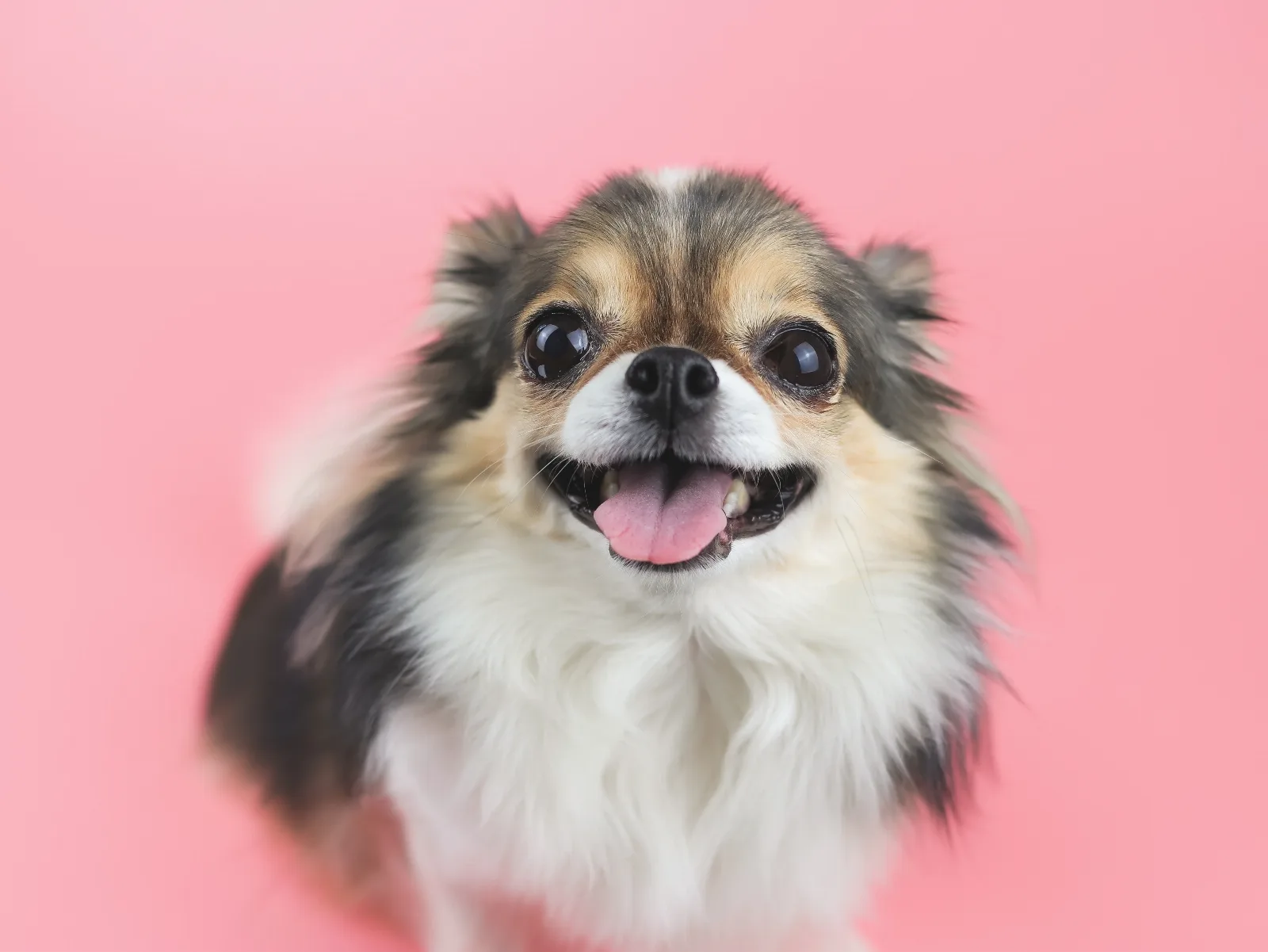
The hardware objection is weaker than it sounds. That same 2025 paper found no significant loss of functional olfactory receptor genes in short-faced breeds, though it noted that airway structure may limit what those genes get to work with, and the rounded skull and shortened muzzle described in our apple head guide do change nasal geometry. The real obstacle is the job description.
Detection programmes select for work drive, tolerance of tedium and stamina for twice-daily sessions five days a week; the AKC's survey names australian shepherds and labrador retrievers. Nobody runs a chihuahua string, and the reason is the shift pattern rather than the nose. Plenty of chihuahuas are quick studies, per our intelligence guide, and scent games make fine enrichment, per our games guide. Medical alert work is a separate proposition with its own standards, set out in our service dog guide.
When your own dog fixates on a spot
No published evidence shows that an untrained pet dog's interest in part of your body predicts anything. Dogs investigate scabs, healing wounds, infections, hormonal shifts and last night's dinner with identical enthusiasm, and the stories that circulate are anecdotes assembled after the fact, every uneventful sniff quietly discarded. The 1989 case is still instructive, but for the correct reason: the dog diagnosed nothing. It changed a woman's behaviour, and a physician did the diagnosing.
So the practical rule runs one way only. If your dog's attention makes you notice a mole that has changed shape or colour, a lump, a sore that will not heal or a cough that will not settle, book the appointment and present the symptom, not the dog, as your reason.
Never run the logic backwards: a dog's indifference is not a clean bill of health. The discipline applies in reverse too, because chihuahuas develop lumps and cancers of their own, and any new mass, unexplained weight loss or lasting change in appetite belongs with your veterinarian, as our health library sets out.
Frequently asked questions
Can dogs really smell cancer?
Under controlled conditions, trained dogs distinguish samples from cancer patients well above chance, repeated across several cancers since the 2004 bladder cancer trial. That is not the same as saying any dog can smell cancer on a person reliably, or that the ability has become an approved diagnostic test.
How accurate are cancer detection dogs?
It depends on the study, which is itself the honest finding. Pooled prostate cancer figures reach 95 percent sensitivity, yet the same 2023 meta-analysis watched them fall toward 72 percent once the largest trial was removed. Treat any single headline percentage with suspicion.
Can a chihuahua be trained to detect cancer?
No published programme uses chihuahuas, and the barrier is temperament and stamina rather than olfactory ability: the work means hours of repetitive line-ups, several sessions a day. Recreational scent games are another matter, and suit small dogs beautifully.
My dog keeps sniffing one spot on me. Should I worry?
See a doctor about the spot, not about the dog. If a mole, lump or sore is worth a professional look, have it looked at; if there is nothing there, she is most likely responding to skin bacteria, a scab or soap. Her interest is not a test result, and her disinterest is not reassurance.
The fair verdict, thirty-seven years on, is that dogs detect something real which medicine cannot yet name precisely, and that the most useful thing they may ever do with it is teach a machine to do it instead. The dog on your lap is not a screening service. She is, at most, an excellent reason to stop ignoring the thing you have been ignoring.

No comments yet
Leave a comment