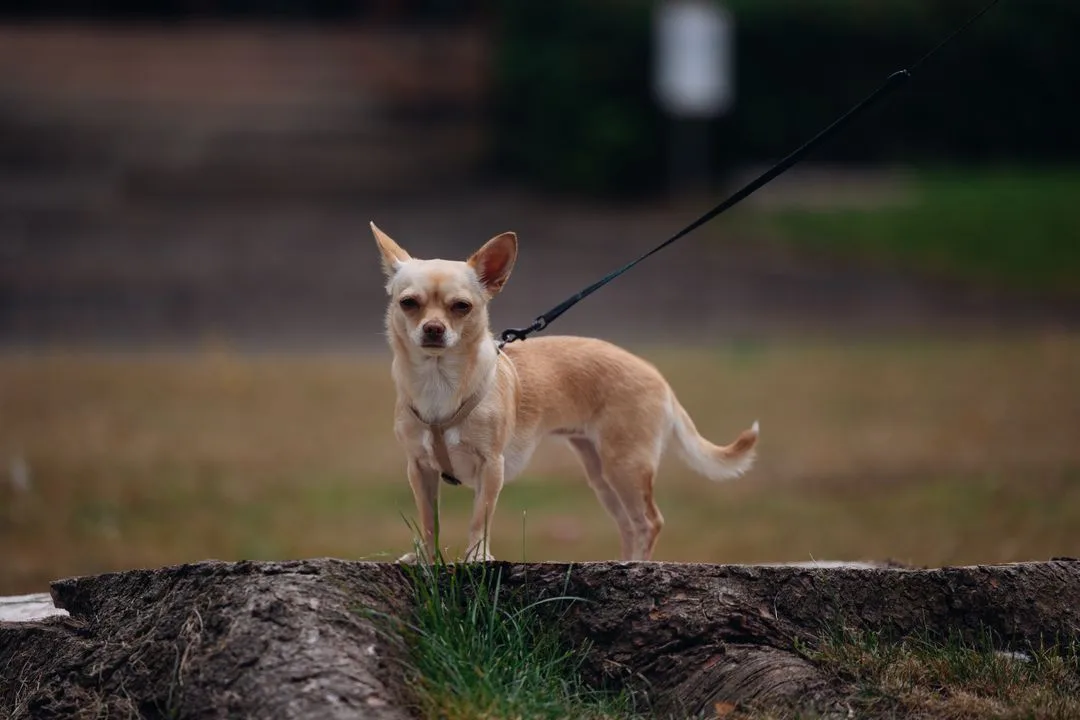
The chipin is a portmanteau before it is anything else: a chihuahua crossed with a miniature pinscher, sold under a name that sounds official and is not. No kennel club recognizes it, no standard describes it, and the second half of the pairing carries the toy group's most persistent case of mistaken identity. Sort out what a min pin actually is and most of the cross becomes predictable, which is more than can be said for the ears.
Quick answer: The chipin is a chihuahua crossed with a miniature pinscher, sold under a name that sounds official and is not: no kennel club maintains a standard, stud book, or show classification for it. Most land between five and twelve pounds and eight to twelve inches tall. The common mistake is assuming a min pin is a shrunken Doberman; the two breeds are unrelated, and today's min pins likely carry dachshund and Italian greyhound ancestry. A min-pin-leaning chipin needs real daily exercise and mental work.
The min pin is not a shrunken Doberman
Nearly everyone starts wrong here. The miniature pinscher looks like a Doberman reduced to lap scale. The two breeds are not related. Per the AKC's breed history, today's min pins likely carry dachshund and Italian greyhound ancestry with possible German pinscher influence, and the type predates the Doberman by centuries.
Its old name, reh pinscher, referred to the small red deer of the Rhineland forest rather than to any guard dog. The AKC registered the breed in 1925 simply as the Pinscher; "Miniature" was not added until 1972. The nickname that stuck, King of Toys, describes bearing rather than size.
The two parent standards make an amusing pair. The official miniature pinscher standard measures the dog in inches: ten to twelve and a half at the shoulder, eleven to eleven and a half desired, anything outside disqualified in the ring. The chihuahua standard does the reverse, ignoring height entirely and capping weight at six pounds. The breeds are not even described in the same units, which is fair warning about predicting their offspring.
What the cross actually produces
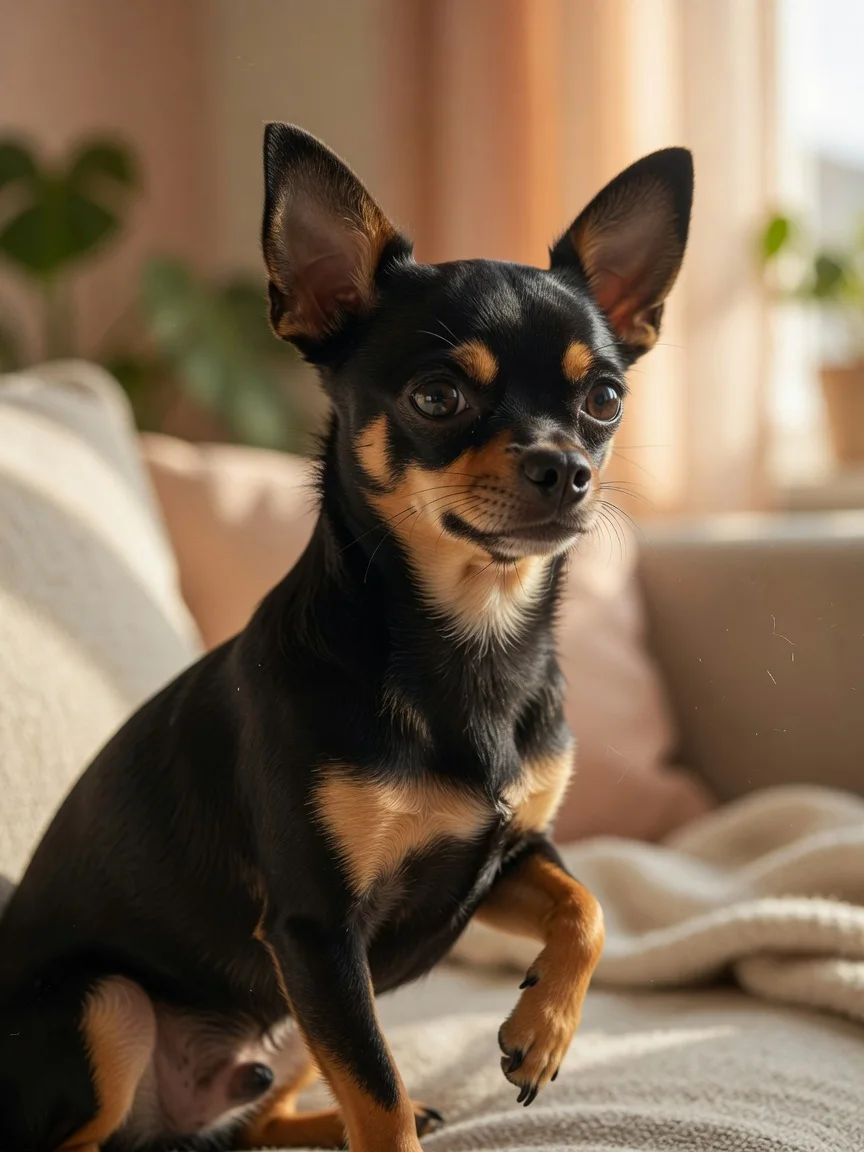
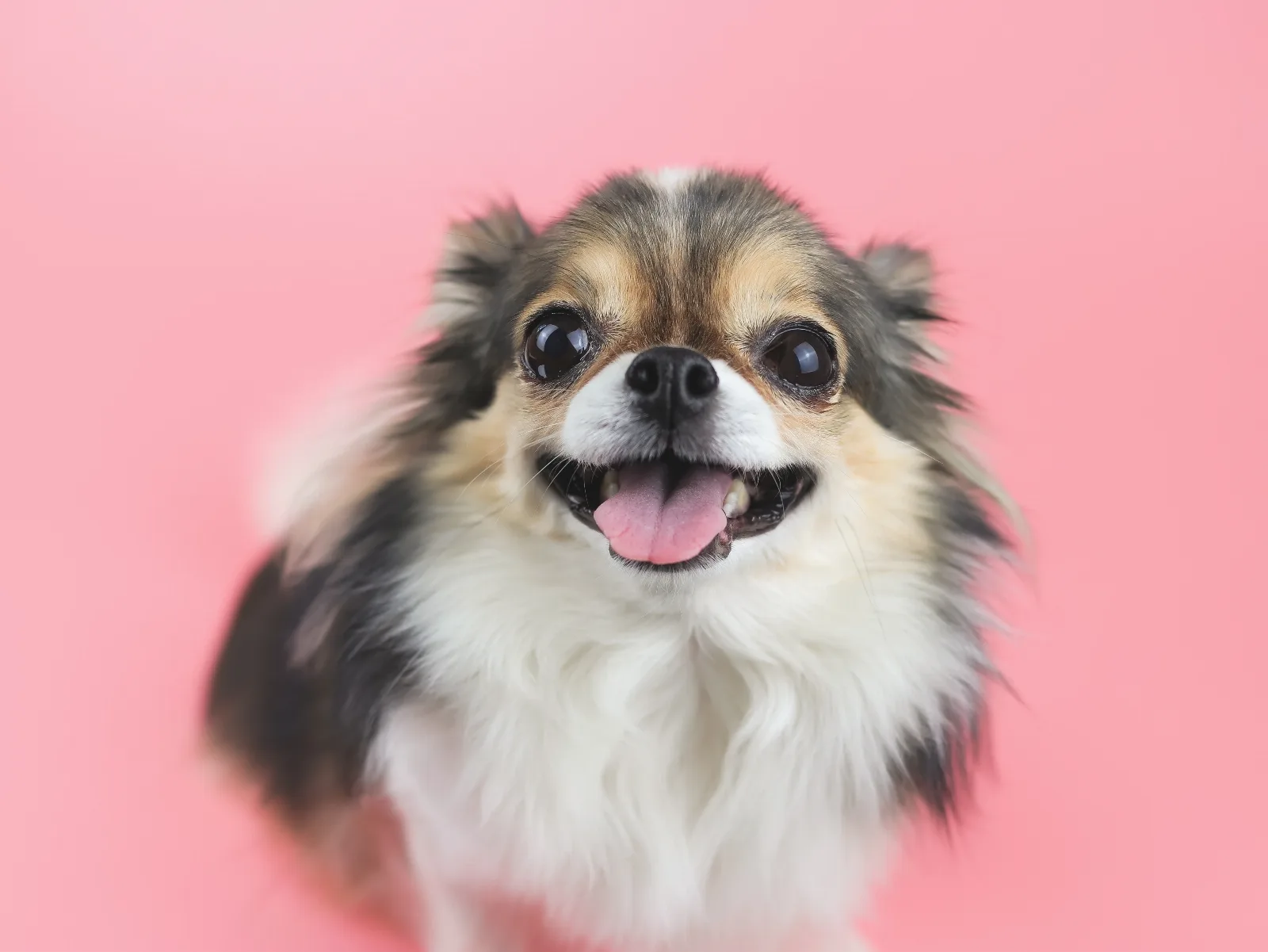
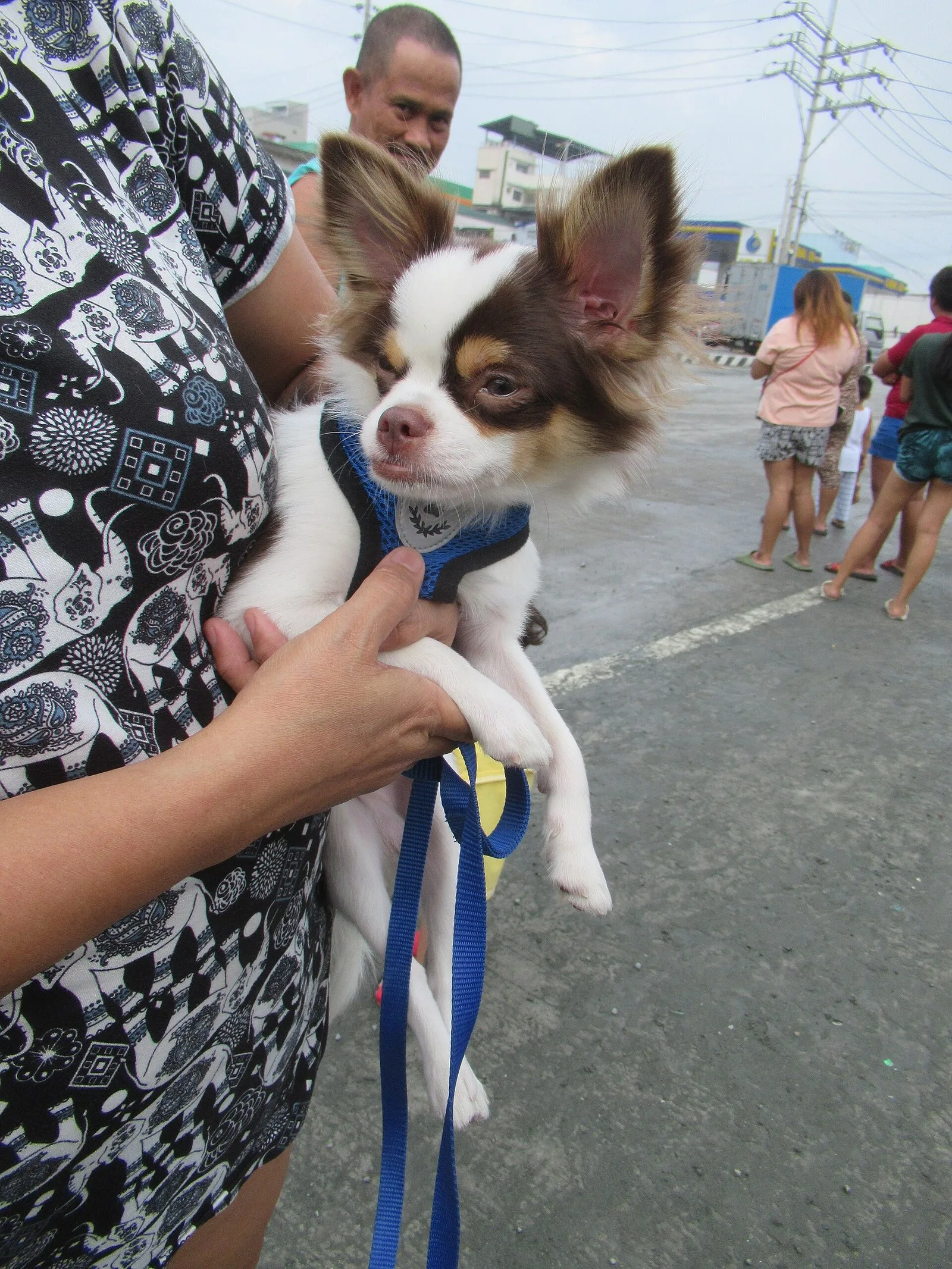
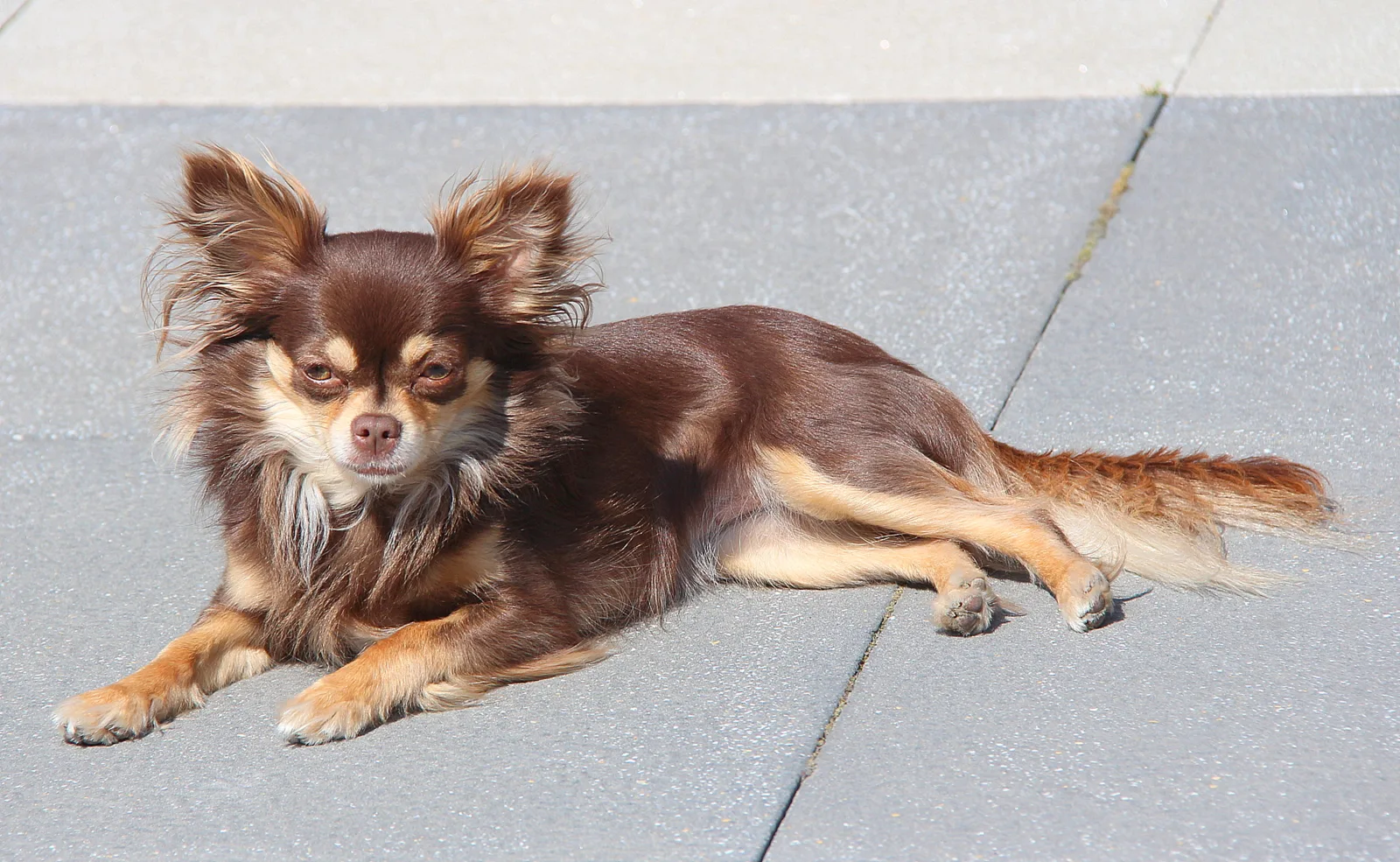
Coat is the easy part. The min pin standard asks for a coat smooth, hard and short, and the chihuahua contributes either the smooth or the long variety, so most chipins are short-coated and cheap to keep. A long coat is the minority outcome, and depends on the chihuahua parent. Color usually leans on the min pin's black-and-rust and stag-red palette, with the chihuahua's wider range breaking through. Ears are a coin toss: two erect-eared parents make erect ears likely, but a chihuahua's larger, flarier set arriving on a narrower min pin head produces results best described as antenna-adjacent.
Size is where the honest answer is a range: roughly five to twelve pounds and eight to twelve inches, with individuals landing anywhere inside it depending on which parent won the argument. A first cross does not average its parents, it shuffles them, so one litter can hold a leggy min pin lookalike and a compact chihuahua type raised in the same whelping box. That unpredictability is the strongest argument in our mixes pillar for adopting an adult, where the shuffle has already resolved.
Two standards, one ego
Read both temperament sections back to back and they are nearly a duplicate. The min pin standard asks for fearless animation, complete self-possession, and spirited presence. The chihuahua standard wants a dog projecting terrier-like attitudes of self importance, confidence, and self-reliance. Neither describes an animal that will be talked out of anything, and the cross does not dilute the trait so much as endorse it twice.
The real difference between the parents is fuel. Chihuahuas do well on the modest budget in our exercise guide, while VCA's min pin profile describes an extremely active and playful dog wanting a daily walk plus several play sessions on top. A chipin who inherits that engine and gets chihuahua-sized exercise will invent a job, usually barking or renovation.
The same heritage produces a committed escape specialist, small enough to exploit a gap you did not know was a gap, which makes the containment audit in our runaway guide less optional than it looks. Run the timetable in our socialization guide early, because two self-possessed parent breeds produce a puppy with opinions ahead of schedule.
Health, and the hybrid vigor question
Crossbreeding is often sold as a health upgrade. The evidence is more careful than the pitch. A University of California, Davis analysis published in the Journal of the American Veterinary Medical Association in 2013 reviewed records for more than 90,000 dogs and identified 27,254 with one or more of 24 inherited disorders.
Purebreds were more often affected for ten of them, prevalence was similar for thirteen, and mixed breeds came out worse on exactly one, ruptured cranial cruciate ligament. Mixing helps against conditions concentrated in a single breed's gene pool. It does nothing about conditions both parents share, and this pairing shares plenty.
Both sides bring kneecaps that slip out of position, a predisposition VCA describes as genetic in toy and small breeds with the chihuahua named directly, so our patella guide applies in full. Legg-Calve-Perthes disease, in which the head of the femur loses blood supply in a young dog, puts the miniature pinscher on the Orthopedic Foundation for Animals' at-risk list, and the OFA will not issue a clearance number before twelve months of age.
Add the crowded small-breed mouth that makes our dental guide the most-used bookmark in this file, the tracheal softness that makes a harness rather than a collar the default, and the blood sugar arithmetic VCA flags for very small min pin puppies. Ask any breeder for knee and eye evaluations on both parents, treat pricing that leans on rarity or teacup wording as the marketing it is, and take limping, collapse, or a puppy that will not eat to a veterinarian rather than a forum.
Frequently asked questions
Is the chipin a recognized breed?
No. It is a cross between two recognized breeds, and no major kennel club maintains a chipin standard, stud book, or show classification. That is not a judgment on the dogs; it simply means nothing written constrains how any individual chipin looks or behaves.
How big does a chipin get?
Most land between five and twelve pounds and eight to twelve inches tall, bracketed by the chihuahua's six-pound show cap and the min pin's ten to twelve and a half inch height range. Litters vary widely, and a breeder's estimate of adult size is a forecast, not a promise.
Are chipins good apartment dogs?
The footprint says yes and the energy says it depends. A chipin who takes after the min pin needs real daily exercise and mental work before treating a small flat as restful, and both parent breeds are quick to comment on hallway noise. With training and alert-barking management, they live in small homes perfectly well.
Are mixed breeds healthier than purebreds?
Sometimes, for some conditions. The UC Davis analysis found purebreds more affected for ten of twenty-four inherited disorders, no meaningful difference for thirteen, and mixed breeds more affected for one. A cross dilutes risk that sits in a single breed's pool; it does not dilute the knees, teeth, and trachea that both toy parents contribute.
A chipin is a small alert dog with a leggy dog's engine, a toy dog's skeleton, and two breed standards behind it that independently arrived at self-possession. Take it on as a min pin cross rather than a chihuahua with a novelty name, budget for the exercise, the knees, and the teeth, and the marketing label stops mattering about ten minutes after the dog starts running the household.

No comments yet
Leave a comment