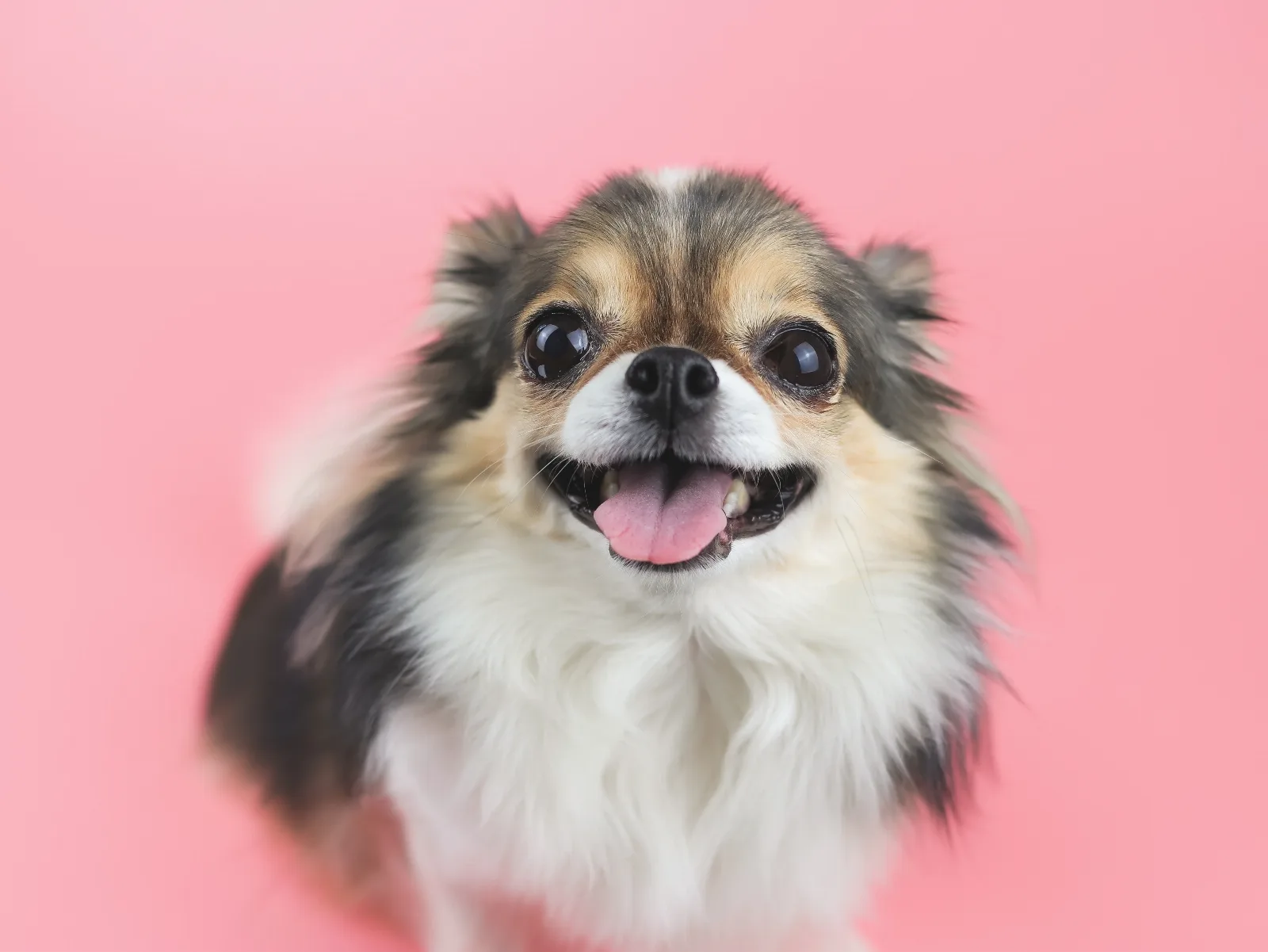
People search for "fluffy chihuahua" constantly, usually with one of two questions behind it: is that a separate kind of chihuahua, and can I get one? The short answer is no, it is not a separate kind. The interesting answer takes another paragraph, because the coat you are picturing is real, it is recognized, and it may already be hiding in the smooth-looking puppy asleep on your couch.
Quick answer: No, a fluffy chihuahua is not a separate kind of chihuahua. The AKC standard describes exactly two coat varieties, smooth and long, and the dog people call fluffy is a long coat. The gene is recessive, so two smooth-coated parents who each carry a copy can produce long-coated puppies, and those puppies look smooth at first, developing the ruff, feathering, and plume tail gradually. Wire-haired chihuahuas are not purebred, because no breed standard recognises a wire coat.
What the standard actually recognizes
The official AKC breed standard describes exactly two coat varieties: smooth and long. That is the entire list. "Fluffy" is a description an owner uses, not a designation a judge uses, in the same way that "deer head" describes a shape the standard never names. If a breeder offers you a fluffy chihuahua as though it were a third variety with a matching price tag, they are selling you a long coat and a vocabulary word.
| Smooth coat | Long coat | |
|---|---|---|
| Texture | Soft, close, glossy | Soft, flat or slightly wavy |
| Undercoat | Permitted | Preferred |
| Ears | More scanty hair | Fringed |
| Tail | Furry preferred | Full and long, carried as a plume |
| Extras | Ruff on neck preferred | Feathering on feet and legs, pants on hind legs, large neck ruff |
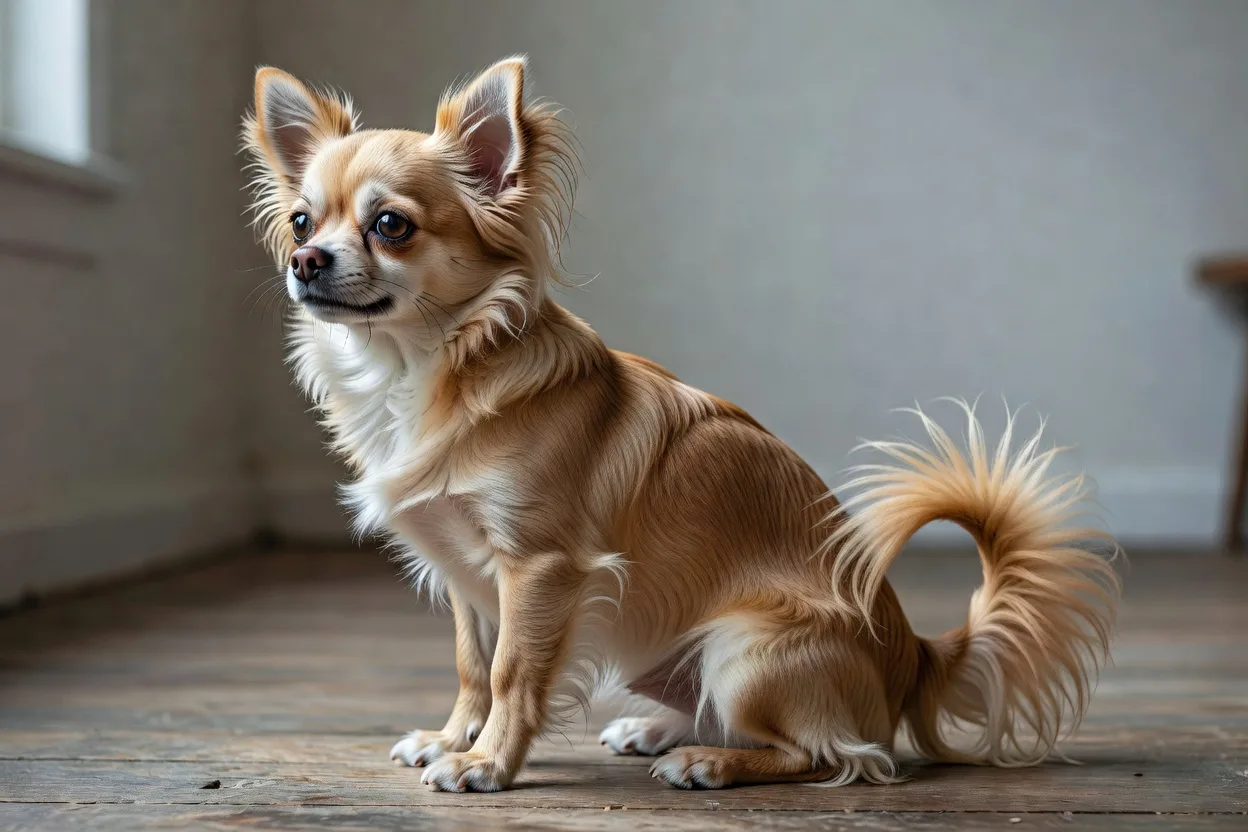
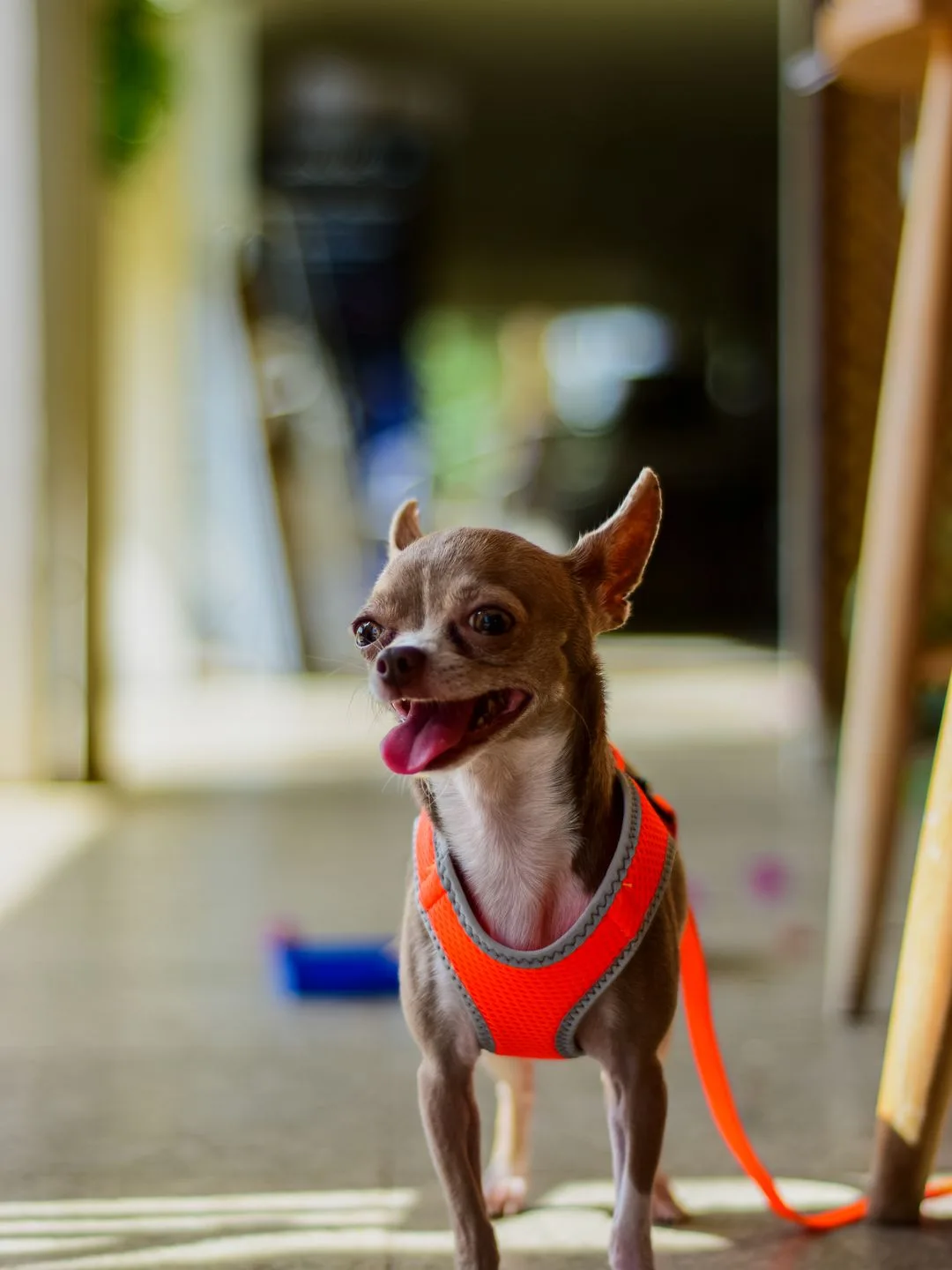
Read that right column again and you have your answer. The feathered ears, the plume tail, the ruff, the trousers: that combination is what people mean when they say fluffy. The standard just calls it the long coat, and The Kennel Club in the UK describes it in near-identical terms. Our long-haired chihuahua guide goes deeper on living with that coat day to day.
Why a smooth-looking puppy can still turn fluffy
This is the part that surprises people, and it is the reason the question keeps getting asked.
Coat length in dogs is governed largely by the FGF5 gene, and the long coat is recessive. A chihuahua needs two copies to grow one. That single fact has two consequences worth understanding. First, two smooth-coated parents who each quietly carry the gene can produce a long-coated puppy, which is why a litter can surprise its own breeder. Second, and more usefully for you: long-coated puppies are essentially born looking smooth. The plume is not there at eight weeks. It arrives slowly, and depending on the individual dog, a coat can keep filling in well past the first birthday.
So if you brought home a chihuahua who looked sleek and is now sprouting feathering behind the ears, nothing has gone wrong and nobody misled you. You have a long coat that took its time. Breeder and owner accounts of exactly when the coat finishes vary quite a bit, and there is no tidy published figure to point at, so treat any confident month-by-month timeline you read online with mild suspicion.
The wire-haired chihuahua question
There is no wire coat in the chihuahua. Not in the AKC standard, not in the Kennel Club standard, not anywhere the breed is formally described. The variety does not exist.
What does exist is a scruffy, bristly little dog who looks like a chihuahua wearing a terrier's beard, and those dogs are almost always mixes. Cross a chihuahua with a wire fox terrier or a similar coat type and you get precisely that texture. The dog can be excellent company. It is simply not a wire-haired chihuahua, because that is not one of the things a chihuahua comes as. Our guide to chihuahua mixes covers what those crosses actually inherit.
When "fluffy chihuahua" is not entirely a chihuahua
A fair share of the fluffiest dogs labeled chihuahua online are part something else, most often pomeranian. The cross is common enough to have earned a portmanteau, and it produces a genuinely poufy, round-coated dog that a long-coat chihuahua does not quite match. A purebred long coat is silky and flat to slightly wavy, with the volume concentrated in the ruff, ears, tail, and trousers. It is elegant rather than spherical.
None of this makes a mixed dog worse. It matters only if you are paying purebred money, or expecting adult size and coat to land somewhere specific. If a seller cannot tell you which coat varieties the parents carried, that is worth noticing, in the same spirit as the invented size labels covered in our piece on teacup, micro, and mini.
What the fluffy coat actually costs you
Long coats are not high-maintenance by spaniel standards, but they are not free either. Expect regular brushing to keep the ruff and the feathering behind the ears from matting, more attention to the trousers and tail after wet or muddy walks, and a real shedding season rather than the imaginary hypoallergenic version some listings promise. Both varieties shed. The long coat simply leaves longer evidence.
One rule worth holding onto: resist shaving a long coat down for summer. The coat regulates temperature in both directions, and shaved chihuahua coats can grow back patchy. Our grooming guide covers the brushing routine, and the coat you end up with is independent of color, so the full palette in our colors and markings guide applies to smooth and long alike.
Frequently asked questions
Is a fluffy chihuahua a real breed?
No. Fluffy is a descriptive word, not a recognized variety. The AKC standard recognizes two coats, smooth and long, and the dog people call fluffy is a long coat. Any breeder pricing "fluffy" as a rare separate type is inventing a category.
Can two short-haired chihuahuas have a fluffy puppy?
Yes. The long coat is recessive, so two smooth-coated parents who each carry a copy of the gene can produce long-coated puppies. Neither parent needs to look fluffy for the puppies to become so.
At what age does a chihuahua get its long coat?
Long-coated puppies look smooth at first and develop the ruff, feathering, and plume tail gradually, often continuing to fill in past their first birthday. There is no reliable fixed timetable, and individual dogs differ, so a sleek six-month-old may still be a long coat in progress.
Are wire-haired chihuahuas purebred?
No. No breed standard recognizes a wire coat in the chihuahua. Dogs with that bristly texture are mixes, typically involving a wire-coated terrier.
The practical takeaway is short. There are two coats, the fluffy one is the long one, it is recessive, and it can show up in a litter that had no visible fluff in it. Whether you get one is largely a question of genetics you cannot see from the outside, which is a mildly unsatisfying answer, and also the true one.
Sources
- Official Standard of the Chihuahua, American Kennel Club
- Chihuahua (Long Coat) Breed Standard, The Kennel Club
- Coat Length, Veterinary Genetics Laboratory, UC Davis
- Teacup Statement, Chihuahua Club of America

No comments yet
Leave a comment