
Search for a teacup chihuahua and you will find breeders, price tiers, waiting lists, and a great deal of confidence about a category that no kennel club anywhere has ever recognized. Teacup, micro, mini, pocket, and tiny toy are not varieties of the breed. They are adjectives that got promoted to nouns and then to invoices. The dogs sold under them are real, frequently lovely, and occasionally fragile; the classification is fiction. Here is what the paperwork says, and what the label does not buy.
Quick answer: No kennel club anywhere recognises teacup, micro, mini, pocket, or tiny toy as a chihuahua variety. The AKC standard gives the breed exactly one number, weight not to exceed six pounds, with no floor, no bracket, and no sub-class for the small end. There is no definition of teacup, which is rather the point: sellers apply it anywhere from two to four pounds. Small is not a disease, but breeding deliberately for extreme smallness is the concern, and the premium buys a word that appears on no registration document.
What the standards actually recognize
The American Kennel Club standard gives the breed exactly one number: weight not to exceed six pounds, with anything heavier disqualified in the ring. There is no floor, no bracket, no sub-class for the small end. Britain's Royal Kennel Club standard keeps the same six-pound ceiling but adds something the marketing rarely quotes: a preferred weight of four to six pounds. The only major standard that expresses a preference about size prefers the top half of the range.
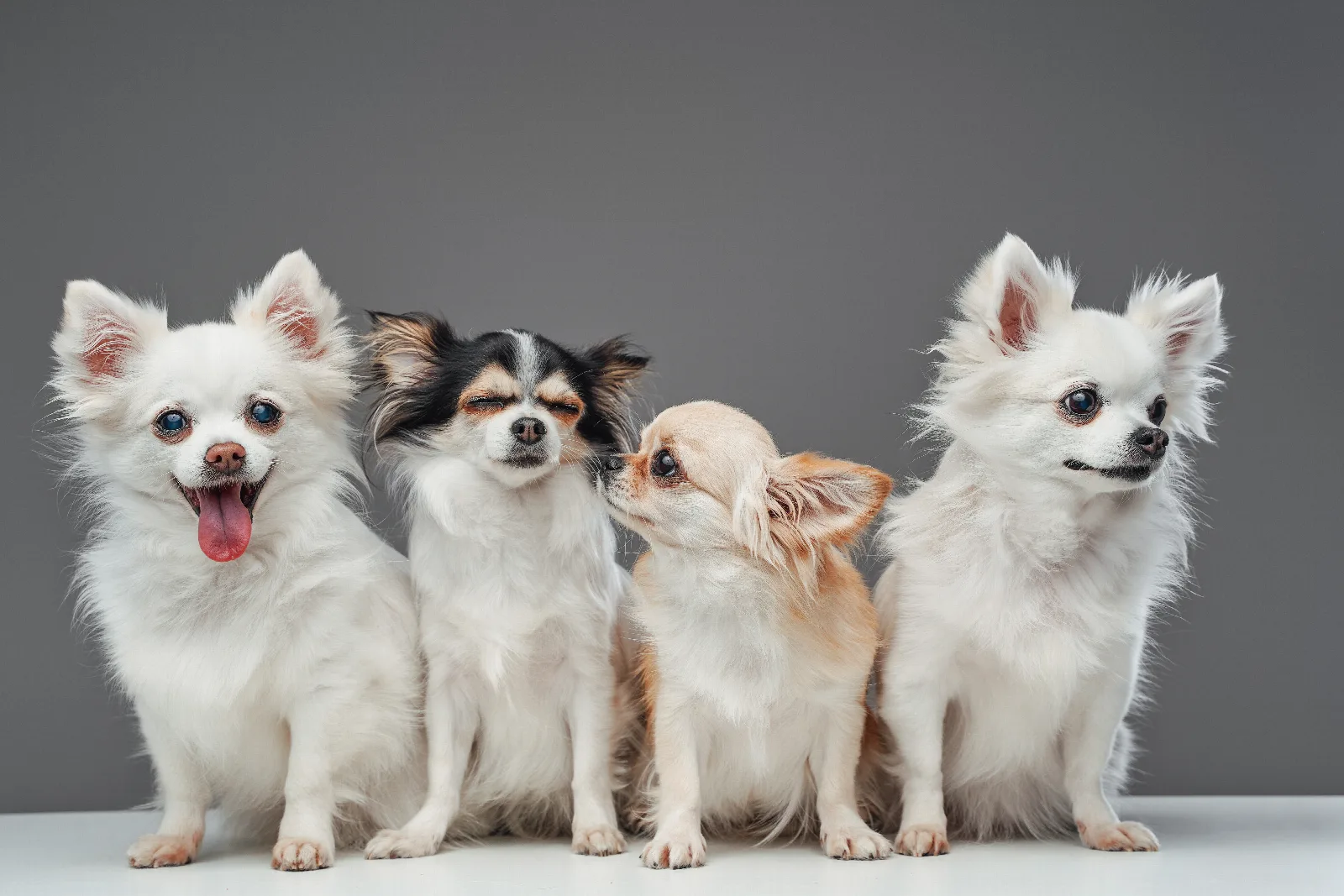
The one official division inside the breed is coat. Smooth and long, as our types guide lays out, and that is the entire list. The Chihuahua Club of America, the breed's parent club in the United States, states that it "does not endorse nor condone the use of any of these terms," and notes that the standard does not categorize chihuahuas by size at all. A two-pound dog and a five-pound dog from the same litter are both, on paper, chihuahuas. One is simply smaller, which is how siblings work.
Where the labels came from
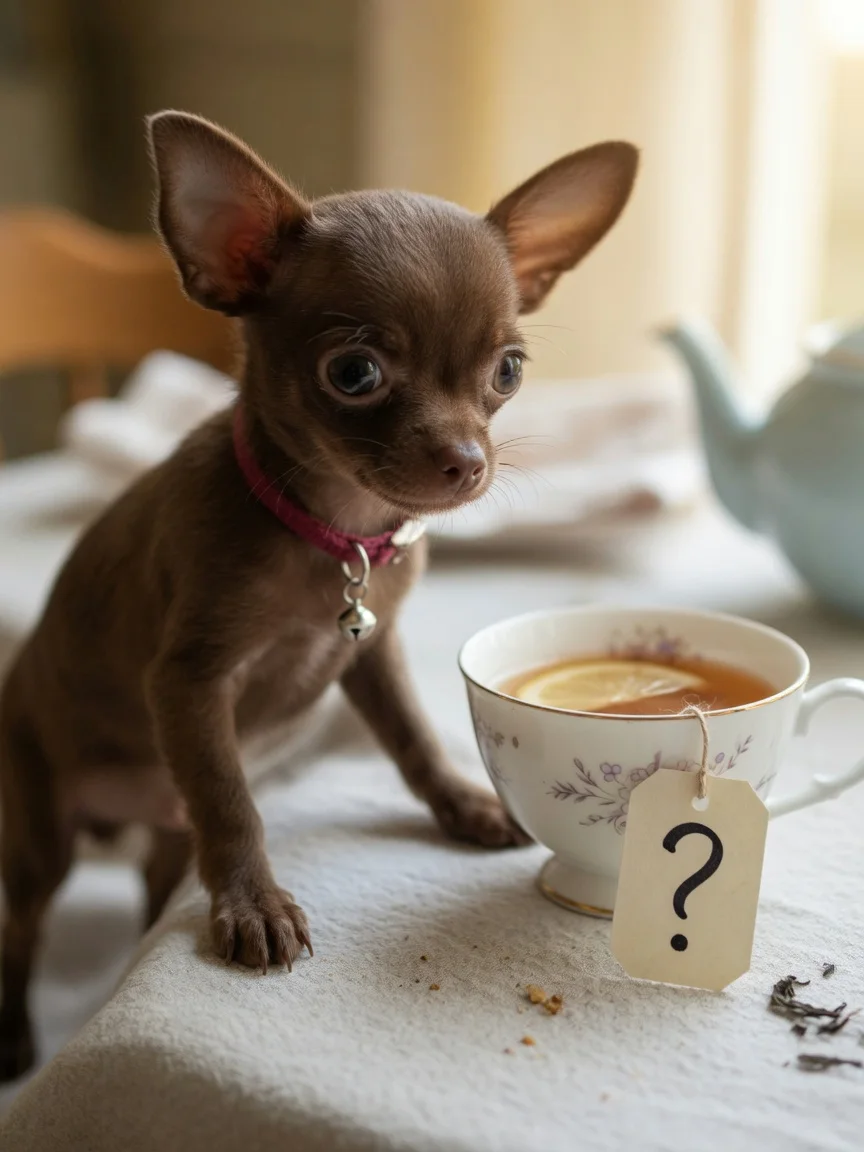
Every litter produces variation, and now and then a puppy stays noticeably smaller than the rest. That puppy has always existed. What changed is that somebody worked out it could carry a premium. The parent club's objection is specifically commercial: the terms are used to convince buyers that a smaller puppy is worth more money, which the club says it is not, and to dress an ordinary small dog up as something rare.
Two practical consequences follow. First, no registry issues a teacup pedigree, so the word lives in the advertisement and nowhere in the paperwork. Anyone charging extra for it is charging you for a font choice. Second, the label forecasts nothing. Weight at eight weeks is a weak predictor of adult weight, and the puppy sold at a premium as a micro routinely turns up at five pounds a year later, a pattern our size guide and cost guide both track. The refund policy on a broken adjective is, as a rule, nonexistent.
The health arithmetic of very small dogs
Here the topic stops being a vocabulary dispute. Selecting deliberately for the extreme low end of a breed that already sits at the small end of the species compounds known toy-breed problems, and it is worth being specific rather than dramatic about them.
Blood sugar comes first. VCA Animal Hospitals lists inadequate nutrition in toy-breed puppies among the causes of hypoglycemia, and the signs it describes, weakness, collapse, disorientation, tremors, and sometimes seizures, call for a veterinarian the same day rather than a night of watching. Very small puppies need frequent meals, and our blood sugar guide covers the routine. Teeth come second.
The Merck Veterinary Manual names toy breeds as a risk group for periodontal disease and identifies crowding and malocclusion as plaque-retentive risk factors, occasionally severe enough to warrant selective extraction. A chihuahua is expected to carry the same adult tooth count as a retriever, per our dental guide, and shrinking the jaw does not reduce the number.
Then the skull. The molera, the soft spot that persists in many chihuahuas, is a breed-associated feature rather than a diagnosis. VCA notes that most open fontanelles are genetic, are not associated with hydrocephalus, and belong to dogs who go on to live normal lives, with a theoretical but uncommon vulnerability to a blow on the head.
Our molera guide handles the distinction properly; a dome-shaped skull paired with neurological signs is a veterinary question, not a breeder's selling point. Add the plain physics of a two-pound animal living in a house scaled for humans, and the case against chasing the smallest puppy in the listing assembles itself.
Buying the dog instead of the adjective
None of this is an argument against small chihuahuas. Plenty of healthy dogs weigh three pounds because that is where they landed, and the parent club's own guidance allows that very small puppies can be perfectly healthy while cautioning buyers about the extra care they may need. The argument is against paying for a size claim and reading it as a quality claim.
Practically, then. Ask the adult weights of both parents and meet the dam in person. Ask what health testing was done, then ask to see it. Ask what feeding schedule the breeder uses for the smallest puppies in a litter, because a good breeder has a detailed answer ready and a bad one changes the subject.
Decline anyone who prices by the ounce, guarantees an adult weight, or releases puppies before eight weeks, later still for the tiniest, who absorb the stress of a move worst. Then book a veterinary exam in the first week, before the small stuff becomes the expensive stuff. The market for very small dogs has a history, and the 2000s purse-dog boom is where most of the demand, and the labels, came from.
Frequently asked questions
Is a teacup chihuahua a real breed or variety?
No. No kennel club recognizes teacup, micro, mini, pocket, or tiny toy as a chihuahua variety, and the Chihuahua Club of America objects to the terms outright. The only official division inside the breed is coat type, smooth or long. A dog advertised as a teacup is a chihuahua who happens to be small, with an extra word attached.
How small is a teacup chihuahua supposed to be?
There is no definition, which is rather the point. Sellers apply the word anywhere from two to four pounds, and sometimes to puppies who later settle at five or six. Because no standard sets a minimum weight, the claim cannot be checked against anything, and adult size is genuinely hard to predict from an eight-week-old puppy.
Are very small chihuahuas less healthy than larger ones?
Small is not a disease, and many small chihuahuas are perfectly robust. Breeding deliberately for extreme smallness is the concern, because it amplifies toy-breed tendencies such as low blood sugar in puppies, dental crowding, and physical fragility, and it tends to attract sellers who skip health testing. Judge the breeder rather than the ounces.
Should I pay more for a smaller chihuahua puppy?
No. The premium buys a word that appears on no registration document. Spend the difference on a breeder who health tests, keeps puppies long enough, and can describe the feeding routine for a tiny puppy without improvising.
The breed has two official flavors and both of them are about hair. Anything sold as smaller than a chihuahua is either a marketing decision or an accident of the litter, and only one of those is worth money. Buy the parents, the health testing, and the honest conversation; if the dog you bring home weighs three pounds, that is a fact about her rather than a category she belongs to.

No comments yet
Leave a comment