
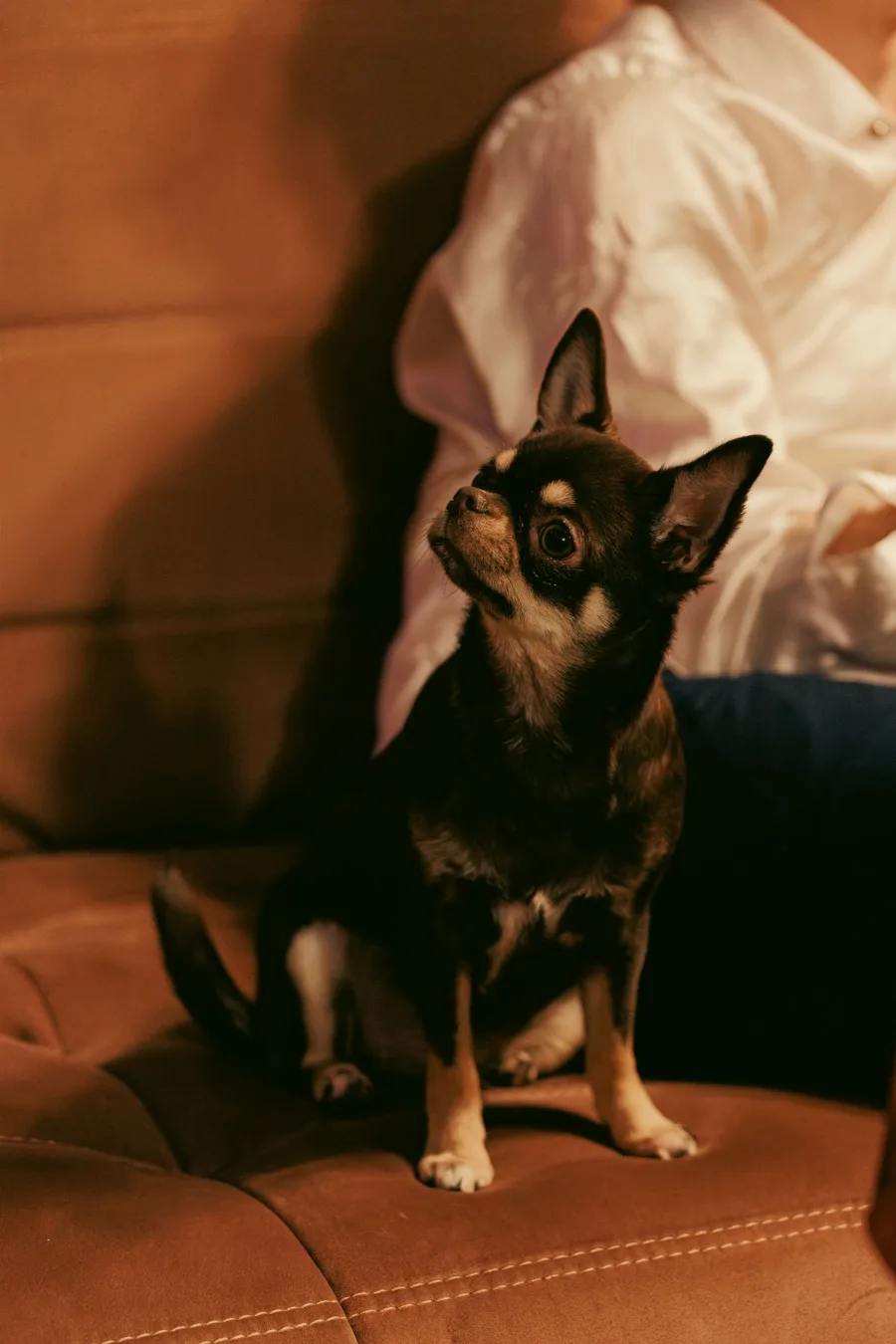
Gidget, the female chihuahua who played the Taco Bell Chihuahua in the "Yo quiero Taco Bell" campaign, died on July 21, 2009, at 15. CBS News reported that she suffered a massive stroke late that Tuesday night at her trainer's home in Santa Clarita, California, and was euthanized; the Associated Press gave the same date and cause. She had been retired for years. The campaign ended nine years earlier, in July 2000, and the lawsuit it generated outlasted both. Here is what the record shows.
Quick answer: Gidget, the female chihuahua who played the Taco Bell Chihuahua in the Yo quiero Taco Bell campaign, was owned by Studio Animal Services in Castaic, California and worked with trainer Sue Chipperton. She played a male character; the voice belonged to actor Carlos Alazraqui. She died on July 21, 2009, aged 15, nine years after the campaign ended. Taco Bell dropped the ads in July 2000 over a 6 percent fall in same-store sales, not because of the dog.
The dog behind the voice
Gidget was owned by Studio Animal Services, an animal talent company in Castaic, California, and worked with trainer Sue Chipperton. On screen she played a male character. The voice belonged to actor Carlos Alazraqui, who told Remezcla in a 2019 interview that the mismatch was the whole idea. "It was played against type," he said. "It was this minuscule little dog with a deeper cool voice." Karin McElhatton, who owns Studio Animal Services, told CBS News: "She was a prima donna, basically. She absolutely knew when she was on camera."
The ads also gave American television three years of drilling in the breed name, a pronunciation with its own history, covered in our piece on why chihuahua is pronounced cheewawa. They drew objections while they were still running: the AP reported that the commercials "provoked some criticism from activists who felt they used Mexican stereotypes," a criticism that has followed the campaign ever since.

Why Taco Bell dropped the ads in 2000
The chihuahua did not disappear because anything happened to Gidget. On July 19, 2000, the Associated Press reported that Taco Bell had decided to drop the talking chihuahua from prominent roles in future advertising and shift its message toward low-price menu items. The same announcement moved the chain's roughly $200 million account from TBWA/Chiat Day, which had held it since 1997, back to a former agency, Foote, Cone & Belding Worldwide. Taco Bell also replaced president Peter C. Waller with Emil Brolick, a 12-year veteran of Wendy's International.
The reason sat in the quarterly numbers: sales at restaurants open at least a year had fallen 6 percent in the second quarter. "Last year's sales were flat, this year's are down," David E. Novak, then chairman of parent company Tricon, told the AP. "We recognized that some fundamental changes were necessary." Tom Carroll, chief executive of TBWA/Chiat Day, gave the agency's version in one line: "People like the dog. It's just that simple." Liking the dog and buying the food had turned out to be separate behaviors.
The lawsuit that outlasted the campaign
The legal fight was never about Gidget. It was about who invented the character she played. According to the Sixth Circuit's July 6, 2001 opinion in Wrench LLC v. Taco Bell Corp., Thomas Rinks and Joseph Shields created a cartoon character called Psycho Chihuahua, which the court described as "a clever, feisty dog with an attitude."
They showed it at a New York licensing trade show in June 1996, where two Taco Bell employees took an interest; a licensing proposal followed that November. Taco Bell hired TBWA Chiat/Day in March 1997, aired its first chihuahua commercial in the northeastern United States that July, and went national that December.
A federal district court threw the case out. The Sixth Circuit reversed in 2001, holding that an implied-in-fact contract claim survives copyright preemption because it carries an element the Copyright Act does not require: a promise to pay. A Michigan jury then found against Taco Bell in June 2003, and judgment entered for $30,174,031, a figure that grew past $42 million once interest was added, according to the Ninth Circuit's January 23, 2009 opinion. Taco Bell tried to shift that cost onto its former agency and failed. The last appellate ruling landed about six months before Gidget died.
Gidget's later work and her death in 2009
Gidget kept working after Taco Bell. CBS News reported that she appeared in a 2002 GEICO commercial and played Bruiser's mother in the 2003 film "Legally Blonde 2." She then retired. "She lived like a queen, very pampered," McElhatton told CBS News.
Fifteen falls inside the normal range described in our guide to how long chihuahuas live. Taco Bell Corp. said in a statement that Gidget would be missed: "Our deepest sympathies go out to her owners and fans."
What the campaign left in California shelters
The most durable consequence for chihuahua owners was not the catchphrase. In December 2009, five months after Gidget died, The Christian Science Monitor reported that Los Angeles-area shelters had taken in 4,700 chihuahuas over the previous year and that the breed had become the most common in California shelters. Facilities began flying dogs out of state to find homes, roughly 60 from Los Angeles to New Hampshire and 40 from Monterey County to Denver.
Animal welfare workers quoted in that reporting attributed the surge to a decade of pop-culture visibility: the Taco Bell ads, the Legally Blonde films, and celebrities carrying small dogs as accessories. That is a professional judgment, not a measured finding, and no intake form records why a dog was acquired. What is documented is the sequence shelters now plan around: a breed becomes visible, breeding and buying rise, surrenders arrive years later. That problem is covered in why so many chihuahuas end up in shelters, with the practical response in our guide to choosing a chihuahua rescue.
Frequently asked questions
Did Taco Bell end the campaign because the dog died?
No. The Associated Press reported the decision on July 19, 2000, and tied it to a 6 percent fall in same-store sales. Gidget lived another nine years, worked during that time, and died on July 21, 2009.
Was the Taco Bell Chihuahua male or female?
Female. Gidget played a male character, with the voice supplied by actor Carlos Alazraqui. The on-screen performer and the voice are separate hires, which is why the mismatch went unnoticed for three years.
How much did the chihuahua campaign cost Taco Bell in court?
A Michigan jury awarded $30,174,031 in June 2003, and interest carried the judgment past $42 million, according to the Ninth Circuit's January 2009 opinion. Taco Bell's attempt to make its former agency cover that amount was rejected on appeal.
Did the ads increase chihuahua ownership?
Shelter workers and rescue advocates have said so consistently, though the effect has never been measured directly. What is documented is the aftermath: by December 2009, chihuahuas were the most common breed in California shelters. The reputation the breed still carries, examined in our piece on the chihuahua ankle-biter myth, took shape over the same years.
Gidget worked three years, retired, took other parts, and died at 15 in Santa Clarita. Around her, the campaign produced a catchphrase that outlived it, sustained criticism over ethnic stereotyping, a lost $200 million account, a replaced president, a judgment past $42 million, and a decade of shelter intake that rescue workers still describe in the present tense. Gidget knew when the camera was on. None of the rest was hers to answer for.



No comments yet
Leave a comment