Clyde’s recovery was not a lone dramatic moment. It was the result of days of sightings, shared information, patient searching, and one tight crawl beneath a shed.
For almost a week in January 2021, a missing Chihuahua named Clyde stayed beyond the reach of searchers in Regina, Saskatchewan. People saw him. They shared locations. They set up trail cameras and snow fencing. Still, a sighting was not the same as a safe recovery.
The search ended beneath a shed near the city’s Ring Road and Victoria Avenue, where Kayla Kurcin crawled into a narrow space and pulled the little dog out.
A search built from repeated sightings
Global News reported that Clyde had been missing for nearly a week in frigid conditions. Kurcin organized a Facebook search page that grew to more than 300 members.
This was not a crowd chasing a frightened dog in every direction. The group tried to turn scattered observations into a pattern. Volunteers monitored the area, used a trail camera, and placed snow fencing as part of the effort to contain or understand Clyde’s movements.
A tip eventually placed him near sheds by a commercial area. Roughly ten volunteers gathered. Kurcin went between the structures, reached underneath, and brought Clyde out.
The physical rescue makes the memorable scene, but the preceding days explain why she was close enough to attempt it. Someone had to report a sighting. Someone had to maintain the page. People had to return, compare information, and keep watching.
Clyde was warmed and examined
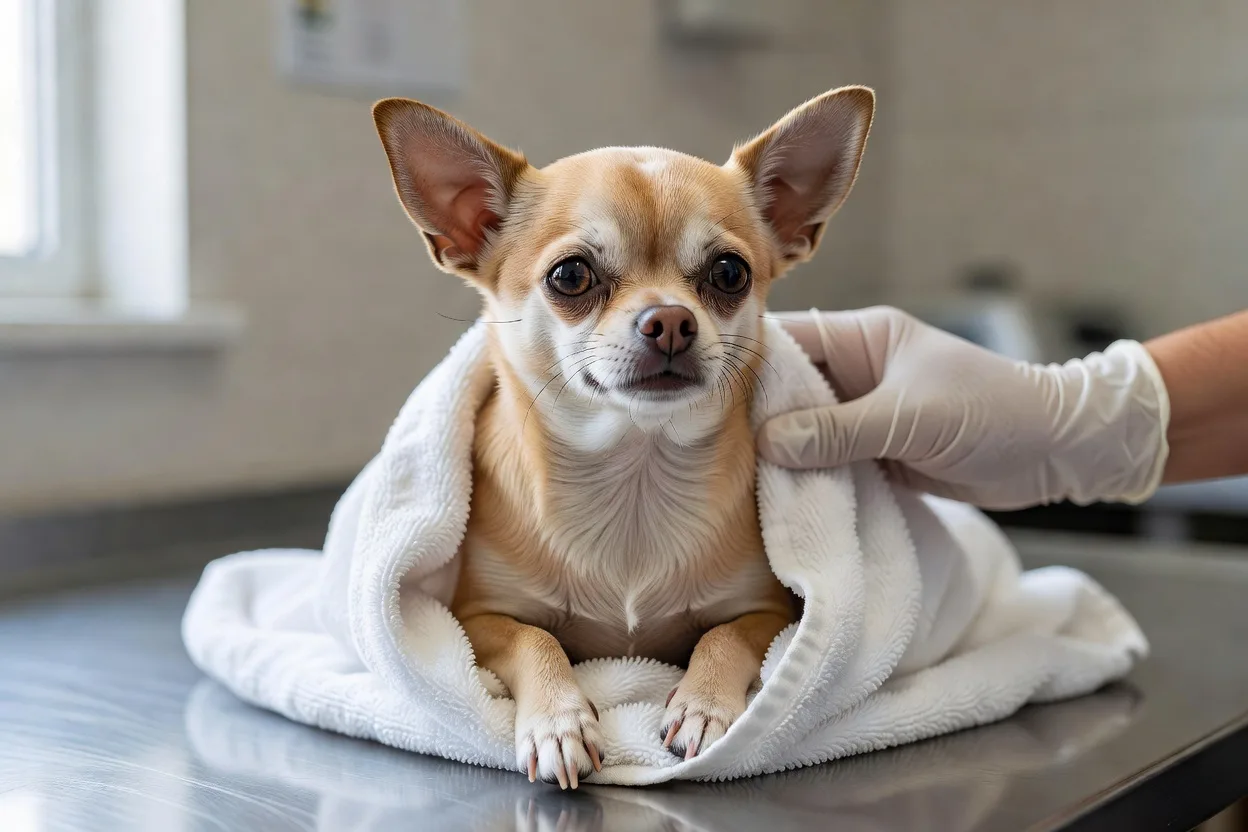
After Clyde came out, he was wrapped in a blanket. The original report says he went home to rest after a veterinary visit.
It does not provide a diagnosis, body temperature, or complete medical record. Those details should not be inferred. A small dog exposed to winter weather can face serious risk, but only the attending veterinary team could describe Clyde’s condition.
His owner declined an interview, according to Global News. This article respects that boundary and does not identify or speculate about the owner.
Kurcin’s wider effort did continue. The search page was rebranded as Kake’s Animal Rescue Mission, with the aim of helping other animals. The report also mentions Rocco, a shepherd cross used after the rescue to trace Clyde’s scent and test the idea of a search service.
What searchers can learn from the recovery
Every missing-dog case is different. Clyde’s route, hiding place, weather, and response to people cannot be turned into a universal formula. Several elements of the response are still broadly useful.
First, centralize information. One page, phone number, or coordinator reduces duplicate reports and makes it easier to map times and locations.
Second, distinguish confirmed sightings from guesses. Ask for the time, direction of travel, exact location, and a photograph when one can be obtained without pursuing the dog.
Third, avoid turning a sighting into a chase. A frightened dog may run from familiar people and can move into traffic. The safest response depends on terrain and the dog’s behavior; local animal control, a humane society, or an experienced recovery group can advise.
Fourth, use equipment deliberately. Cameras can confirm timing without putting more people in the area. Barriers and traps require permission, correct placement, frequent monitoring, and humane handling.
Prepare before a Chihuahua goes missing
A current microchip registration and visible identification can shorten the path home. The American Veterinary Medical Association emphasizes that a microchip works only when the registration information leads to the owner. Confirm the phone number after a move or carrier change.
Keep several recent photographs: full body, face, markings, and the dog beside an object that shows scale. Store the microchip number, licence, veterinary contact, and medication list where another household member can reach them.
Check gates, harness fit, and leash hardware regularly. A frightened Chihuahua can back out of equipment that appears secure when the dog is relaxed. For travel or noisy environments, discuss a double-attachment setup with a qualified trainer.
If a dog disappears, notify local shelters, animal control, veterinary clinics, and the microchip company. Search close to the escape point as well as along credible sighting routes. Ask before entering private property or installing equipment.
Winter changes the urgency
Cold exposure is an emergency risk, especially for a small dog. Searchers should contact animal-control or veterinary professionals promptly and avoid advice that delays care.
People also need protection. Night searches near roads, industrial areas, ice, and confined structures can create a second emergency. Wear visible clothing, work in pairs, tell a coordinator where you are, and do not crawl under an unstable building. Kurcin’s success does not make every tight space safe to enter.
When a dog is recovered, secure the dog before celebrating. Use a carrier, leash, or enclosed vehicle; frightened animals can bolt again. A veterinary examination is appropriate after prolonged exposure, injury, ingestion risk, or any sign of illness.
The rescue was a network, not a miracle
Calling Clyde’s recovery miraculous would erase the work that made it possible. The verified account shows a sequence: a public page, hundreds of members, sightings, equipment, a focused group at the final location, and one person able to reach the dog.
The original photographs and video remain copyrighted and are logged as reference-only. The Chihuahua images in this package are licensed illustrations and do not depict Clyde.
Clyde’s story is hopeful because it is practical. People kept sharing reliable information until the distance between “seen” and “safe” became small enough to cross.
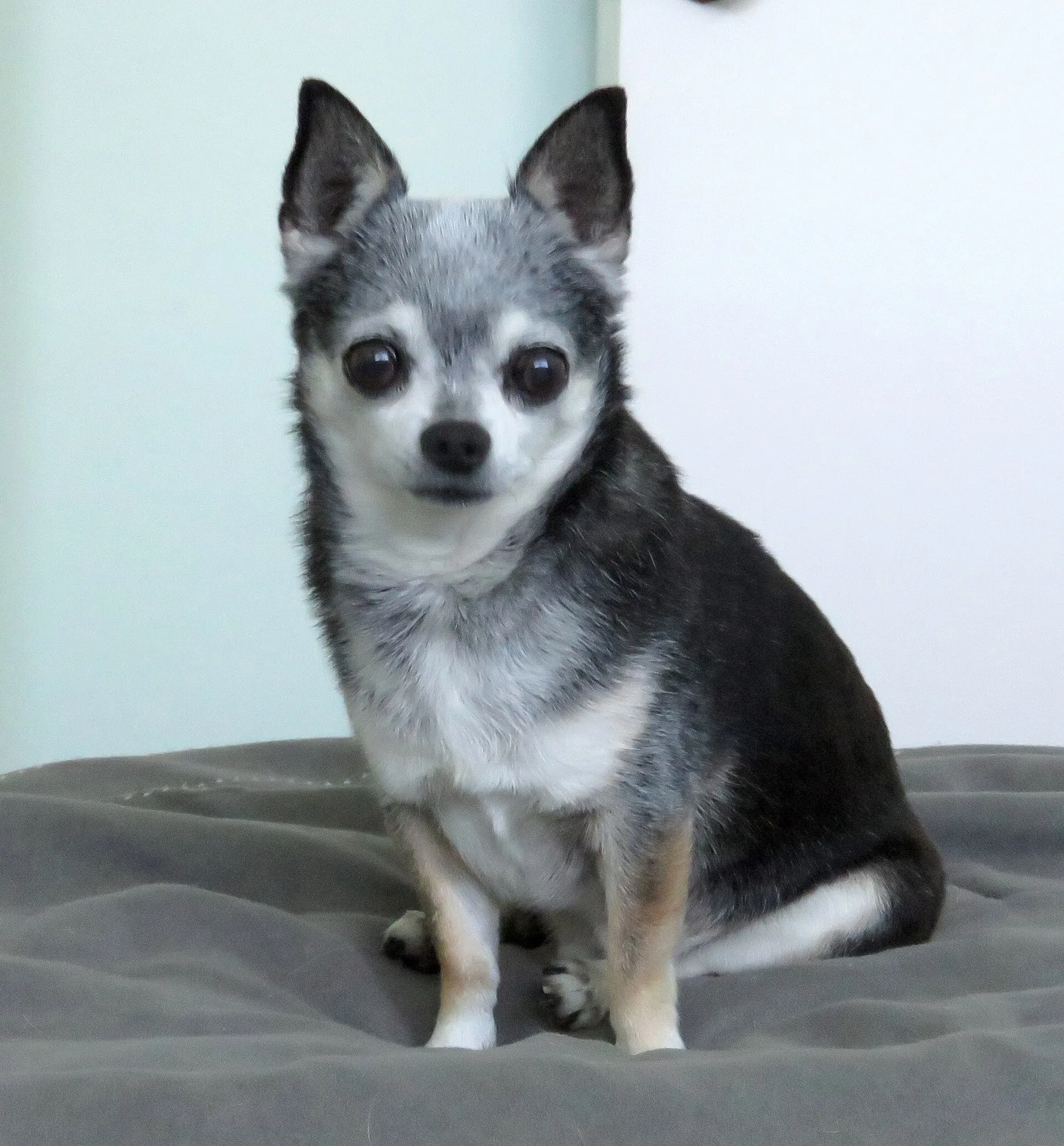
Featured photograph: znetcancel / Wikimedia Commons (CC BY-SA 4.0), via Wikimedia Commons. It is an illustration and does not depict the animals described in this article.

No comments yet
Leave a comment