Stanley’s disability was not the reason his life lacked value. His recovery shows what happens when a rescue assesses the whole dog and builds care around his needs.
In spring 2020, animal control found an approximately eight-year-old Chihuahua locked in a crate beside Route 80 in New Jersey. He could not simply stand and walk away. All four legs were severely deformed, and his weight—reported at about 21 or 22 pounds—made movement harder.
Ramapo-Bergen Animal Refuge named him Stanley and placed him with an experienced foster caregiver. Over the following months, the rescue reported supervised weight loss, swimming, mobility equipment, growing confidence, and a permanent home.
The transformation was not a miracle cure. It was a sequence of practical decisions built around the dog who was actually in front of the team.
Quick answer: Stanley the Chihuahua regained mobility after animal control found him in spring 2020, locked in a crate beside Route 80 in New Jersey, unable to stand with all four legs severely deformed at about 21 or 22 pounds. Ramapo-Bergen Animal Refuge assessed his full condition, supervised weight loss to around 10 pounds, introduced swimming, mobility equipment and foster care, then placed him in a permanent home with Kathy. The sequence emphasized practical veterinary evaluation, gradual conditioning and correctly fitted support rather than a single cure.
Rescue began with assessment
Early coverage described Stanley as frozen in fear and almost immobile. A veterinarian examined him, and the rescue considered his limb structure, weight, skin, comfort, movement, and ability to perform daily functions.
That whole-dog assessment matters. Two Chihuahuas who both drag their back legs may have different causes, pain, bladder control, skin risks, and rehabilitation potential. A wheelchair suitable for one can be unsafe for another.
Stanley’s team did not immediately put him into a cart and film the result. Reports said he first needed to lose weight and build capacity. The plan changed as his body and confidence changed.
Anyone who finds a dog unable to walk should contact animal control or a veterinarian, support the body during transport, and avoid stretching, splinting, or forcing the limbs.
Weight was a medical issue, not a joke
Coverage repeatedly called Stanley overweight. That fact should never become ridicule. Extra weight can increase effort, heat, skin pressure, and strain for a dog whose movement is already limited.
Stanley’s foster caregiver worked with the rescue on a controlled food and activity plan. Later reporting said he reached about 10 pounds. That number was right for the care team’s assessment of Stanley; it is not a target for every Chihuahua.
A veterinary weight plan uses body condition, muscle, medical history, calories, treats, medications, and safe movement. Sudden restriction can be harmful, and online feeding charts cannot account for an individual disabled dog.
Progress can be measured by comfort, stamina, skin health, muscle, toileting, and easier transfers—not only the scale.
Water gave Stanley a different way to move
The rescue reported that Stanley learned to swim during rehabilitation. Water can reduce weight-bearing and allow movement that is difficult on land, but it is not automatically safe.
Hydrotherapy should be recommended and supervised by qualified professionals. Water temperature, flotation support, entry, fatigue, breathing, ears, skin, and the dog’s fear all matter. A household pool is not a rehabilitation clinic.
Chihuahuas can tire or chill quickly. Never place a dog in water to “see if he can swim,” and never leave a mobility-impaired dog unattended near a tub or pool.
For Stanley, swimming was one part of a broader plan. It did not replace veterinary follow-up, nutrition, foster observation, or land-based support.

Wheels must fit the dog
A cart can create independence when it is correctly measured and introduced. A poor fit can rub skin, restrict shoulders, shift weight incorrectly, interfere with toileting, or allow the dog to overwork.
The dog needs a hands-on assessment and measurements taken in the posture recommended by the manufacturer or rehabilitation team. Fit must be rechecked after weight or muscle changes.
Begin with short, rewarded sessions on a level, nonslip surface. Inspect skin after every use. Stop for rubbing, swelling, distress, dragging, unusual breathing, or a change in movement.
Many dogs do not wear carts all day. They need supported rest, position changes, bedding, hygiene, and safe ways to move when the device is off. Some need diapers or bladder support under veterinary instruction.
Best Friends’ account of Blossom, another Chihuahua using a wheelchair, shows why adopters must understand the daily care rather than decide from an emotional video alone.
Foster notes made the placement stronger
Stanley’s foster caregiver could observe eating, sleep, toileting, handling, play, frustration, and affection outside a kennel. Those notes helped the rescue understand what a permanent home would need.
A special-needs foster should have written instructions, emergency contacts, equipment training, authorized veterinary providers, and a clear record of medications and daily observations.
The aim is not to make the dog perform an inspirational narrative. It is to find out whether the plan provides comfort, choice, and access to ordinary dog activities.
Adoption required preparation
Later coverage said Stanley bonded with foster caregiver Kathy and found a home after months of care. The strongest adoption was the one prepared for his established routine and equipment.
Prospective adopters of a disabled Chihuahua should ask about diagnosis, pain, prognosis, medication, skin care, bladder and bowel function, lifting, stairs, transport, rehabilitation, device replacement, insurance, and likely costs.
They should also meet the dog more than once when possible and involve their veterinarian. Compassion is essential, but sustainable care requires time, physical capacity, money, backup help, and suitable housing.
Disability does not erase play, affection, learning, or preferences. It also should not be romanticized by hiding the work.

Stanley’s story is about access
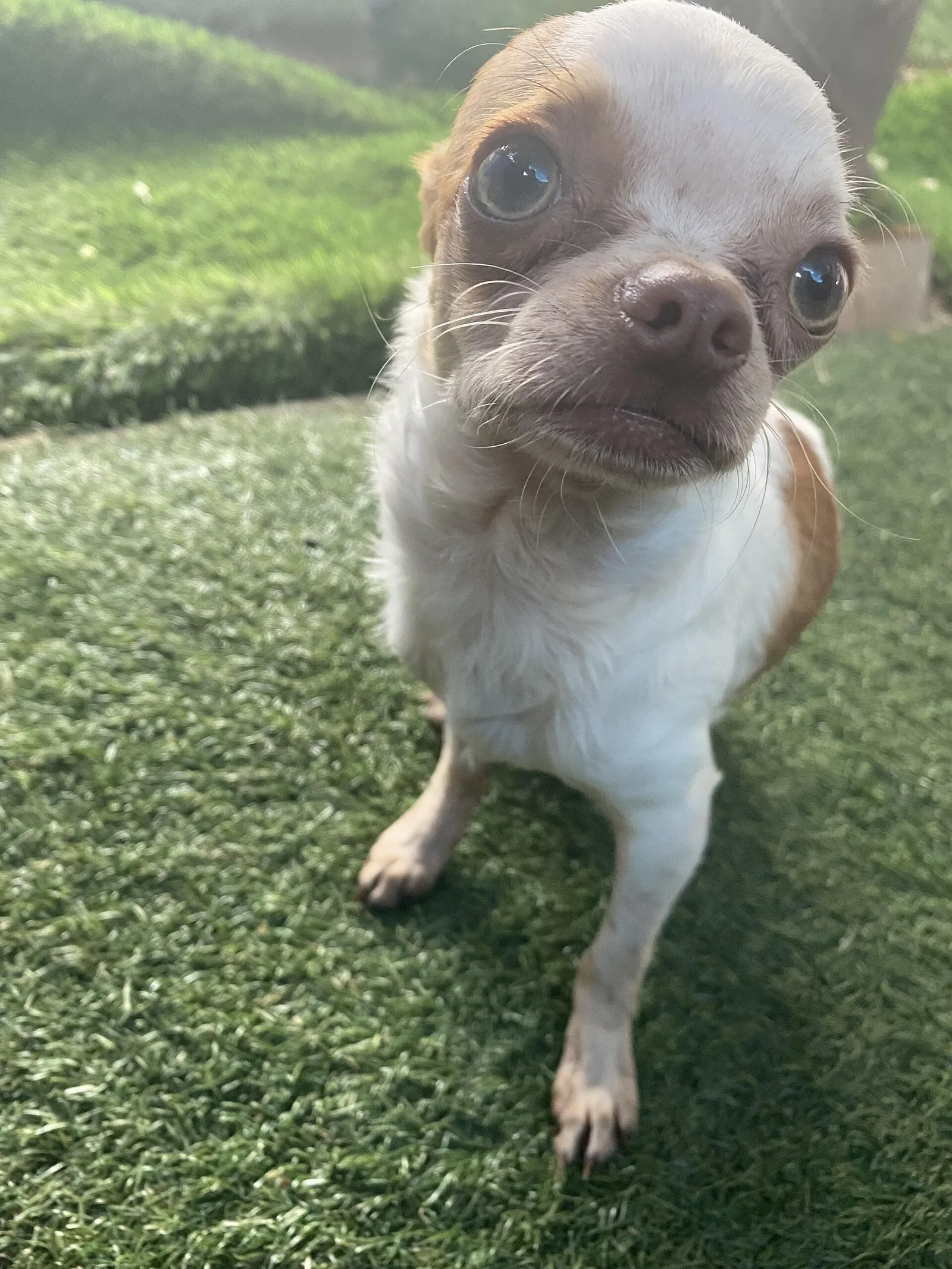
The original photographs belong to the rescue and news licensors and remain reference-only. The licensed images in this package do not show Stanley.
His progress—from crawling, to swimming, to moving with wheels—was described by the people caring for him. It was not proof that every disabled dog will follow the same path.
Stanley received something more useful than a generic happy ending: assessment, an experienced foster home, gradual conditioning, correctly timed equipment, and a placement built around his abilities.
Mobility care succeeds when the dog can do more of what matters to him, in comfort and with dignity.
Featured photograph: Rotemushy / Wikimedia Commons (CC BY-SA 4.0), via Wikimedia Commons. It is an illustration and does not depict the animals described in this article.

No comments yet
Leave a comment