Amadeus did not hold a cue, call a bank shot, or settle a bar tab. He did clear a pool table with his paws, and contemporary reporting explains how.
The black Chihuahua on the pool table has no cue and no interest in geometry. He uses his front paws to send one ball after another toward a pocket. A treat waits at the end of the routine.
That is the documented core of Amadeus’s unusual 2010 video—not proof that a dog understood billiards, but a patient piece of training that made a five-pound Chihuahua look remarkably at home on green felt.
Quick answer: No, Amadeus the Chihuahua did not play pool. The three-year-old five-pound black Chihuahua, owned by Michael and Constance Baldwin of Robin’s Billiards in Monroe, Washington, used his front paws to push balls into pockets on a pool table for treats. He cleared the table in about two minutes, with a best reported time of one minute and 17 seconds, performing the routine around five times a day, three days a week. The 2010 video gained more than 300,000 views.
The dog behind the pool-table video
Contemporary reporting identifies Amadeus as a three-year-old black Chihuahua owned by Michael and Constance Baldwin. The couple operated Robin’s Billiards in Monroe, Washington, where the dog’s routine became a local attraction.
HeraldNet described Amadeus as weighing about five pounds and standing roughly nine inches tall. He could use his paws to clear the balls from a pool table in about two minutes. His reported best time was one minute and 17 seconds.
Those numbers are funny because they sound like sports statistics. The more revealing detail is the schedule behind them. According to the local report, Amadeus performed the routine for treats around five times a day, three days a week. Repetition—not a sudden canine revelation about corner pockets—built the performance people saw online.
The videos had accumulated more than 300,000 views by October 2010, a meaningful audience in the online-video landscape of that period. Posts from Laughing Squid, The Awesomer, and Chihuahua-focused sites help confirm how quickly the clip traveled beyond Monroe.
What “playing pool” meant in practice
Amadeus’s version of pool was straightforward: move balls across the felt and into pockets using his paws. He was not shown choosing shots according to the rules, calculating angles, or competing against a person. Calling him a pool player was a playful description of a trained routine.
That distinction does not make the performance less impressive. A dog had to be comfortable on the table, understand the repeated action, work around rolling objects, and remain engaged until the table was cleared. The owners paired the behavior with rewards, turning a sequence of small actions into a complete act.
It also explains why viewers could watch the same clip and see two things at once: a tiny dog apparently dominating a human game, and a clear example of how consistent reinforcement can shape a complex-looking performance.
Why the size contrast made the clip work
A full pool table made Amadeus look even smaller. The balls were large relative to his paws, the pockets looked like hazards, and every successful push created a crisp visual payoff. No narration was required. The viewer understood the challenge immediately.
The Chihuahua’s alert posture added to the effect. The American Kennel Club describes the breed as alert and animated, but breed descriptions are not a guarantee that an individual dog will enjoy a particular trick. Amadeus’s routine reflected his own training history and comfort in that setting.
That matters because viral animal videos often invite people to generalize. One Chihuahua’s willingness to work on a pool table does not mean another should be placed on an elevated surface and expected to perform.
A good trick should still be safe
The surviving coverage focuses on the novelty of the routine, not a complete safety assessment. Anyone inspired to teach a dog a sequence of behaviors should begin at floor level on a nonslip surface. Pool tables are elevated, balls can roll unpredictably, and a small dog could be injured by a fall.
Use reward-based training, keep sessions short, and let the dog opt out. Do not withhold food to increase motivation or punish mistakes. A veterinarian should advise on physical limitations if a dog has joint, vision, balance, or back problems.
The American Veterinary Society of Animal Behavior recommends humane, reward-based methods rather than pain, fear, or intimidation. The entertaining part of a trick is the cooperation. A dog showing stress, repeated avoidance, freezing, or attempts to escape is not volunteering for the joke.
Owners can create the same satisfying “chain” without a table. A Chihuahua might touch a target, push a lightweight ball across a mat, place a toy in a box, or move between marked stations. Each step can be taught separately and linked only when the dog is comfortable.
The record is charming enough without exaggeration
Amadeus did not need a fictional tournament, a championship title, or an invented rivalry to be memorable. The verified details already have rhythm: a five-pound Chihuahua, a Washington billiards room, a paw-only routine, a table cleared in roughly two minutes, and a reward at the finish.
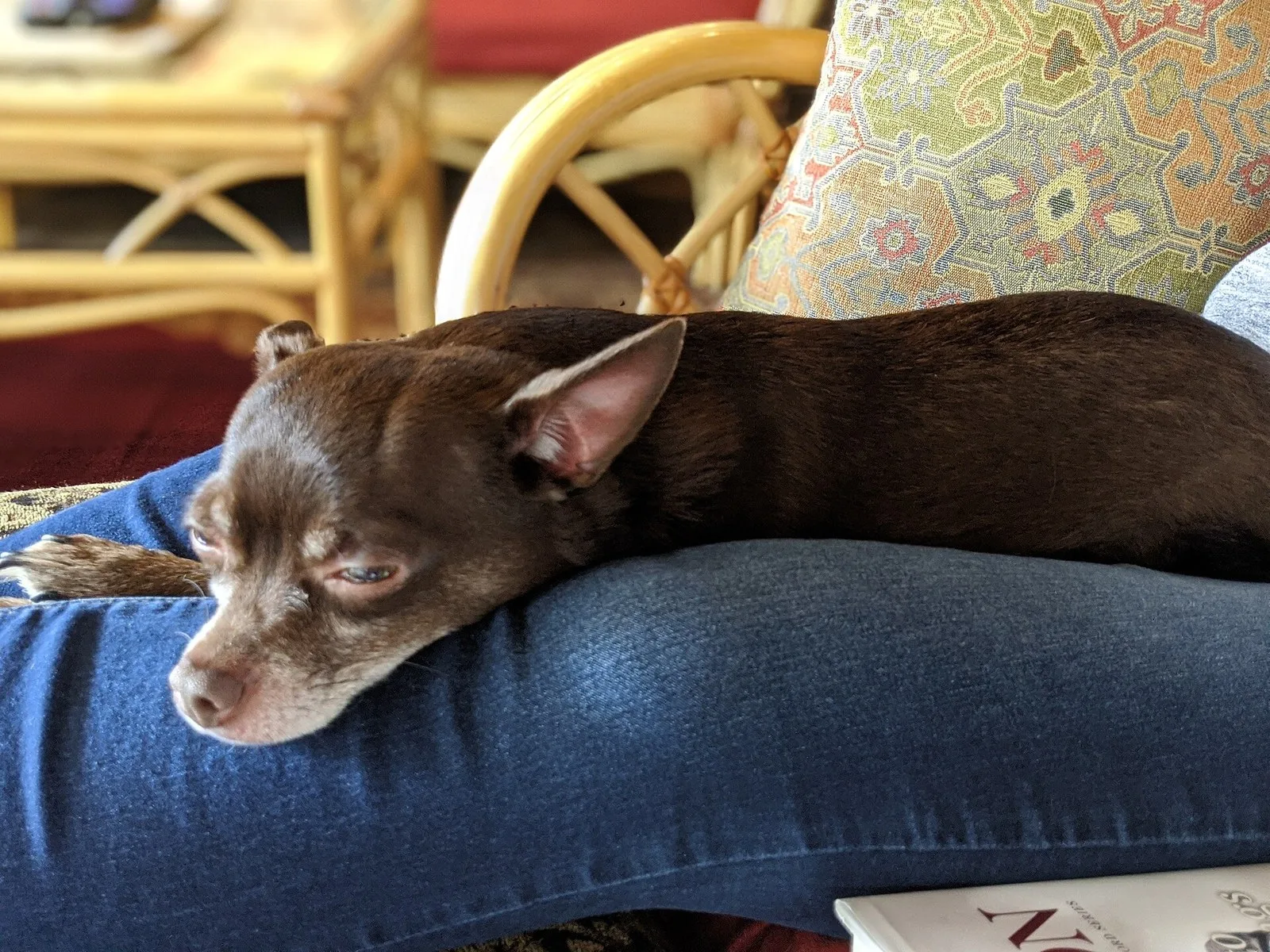
The original video should be embedded only from its canonical platform if permission and platform terms allow. Event photographs remain copyrighted and should not be copied from news pages. The reusable images in this package are illustrative, not pictures of Amadeus.
Fourteen-plus years later, the clip still works because the premise is visible in a single frame. The little dog looks at the enormous table, starts moving the balls, and keeps going until the job is done.
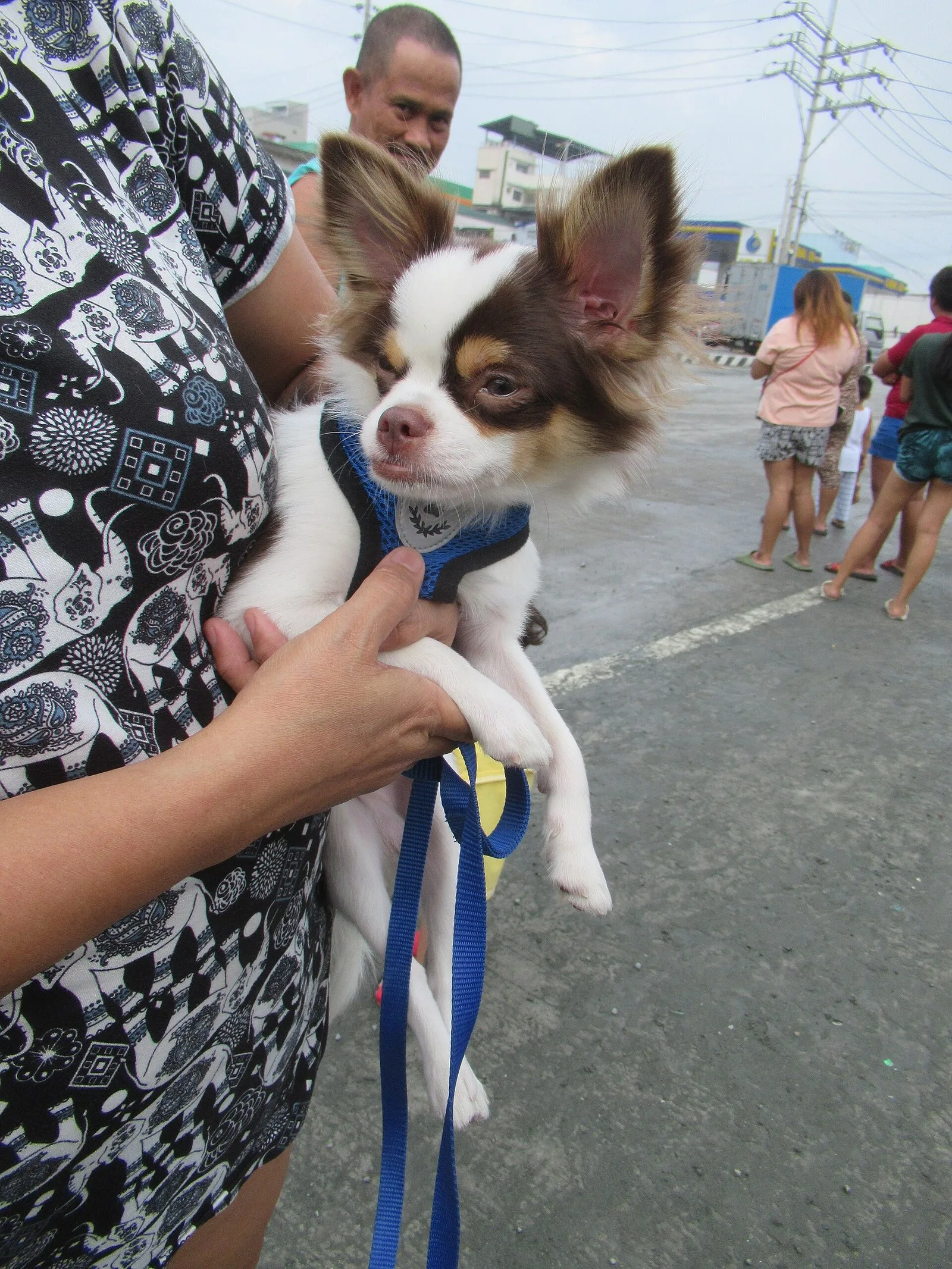
Featured photograph: ChihuahuaLover95 / Wikimedia Commons (CC BY-SA 4.0), via Wikimedia Commons. It is an illustration and does not depict the animals described in this article.

No comments yet
Leave a comment