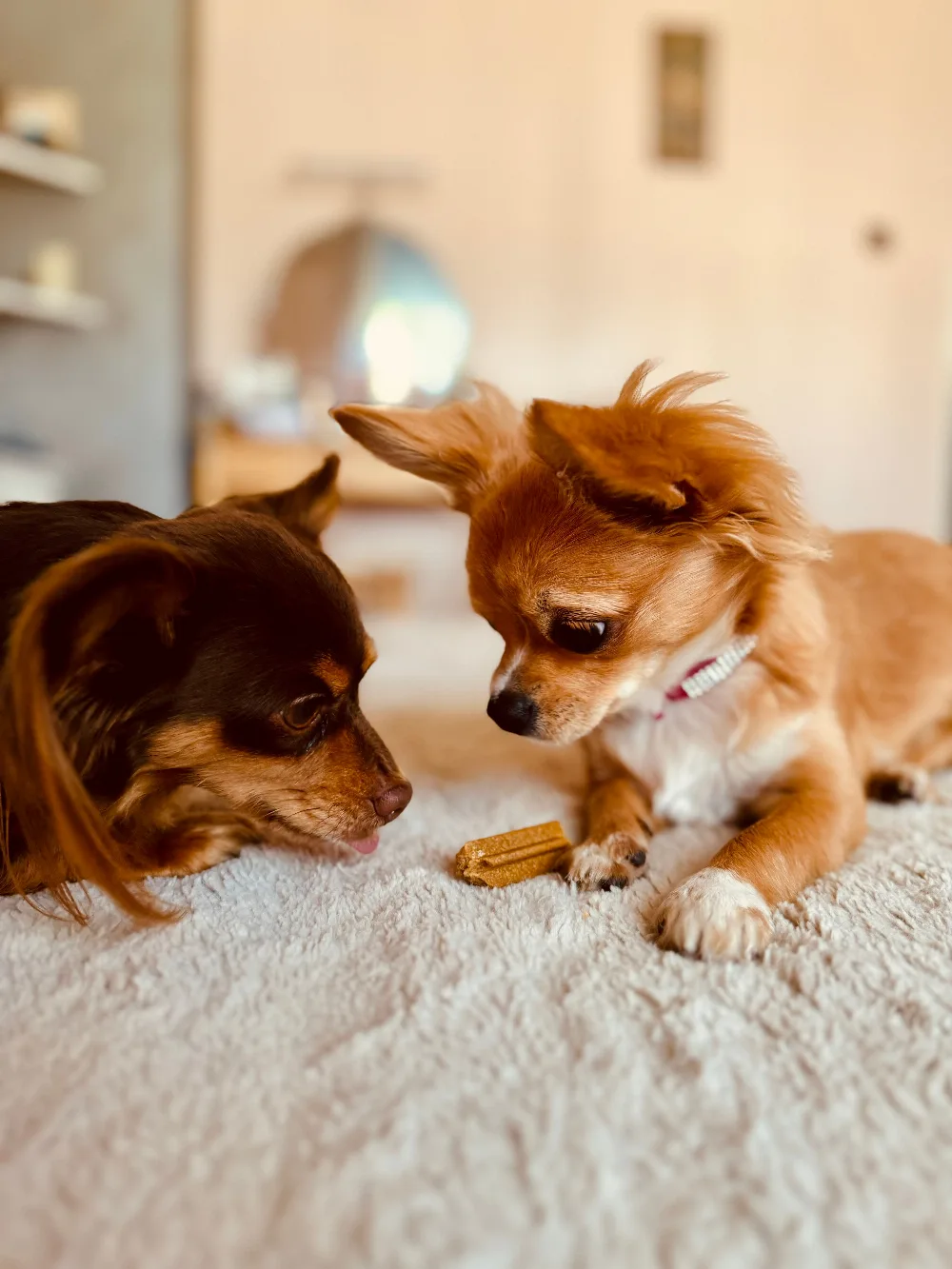
When a chihuahua starts doing something unwelcome, the useful question is not how do I stop this. It is what the behavior is doing for her, and whether she is comfortable while she does it. Behavior is information, not a verdict on character, and the route to a calmer household usually runs through a veterinary check and a change to the environment before any training starts.
Quick answer: When a chihuahua starts doing something unwelcome, the useful question is not how to stop it but what the behaviour is doing for her, and whether she is comfortable while she does it. Behaviour is information rather than a verdict on character. The step almost everyone skips comes first: medical causes have to be excluded before a behavioural diagnosis is confirmed, and pain in particular drives a great deal of what gets read as temperament. Then change the environment before starting any training.
Rule out pain before you call the dog difficult
This is the step almost everyone skips. The Merck Veterinary Manual's overview of behavioral problems in dogs is direct about it: medical causes have to be excluded before a behavioral diagnosis is confirmed, and pain in particular is an important risk factor.
The research it summarizes found signs of pain in a wide share of dogs seen for behavior concerns, from roughly a quarter to a large majority depending on the population studied. That range says nothing about your individual dog, but its direction is consistent, and it matters for a breed carrying known risks of patellar luxation and dental disease.
The problems owners actually report
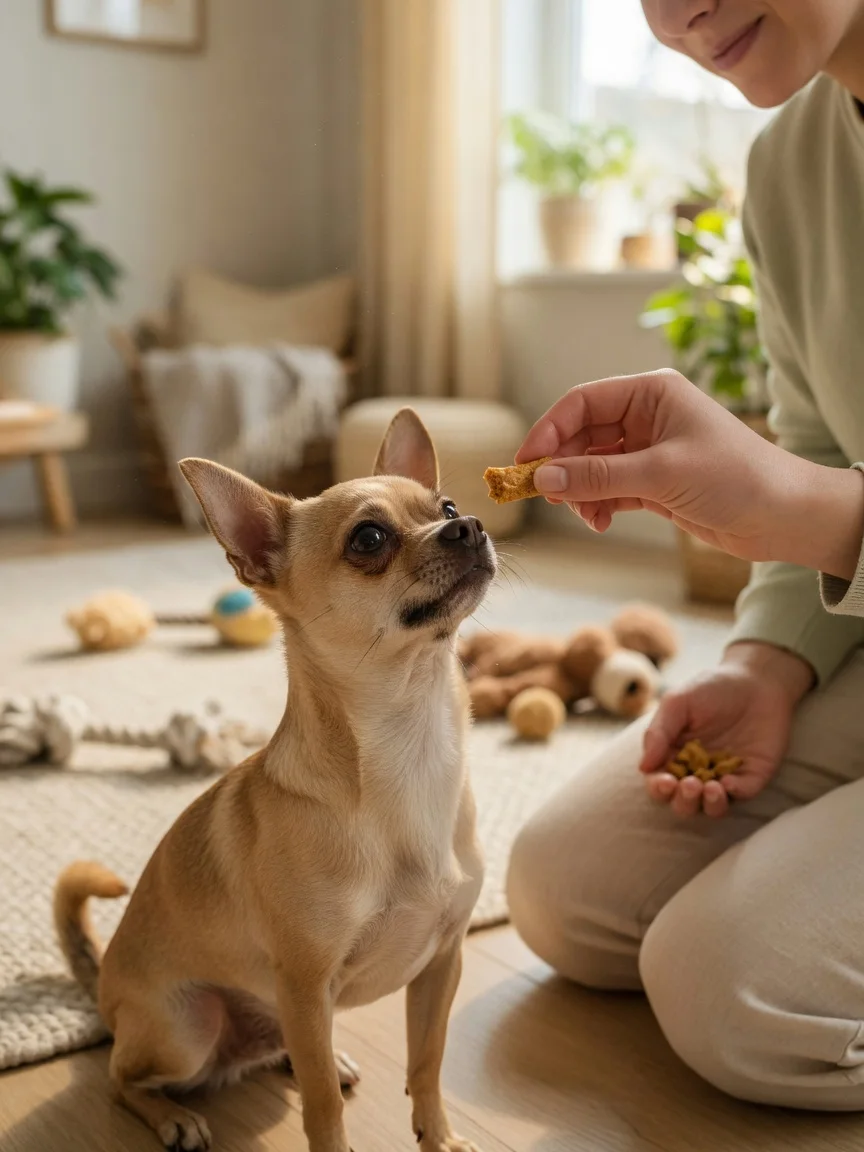
The ASPCA's guide to common dog behavior issues covers most of what turns up in chihuahua households: barking, chewing, food guarding, mouthing and biting, separation-related distress, and aggression. Its recurring instruction is worth more than any technique list, which is to identify the trigger and the function before choosing a response. Four patterns cover most of what owners describe.
Barking at the door and the window. Stated plainly, the mechanism appears: she hears something, she barks, the thing eventually goes away. That last clause is the whole problem, because departure reliably follows the barking and the behavior gets paid every time. Blocking the window view stops the rehearsal while you teach an alternative, and the barking guide carries the protocol.
Growling or snapping during handling. A growl is information, not a character flaw, and punishing it removes the warning while leaving the fear where it was. Most handling aggression in small dogs traces back to fear, rough previous handling, or discomfort, so the medical check comes first and consent-based handling second, as in the biting guide.
Indoor soiling and marking. These look identical on the floor and are not the same behavior. Full bladder emptying on absorbent surfaces points to an incomplete house-training history, a schedule that outlasts a very small bladder, or a medical cause. Small deposits on vertical objects, often after a visitor or a move, is marking, and it answers to supervision, enzymatic cleaning, and trigger reduction rather than to scolding. The marking guide separates the two.
Distress when left alone. Barking, pacing, drooling, or refusing food while you are out is neither spite nor boredom. It is panic, and it is one of the few behavior problems where medication prescribed by a veterinarian meaningfully speeds the training rather than replacing it. Gradual absence work is the core of the separation anxiety guide. Jumping and begging sit in a gentler category, closer to a pay problem, and the jumping guide covers both.
Management first, then reward-based training
Management means arranging the environment so the behavior cannot be practiced: a baby gate, a covered window, a closed door at dinner, a walk at a quieter hour. It is not failure. Every repetition is a rehearsal that makes the next one more likely, so preventing rehearsals while you teach the replacement is simply efficient.
Then teach the replacement in observable terms. Replace stop barking at the door with go to the mat and stay there for twenty seconds while I open it. Vague goals cannot be measured; specific ones can. Raise one dimension at a time, duration or distance or distraction, and keep sessions to a few minutes. Pay in whatever she actually values: food, sniffing, play, or distance from the thing that worries her. For a fearful chihuahua, distance is usually the strongest currency you have.
What not to use is the least ambiguous part of this subject. The American Veterinary Society of Animal Behavior's position statements recommend reward-based methods for all training, including the treatment of behavior problems, and advise against aversive tools and physical or psychological punishment. In a 2020 PLOS ONE study, Vieira de Castro and colleagues observed 92 companion dogs from seven training schools and reported more stress-related behaviors and larger post-training rises in salivary cortisol among dogs from the schools using mostly aversive methods.
The design was quasi-experimental rather than randomized, so it does not establish cause alone. At four pounds the practical arithmetic is blunter anyway: a correction firm enough to suppress a behavior in a chihuahua is usually firm enough to teach her that hands are worth avoiding.
Progress rarely arrives as a clean switch. Look for a shorter burst rather than no bark, faster recovery once the trigger passes, a longer tolerable distance. Write down one number a week, because weekly numbers show trends that daily impressions hide.
When to involve a veterinarian or a professional
Book a veterinary appointment when behavior changes suddenly, when touching one area produces a reaction, when an adult loses house-training, or when the change arrives with appetite, sleep, or movement changes. Anything new in an older chihuahua belongs on that list too.
Ask for a referral to a veterinary behaviorist or a qualified reward-based trainer when a bite has connected, when she cannot stay below the threshold at which she can still eat and think, when the behavior is worsening despite consistent work, or when children share the home. Credentials vary enormously, so ask a trainer what they would do if your dog got something wrong. That answer is the informative one. Mounting is one of the behaviours owners most want to stop and least need to panic about, and our guide to chihuahua humping works through the arousal, play, and stress drivers behind it.
Frequently asked questions
Are chihuahuas more prone to behavior problems than other breeds?
They are more prone to going untrained, which is a different thing. Small dogs are easy to manage physically, so the barking, jumping, and handling issues that would be addressed in a large breed often get carried for years instead. The behaviors themselves are ordinary responses to ordinary reinforcement.
How long does it take to change a chihuahua's behavior?
Genuinely unpredictable, since it depends on the behavior, how long it has been rehearsed, and how consistently the environment is managed. Simple pay problems such as begging often shift within weeks. Fear-based and separation-related behavior is measured in months, with improvement rather than a promise as the target.
Do noise interrupters or spray bottles work?
They frequently stop the behavior in the moment, which is why owners reach for them, and they do nothing about the emotion underneath. Used on a fearful chihuahua, they add a second unpleasant thing to a situation she already dislikes and can suppress warning signals you need to see. Interrupt with a trained cue instead, then reward the alternative.
Behavior problems are rarely mysteries. They are usually a medical issue, a rehearsal your setup permits, or a reward your household delivers without noticing. Work through them in that order, take one behavior at a time, and give the plan weeks rather than days. The dog at the end is not a quieter replacement. She is the same dog, working from better information about what pays.

No comments yet
Leave a comment