
A memorial story can be true and still be unverifiable. Separating what is documented from what is repeated is the only way to retell one honestly.
A story that cannot be traced to its original source can still be repeated honestly, provided the retelling says so. The alternative is to launder a family’s memory into a fact it was never able to support.
Surviving online accounts describe a tiny Chihuahua named Pockets who alerted her owner during a stroke and, about three years later, moved between the owner’s young granddaughter and a rattlesnake, was bitten, and died.
Those accounts point back to a local 12 News report. The original broadcast or article could not be recovered during this review. That means the sequence can be reported only with clear attribution, not upgraded into an independently verified eyewitness narrative.
The careful version honors the dog without inventing certainty.
Quick answer: No, the Chihuahua snakebite story cannot be independently verified. Surviving accounts report that a tiny dog named Pockets alerted her owner during a stroke and, about three years later, placed herself between the owner’s young granddaughter and a rattlesnake, was bitten, and died. Those accounts trace to a local 12 News report that could not be recovered. The sequence can be reported only with clear attribution and the word “reportedly,” without adding unconfirmed details. The careful version honors the dog without inventing certainty.
What the surviving accounts say
GodTube’s retelling identifies the Chihuahua as Pockets and the owner as the owner. It says the owner was asleep when Pockets’ persistent behavior woke her during a stroke, allowing her to get help.
The same page says the later snake encounter involved the owner’s granddaughter and that Pockets put herself in the snake’s path. A separate Chihuahua roundup repeats the two-life-saving account and likewise presents the snakebite as fatal.
Neither accessible page supplies the complete original interview, veterinary record, incident report, date, location, or names of independent witnesses. Their agreement is useful corroboration, but one retelling may have drawn from the other or from the same broadcast.
Responsible reporting therefore uses “reportedly” for the emergencies and does not add weather, dialogue, exact movements, snake species, treatment, or final moments that the sources do not establish.
Why the source gap matters
Animal stories often travel farther than their documentation. A local segment may be embedded, clipped, re-captioned, or summarized for years after the original page disappears. Each repetition can make the account feel more certain even when no new evidence has been added.
Before publication, an editor should ask the named broadcaster for its archive, search the station’s transcript system, and contact the family only through respectful public channels. A veterinary clinic should not be pressured to release private records.
If primary footage is located, verify that it identifies the same dog and family, and note the recording date. A video uploaded later is not automatically contemporary with the event.
Until then, the strongest accurate statement is that Pockets was reported by surviving sources to have intervened twice.
A snakebite is an emergency
The story also raises an immediate safety issue. UC Davis veterinary guidance treats a rattlesnake bite as an urgent medical event. A dog can deteriorate even when fang marks are hard to find or early swelling looks limited.
Move away from the snake without trying to capture or kill it. Keep the dog as quiet as possible, carry a small Chihuahua when it can be done safely, and call the nearest emergency veterinary hospital while traveling.
Tell the clinic the suspected time and location of the bite, the dog’s weight, symptoms, medications, and any safe visual description of the snake. A distant photograph taken without delaying escape may help, but identification is less important than rapid veterinary care.
Do not wait for vomiting, collapse, bleeding, weakness, or severe swelling. The veterinary team may need to assess circulation, pain, clotting, breathing, tissue injury, and the possible use of antivenom.
Do not use movie-style first aid
Do not cut the wound, suck out venom, apply ice, use a tourniquet, give alcohol, or administer human pain medication. These actions can injure tissue, delay treatment, or poison the dog.
Do not let the Chihuahua walk a long distance back to a vehicle. Movement can increase circulation and physical stress. Support the body in a carrier, blanket, jacket, or secure hold while protecting yourself from a frightened bite.
If the snake remains nearby, do not reach toward the dog until there is a safe route away. Human safety comes first; emergency responders may be needed.
Calling a poison hotline can supplement veterinary advice, but it should not replace transport to a clinic capable of stabilizing the dog.
Reduce risk before an encounter
Use a short leash on trails and in brush, especially in regions and seasons where venomous snakes are active. Keep dogs out of rock piles, tall grass, wood stacks, and holes where visibility is poor.
Clear debris around the home, control rodents without exposing pets to poison, use lighting after dark, and examine yards before releasing a small dog. A secure harness can help an adult guide a Chihuahua away without pressure on the neck.
Snake-avoidance training and rattlesnake vaccines are sometimes discussed with veterinarians. Neither should be described as guaranteed protection. Training quality varies, exposure itself must be humane and controlled, and vaccination does not eliminate the need for emergency care after a bite.
Ask a local veterinarian about actual regional species, travel risks, the nearest emergency hospital, and whether that hospital stocks antivenom. Save the number and route before an emergency.
Children need a simple rule
Teach children to stop, step back slowly, and call an adult when they see a snake. They should never depend on a dog to investigate, guard them, or prove that the area is safe.
Adults should supervise children and small dogs outdoors. If a snake appears, take the child away first and use distance rather than attempting a rescue performance.
Pockets’ reported intervention should not become a behavior to invite or test. A dog cannot evaluate venom risk or consent to being placed between a person and danger.

Remember the dog without adding drama
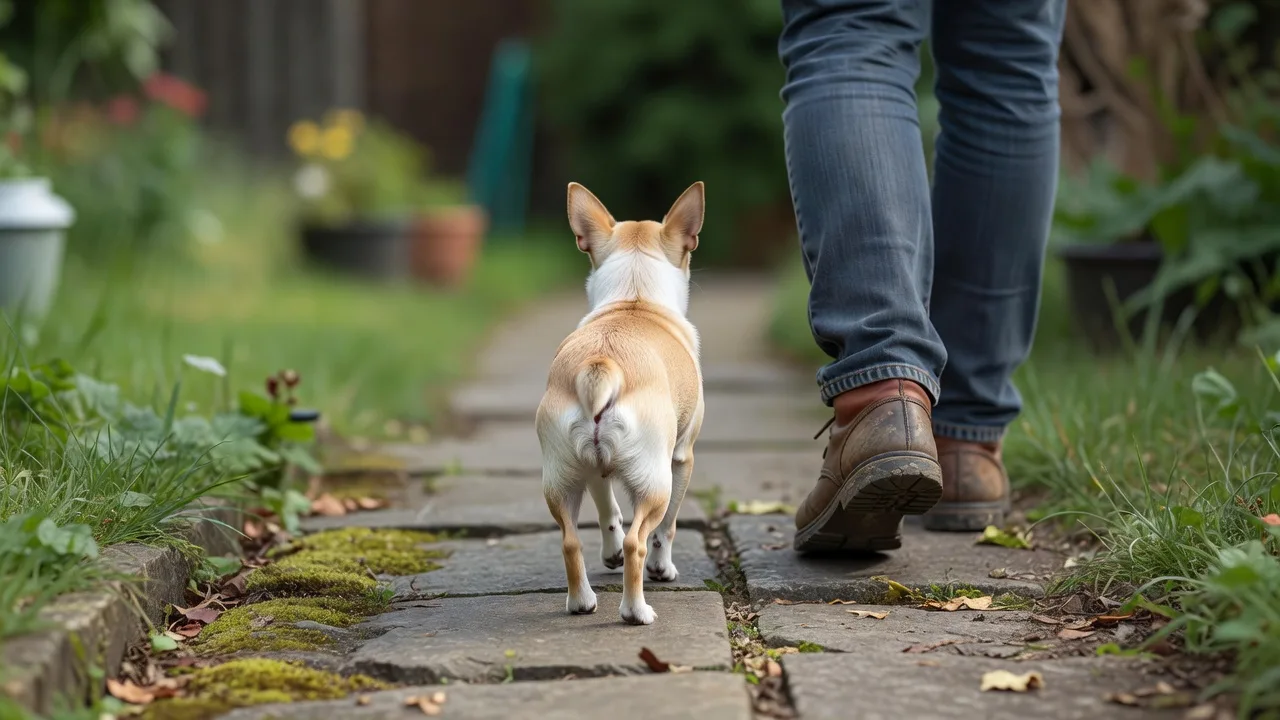
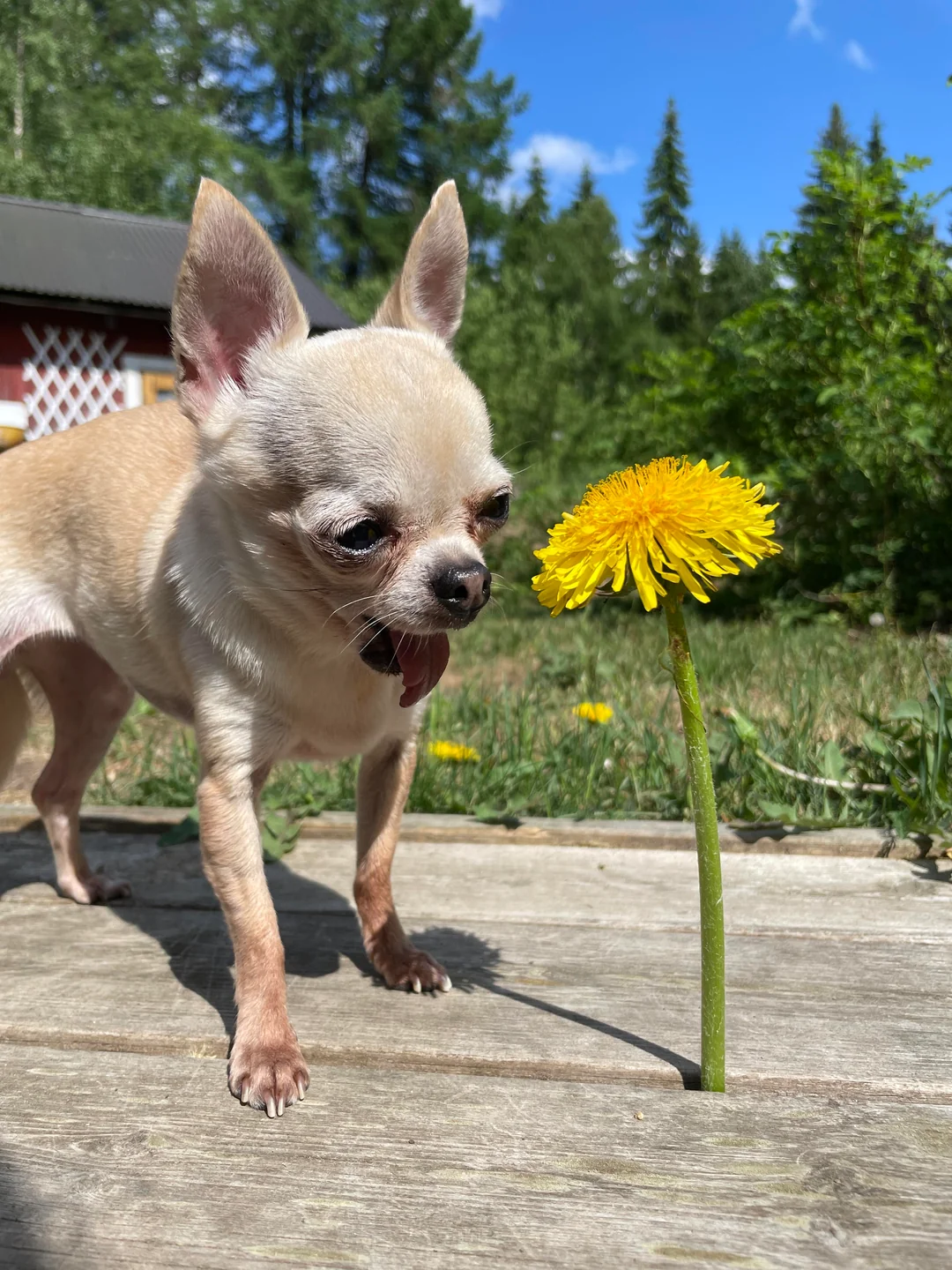
The original media associated with Pockets remains copyrighted and reference-only. The licensed Chihuahua photographs in this package are illustrations and do not depict her.
If the local report is recovered, the article can be updated with its date, exact wording, interview context, and any supported outcome. A correction should follow if it contradicts the later retellings.
Pockets does not need imaginary dialogue or a slow-motion final scene to matter. The account that survives is already profound: a family remembered a tiny dog as an alert companion and protector, and the story ended with loss.
The truthful tribute keeps both parts visible—the reported courage and the evidence we still do not have.
Featured photograph: Carlos.ferreira.rejas / Wikimedia Commons (CC BY-SA 3.0), via Wikimedia Commons. It is an illustration and does not depict the animals described in this article.

No comments yet
Leave a comment