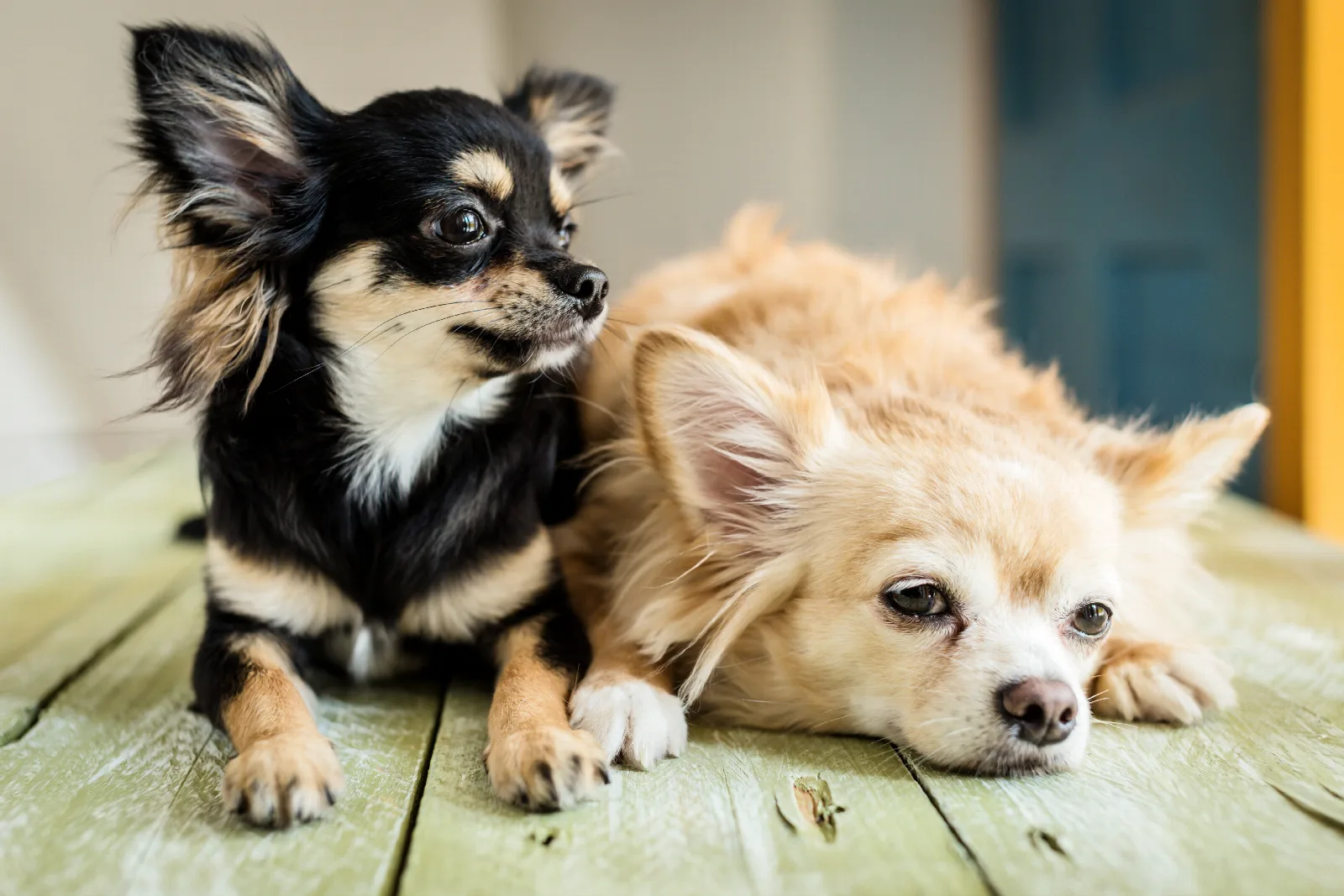
The chihuahua's dog-to-dog sociability is ordinary dog sociability, some individuals gregarious, some selective, most trainable toward polite. What is not ordinary is the arithmetic: a four-pound animal socializing in a species that ranges to a hundred and forty. Every honest answer to this question is therefore two answers, one about temperament, which is fine, and one about physics, which requires a rulebook. Both, in order.
Quick answer: A chihuahua's dog-to-dog sociability is ordinary sociability, some gregarious, some selective, most trainable toward polite. What is not ordinary is the arithmetic of a four-pound animal socialising in a species that runs to a hundred and forty. So every honest answer is two answers: temperament, which is fine, and physics, which needs a rulebook. Living with a big dog works on architecture, refereed play, managed resources, and escape routes the chihuahua owns. Mixed-size dog parks are the one venue to avoid.
Temperament: better than the reputation
Properly socialized chihuahuas, per the window-and-method work in our socialization guide, read and speak dog fluently: play bows, consent checks, the full grammar. The barky lunging that built the reputation is mostly the fear economics of our aggression guide, a small dog shouting at giants because shouting works, and it shrinks under the same distance-and-cheese program.
One genuine breed quirk deserves its footnote: chihuahuas are famous among shelter workers for clannishness, bonding intensely with other chihuahuas and small dogs while remaining committee-skeptical of the large, a pattern visible in every multi-chi household and rescue van. The breed likes dogs; it especially likes dogs that share its tax bracket.
The physics rulebook
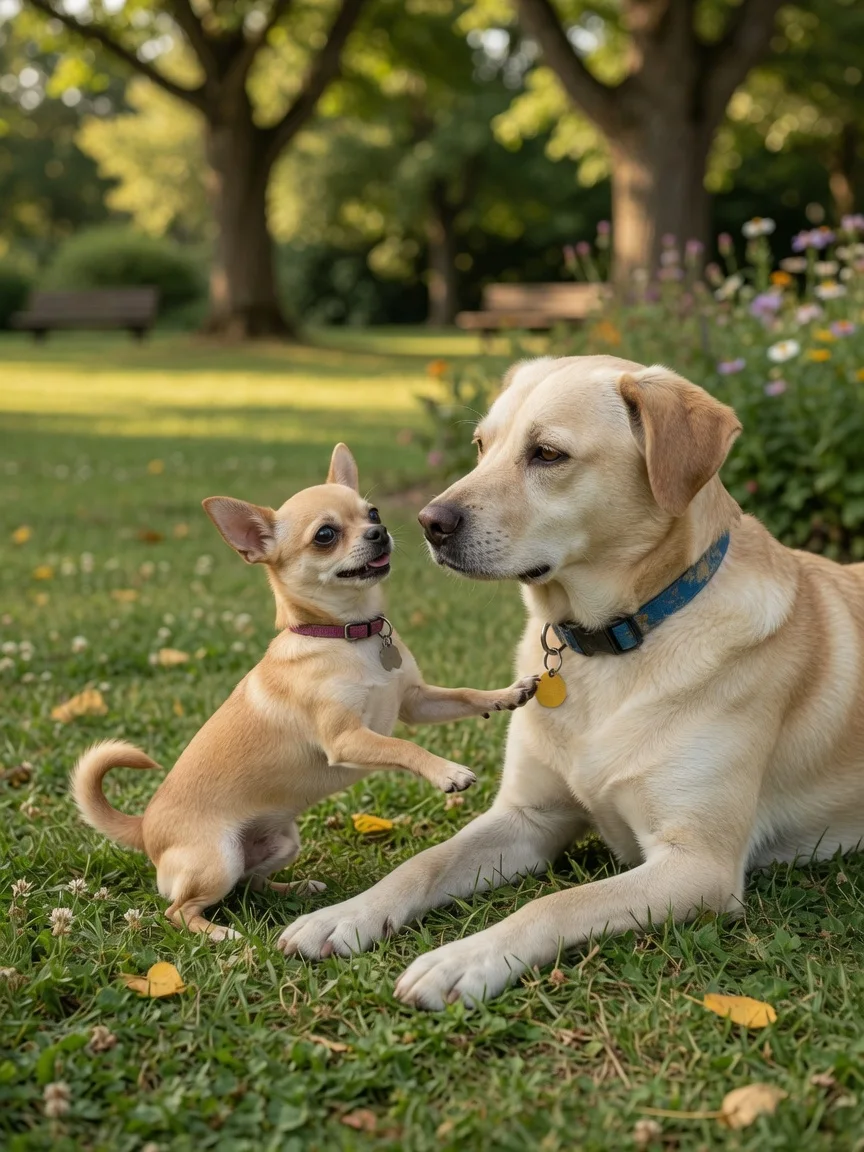
Rule one: mass supervises play. A friendly seventy-pound adolescent can injure a chihuahua with pure enthusiasm, no malice required, a body slam or a mis-timed paw is a fracture at this scale. Mixed-size play is short, calm, floor-level, and refereed, with the big dog's arousal watched as closely as the small dog's fear.
Rule two: know about predatory drift. The uncomfortable fact behind small-dog caution: in rare moments of high arousal, a large dog's chase circuitry can reclassify a fleeing, squeaking small dog as prey, instantly and out of character. It is uncommon, documented, and the reason mixed-size free-for-alls are never worth the odds, whatever the big dog's résumé says.
Rule three: the dog park stays off the list. Uncontrolled mixed-size parks combine rules one and two with strangers' dogs and no referee, the verdict our socialization guide already delivered. Small-dog-only sessions, curated playdates, and parallel walks deliver everything the park promised, minus the lottery.
Rule four: households mix sizes on architecture. Plenty of chihuahuas live wonderfully with big siblings; the successful versions run managed feeding, separate high-value chews, calm-play norms trained into the large dog, and escape furniture the small one owns. The best-friend-of-a-gentle-giant story is real and common; it is built, not assumed.
Choosing a playmate or a sibling
The ideal chihuahua playmate profile writes itself: small to smallish, calm to moderate energy, adult manners, introduced on the staged protocol from our cats guide, which works species-agnostically. Another chihuahua is the classic answer, the clique effect working for you, and the full should-you-actually question, timing, temperament match, and the two-anxious-dogs trap, lives in our second-dog guide. Whatever the match, first meetings run on neutral ground, parallel-walking before face-to-face, per the humane standards in the AVSAB position statements, and the resident dog's household rights get preserved through the transition. Cross-size friendships do happen and sometimes hold: Neeno and Bella, a nine-year-old pit bull and the chihuahua who slept on him, were listed for adoption together.
Frequently asked questions
Are chihuahuas good with other dogs?
Temperamentally, as good as their socialization, and famously excellent with other small dogs. The management burden is size math, not sociability: refereed mixed-size contact, no uncontrolled parks, and playmates chosen from her own weight class as the default.
Can a chihuahua live with a big dog?
Yes, commonly and happily, on architecture: calm-trained large dog, managed resources, refereed play, and escape routes the chihuahua owns. The pairing fails on assumption and succeeds on management, and the first weeks of careful introduction pay for the next decade.
Why does my chihuahua only like other chihuahuas?
The breed cliquishness is real and widely observed: matched size, matched play style, and shared signaling make same-breed friendships the path of least resistance. It is preference, not pathology, and gentle exposure can widen the circle to other calm small dogs over time.
Should I take my chihuahua to the dog park to make friends?
No; the mixed-size free-for-all is the one venue where this breed's risk profile is genuinely bad. Small-dog hours, curated playdates, and parallel walks build the same social life with none of the physics, which is the entire argument in four words: same benefit, no lottery.
Fine with dogs, at war with arithmetic: that is the whole answer. Match the weight class, referee the exceptions, skip the park, and the breed's social life settles where it always wanted to be, in a small, loud, fiercely loyal club of its own kind.

No comments yet
Leave a comment