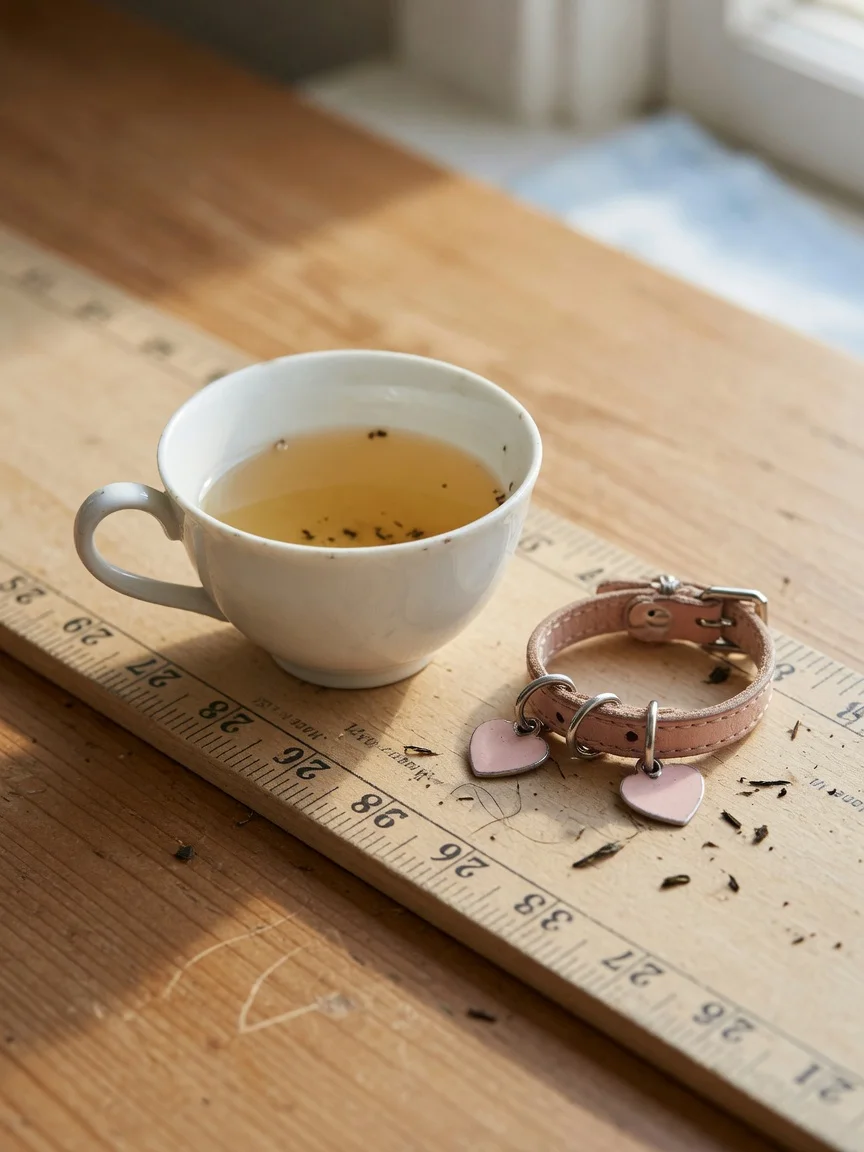
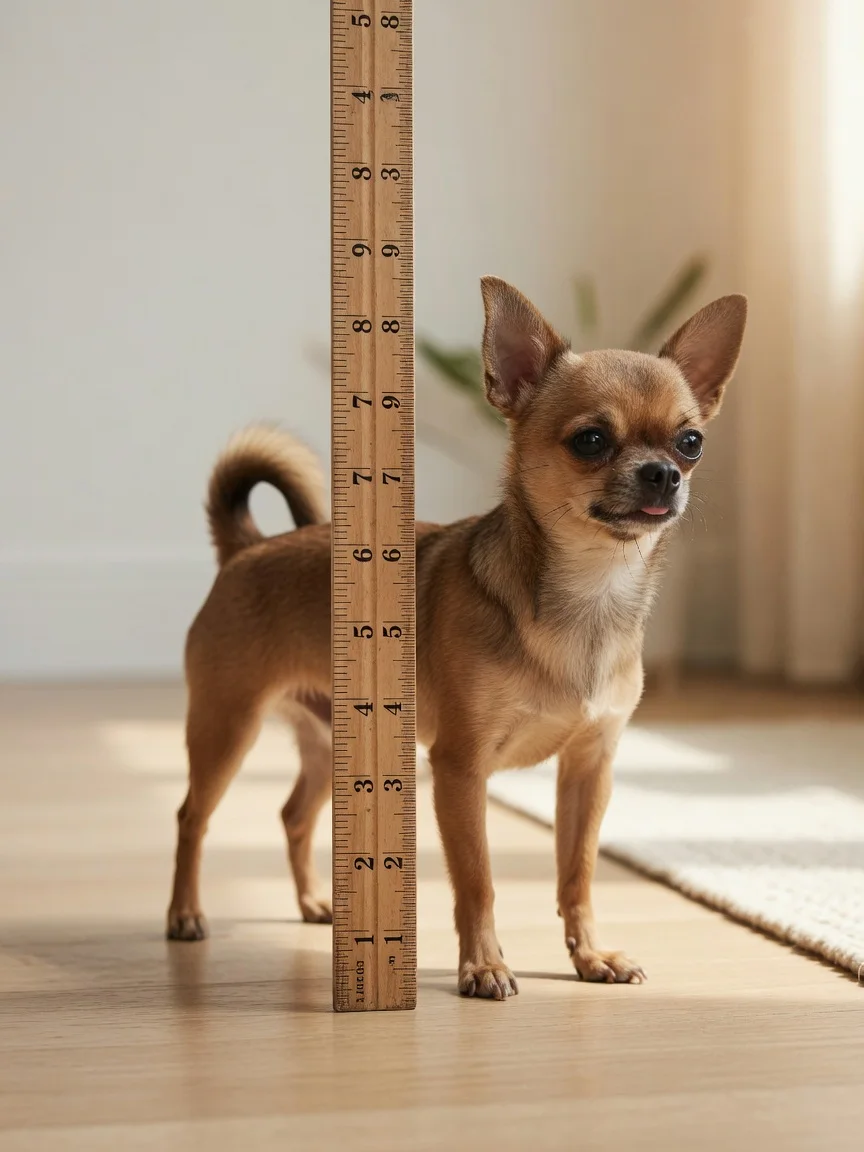
On 21 February 2013, in Dorado, Puerto Rico, a female Chihuahua named Milly held still long enough to be measured at 9.65 cm, or 3.8 inches, at the shoulder. That figure entered the Guinness World Records books as the smallest living dog by height, Guinness publicized it that September, and Miracle Milly spent the rest of the decade as the most photographed Chihuahua alive. Her story is worth revisiting for the reasons it is usually told, and for one reason it almost never is: the record eventually produced a real experiment in whether extreme smallness can be copied on purpose. It cannot.
Quick answer: On 21 February 2013, in Dorado, Puerto Rico, a Chihuahua named Milly was measured at 9.65 cm, or 3.8 inches, at the shoulder, entering the Guinness World Records books as the smallest living dog by height. She was born in December 2011 and belonged to Vanesa Semler, and weighed roughly a pound as an adult. She no longer holds the record, which has belonged to Pearl since her August 2022 measurement at 3.59 inches. Her 49 clones grew larger than she was.
What the record actually certified
Guinness measures height at the shoulder, not weight, and not the impression a well-angled photograph gives. Milly was born in December 2011 and belonged to Vanesa Semler, who kept ten Chihuahuas at the time. According to Guinness's own account of her case, she weighed less than an ounce at birth and fit inside a teaspoon. As an adult she settled at roughly one pound.
The title she took had belonged to Boo Boo, a long-coated Chihuahua from Kentucky who measured four inches, so Milly won it by about two tenths of an inch, which is the sort of margin that makes the measuring protocol matter. Associated Press coverage in September 2013 recorded the domestic details that made her famous: four small meals a day, a firm preference for salmon and chicken, a baby's crib for a bed, and a habit of putting her tongue out whenever a camera appeared.
The part of the story that was actual work
Milly's mouth was too small to nurse. Semler fed her by eyedropper every two hours, a detail most retellings treat as charming and which is in fact the entire reason there was a record to certify. Veterinary guidance on hand-rearing is unsentimental about it: VCA's orphaned-puppy protocol calls for six or more feedings a day for a small or weak puppy, roughly every four hours, and notes that hypoglycemia, hypothermia, and dehydration in neonates are interrelated and tend to arrive together.
Milly needed twice that frequency. Very small puppies exhaust their glucose reserves quickly, a risk our guide to low blood sugar in Chihuahuas covers in detail, and in a one-ounce dog the interval between fine and emergency is measured in hours. She survived because a person ran round-the-clock neonatal nursing for weeks.
Why no breed standard was chasing this
Milly was an outlier, not an ideal, and the paperwork is unambiguous on the point. The AKC breed standard for the Chihuahua sets a ceiling of six pounds, disqualifies any dog above it, and sets no minimum whatsoever. There is a roof and no floor, which means the standard caps size without ever rewarding a breeder for going smaller.
Nothing in it describes a one-pound dog as superior. The labels that do promise that, teacup, micro, pocket, and mini, are sales vocabulary rather than recognized varieties, as our guide to Chihuahua types explains, and the realistic adult range is laid out in our piece on how big Chihuahuas get. A record-holder is a documented individual. A marketing category is a promise no breeder can keep.
Forty-nine clones, and what they failed to copy
Here the story turns into something close to a controlled trial. In August 2017 the Sooam Biotech Research Foundation in Seoul produced the first litter cloned from Milly, and the program eventually ran to 49 genetically identical copies. Vanity Fair, reporting from the laboratory in September 2018, quoted researchers saying the point of the exercise was curiosity about the smallness itself, whether it would carry across, and that it did not: the clones grew larger than the original.
Relations then soured. In March 2019, per FindLaw's account of the federal complaint, Semler sued the cloning firm in Orlando for breach of contract, alleging the agreement had contemplated ten clones rather than 49 and that Milly's DNA and the associated research had been passed to third parties. The scientific residue is the interesting part: 49 identical genomes, and not one of them reproduced 3.8 inches.
Her death, and the record since
Milly died in 2020, which Guinness states plainly in its later coverage. The title moved in 2022 to another dog in the same household. Pearl measured 9.14 cm, or 3.59 inches, at Crystal Creek Animal Hospital in Orlando on 23 August 2022, taken three consecutive times with a measuring wicket by Dr. Giovanni Vergel, and Guinness announced the certification in April 2023.
Pearl weighs 553 g, measures 12.7 cm long, and is the daughter of one of Milly's clones, which makes the late record-holder her great-aunt. She belongs to Vanesa Semler as well. What has never been publicly resolved is the mechanism: no published explanation of the genetic basis of Milly's size emerged from the cloning work, and that is a better place to stop than to start speculating.
Frequently asked questions
How small was Miracle Milly, exactly?
She measured 9.65 cm, or 3.8 inches, at the shoulder on 21 February 2013, and weighed roughly one pound as an adult. Guinness World Records certified her as the smallest living dog by height on that measurement, and she held the title until her death in 2020.
Is Milly still the world's smallest Chihuahua?
No. The record has belonged to Pearl since her measurement in August 2022, at 3.59 inches, and Guinness announced the certification in April 2023. Pearl lives in the same Florida household and is the daughter of one of Milly's clones, so the two are closely related.
Were Milly's clones the same size as she was?
They were not. Forty-nine clones were produced from her cells beginning in 2017, and reporting from the laboratory indicated the copies grew larger than the original. Cloning duplicates a genome, not a developmental outcome, and Milly's size was never traced to a switch anyone could reliably flip.
Should I look for a breeder selling one-pound Chihuahuas?
No. The standard caps weight at six pounds and sets no minimum, so no recognized standard rewards breeding smaller, and dogs at Milly's scale carry genuine risks around hypoglycemia, fragility, and dental crowding. Our overview of Chihuahua health problems covers what to ask a breeder instead.
Milly's record was real, correctly measured, and genuinely remarkable, and it arrived through weeks of eyedropper feeding rather than any breeding program that could be repeated to order. The 49 clones are the footnote worth keeping: the most thorough attempt anyone has made to copy an extremely small dog produced 49 larger ones. Admire the outlier, file her alongside the rest of our Chihuahua facts, cite the number correctly, and treat anyone selling a teacup as someone who has not read the paperwork.

No comments yet
Leave a comment