Missing teeth reduce puncture risk; they do not remove jaw pressure, fear, pain, or the need for a safety plan. Sudden behavior change starts with a veterinary exam.
A Chihuahua without teeth can still snap, clamp, bruise skin, and frighten or injure a person. The absence of teeth changes the likely wound; it does not remove jaw pressure, fear, pain, or the behavior’s function.
Treat the warning seriously without treating the dog as bad. Create distance, stop the trigger when it is safe to do so, and arrange a veterinary examination—especially when the behavior is new.
This is general education, not an individual bite assessment. If anyone is injured, seek appropriate medical advice. If contact is likely, separate the dog safely and contact a veterinarian or qualified behavior professional.
Quick answer: No, a toothless Chihuahua cannot be considered harmless. Missing teeth reduce puncture risk but do not remove jaw pressure, so the dog can still snap, clamp, bruise skin, or cause a fall when a person pulls away. Sudden behavior change requires a veterinary exam first to check for pain from retained roots, infection, or other sources, while management uses barriers, distance, and predictable routines to prevent incidents. Respect early warnings such as growling or freezing without punishment, as they create an opportunity to increase safety and build a structured plan.
Toothless does not mean harmless
An edentulous dog has no teeth, or no functional teeth, but the jaws and surrounding tissue still apply force. Contact can pinch, bruise, break fragile skin, or cause a fall when a person pulls away.
The risk is greater for children, older adults, people taking blood-thinning medication, and anyone with fragile skin or impaired immunity. Face-level contact is especially important to prevent.
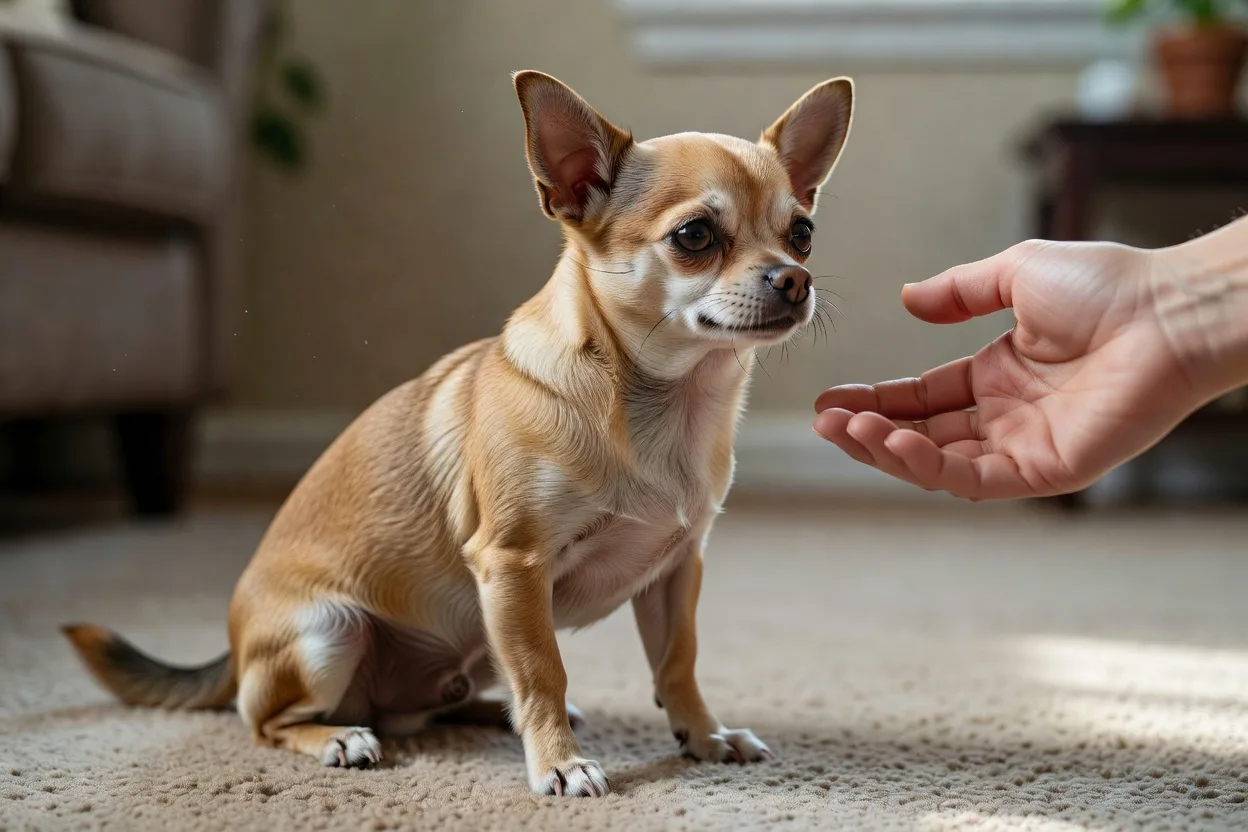
Do not test the dog by placing a hand near the mouth. A “demonstration” teaches nothing useful and may rehearse the behavior.
Use barriers, distance, and predictable routines. Tell visitors not to reach for the dog. Children and dogs should be separated by a secure physical barrier unless an informed adult is actively supervising a planned interaction.
A bite is behavior with a cause, not a personality
Dogs may snap or bite when they are frightened, cornered, restrained, guarding a valued item, protecting a resting place, startled, frustrated, or in pain. Several factors can operate at once.
The useful question is not “How can a toothless dog be aggressive?” It is “What happened immediately before the warning, and what did the dog gain or escape afterward?”
Write the sequence:
- Before: A person reached under the blanket.
- Behavior: The Chihuahua froze, turned the head, growled, and snapped.
- After: The hand moved away.
That record does not prove why the dog acted. It gives the veterinarian and behavior professional a clearer starting point than a label such as “mean.”
Avoid dominance explanations. Forcing a dog onto its back, grabbing the muzzle, yelling, or delivering a physical correction can increase fear and suppress the warning signs people need to see.
Sudden snapping requires a pain check
Pain can lower tolerance for touch and make familiar handling feel threatening. Cornell’s canine health guidance lists behavior changes, withdrawal, altered posture, reduced movement, panting, and irritability among possible signs of pain.
Oral pain may remain even after visible teeth are gone. Retained roots, inflamed tissue, infection, jaw problems, or healing after dental procedures require veterinary assessment. Pain may also come from the neck, back, joints, ears, eyes, skin, or internal disease.
VCA notes that dogs with dental pain may resist face handling, eat differently, drop food, or become less social. Those signs do not identify the exact problem. A veterinarian may need an oral examination and, in some cases, dental imaging or other tests.
If the dog has just had extractions, follow the clinic’s discharge instructions. Do not inspect the mouth, change medication, or offer hard chews unless the veterinary team says it is safe.
Stop punishing the warning system
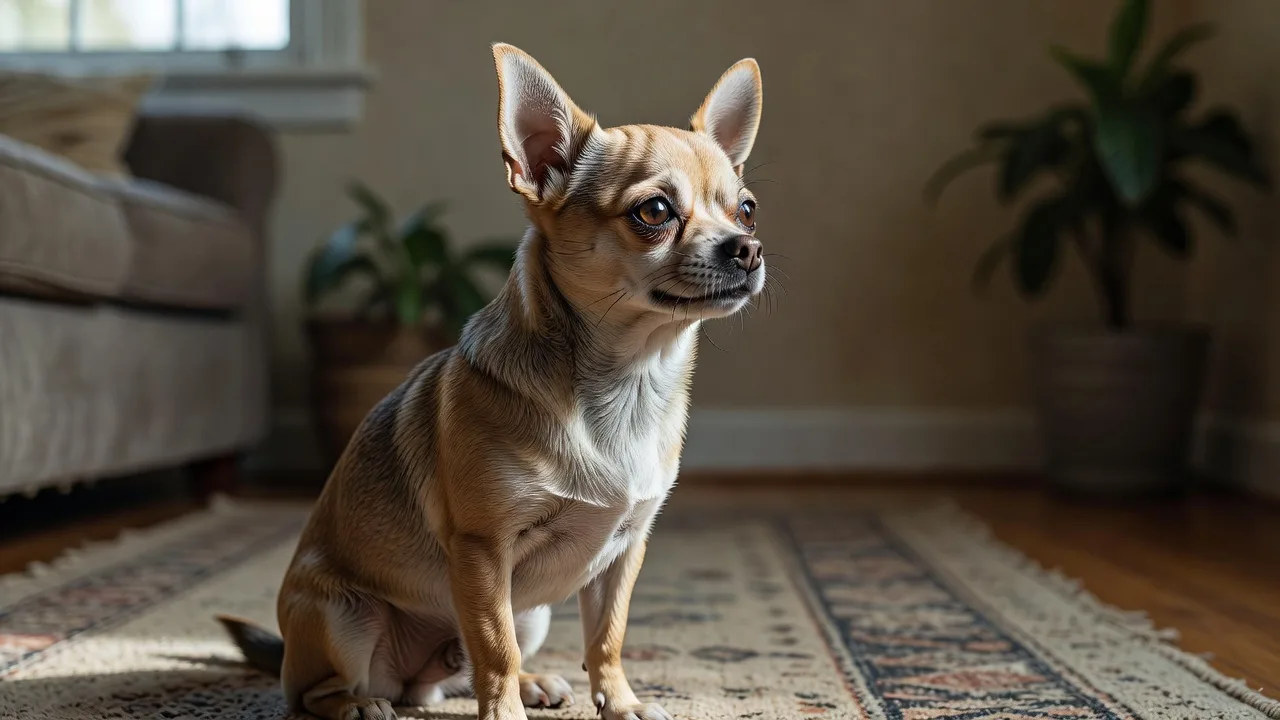
A growl, freeze, head turn, lip lift, hard stare, or retreat can precede a snap. These signals create an opportunity to stop.
Punishing a growl may reduce the sound without changing the fear or pain underneath it. The result can be a dog who moves to contact with less visible warning.
When you see an early signal, pause. Increase distance. Note the context. Do not continue touching to prove that the dog must accept it.
This does not mean allowing the dog to control the household through biting. It means preventing rehearsal while a structured plan teaches safer alternatives. Management and training serve different jobs: management prevents an incident today; training changes a pattern over time.
Build a temporary safety plan
Until the dog has been assessed:
- Use doors, pens, or gates to separate the Chihuahua during deliveries, visitors, meals, and high-activity periods.
- Do not pick the dog up when warning signals appear. Lure movement with distance and food only if it is safe and the dog can eat comfortably.
- Provide a resting area no one enters or reaches into.
- Trade for stolen objects instead of pulling them from the mouth.
- Avoid face-to-face contact and hugging.
- Keep a dated incident log, including near misses.
- Ask the veterinarian whether muzzle training is appropriate after the mouth has been medically evaluated.
A basket muzzle can be a useful safety tool for some dogs, but fit is complicated for a tiny or short-muzzled face. A muzzle must allow panting and should be introduced gradually with rewards. It is not a substitute for distance, and it should never be left on an unattended dog.
Choose humane professional help
Start with the veterinarian. Share videos only when they can be recorded without provoking the dog. Bring the incident log and explain exactly which handling tasks are difficult.
Depending on the findings, the veterinarian may treat a medical problem, adjust handling, or refer to a board-certified veterinary behaviorist. A qualified reward-based behavior consultant can help implement a plan in coordination with the veterinarian.
Credentials vary. Ask about education, methods, bite-case experience, insurance, and collaboration with veterinary professionals. The American Veterinary Society of Animal Behavior supports reward-based approaches and warns against methods that rely on pain, fear, or intimidation.
No ethical professional can promise that a dog will never bite again. A sound plan describes risk, prevention, skills, and the situations that remain unsafe.
Respect the warning and protect the relationship
A toothless Chihuahua who snaps is not a harmless comedy prop. The dog is communicating a limit, even if people do not yet know whether that limit comes from pain, fear, guarding, or learned history.
Prevent contact. Get the mouth and the rest of the dog examined. Replace forced handling with predictable, rewarded cooperation. Protect children and vulnerable adults with physical separation.
The safest response takes the behavior seriously without making the dog a villain.
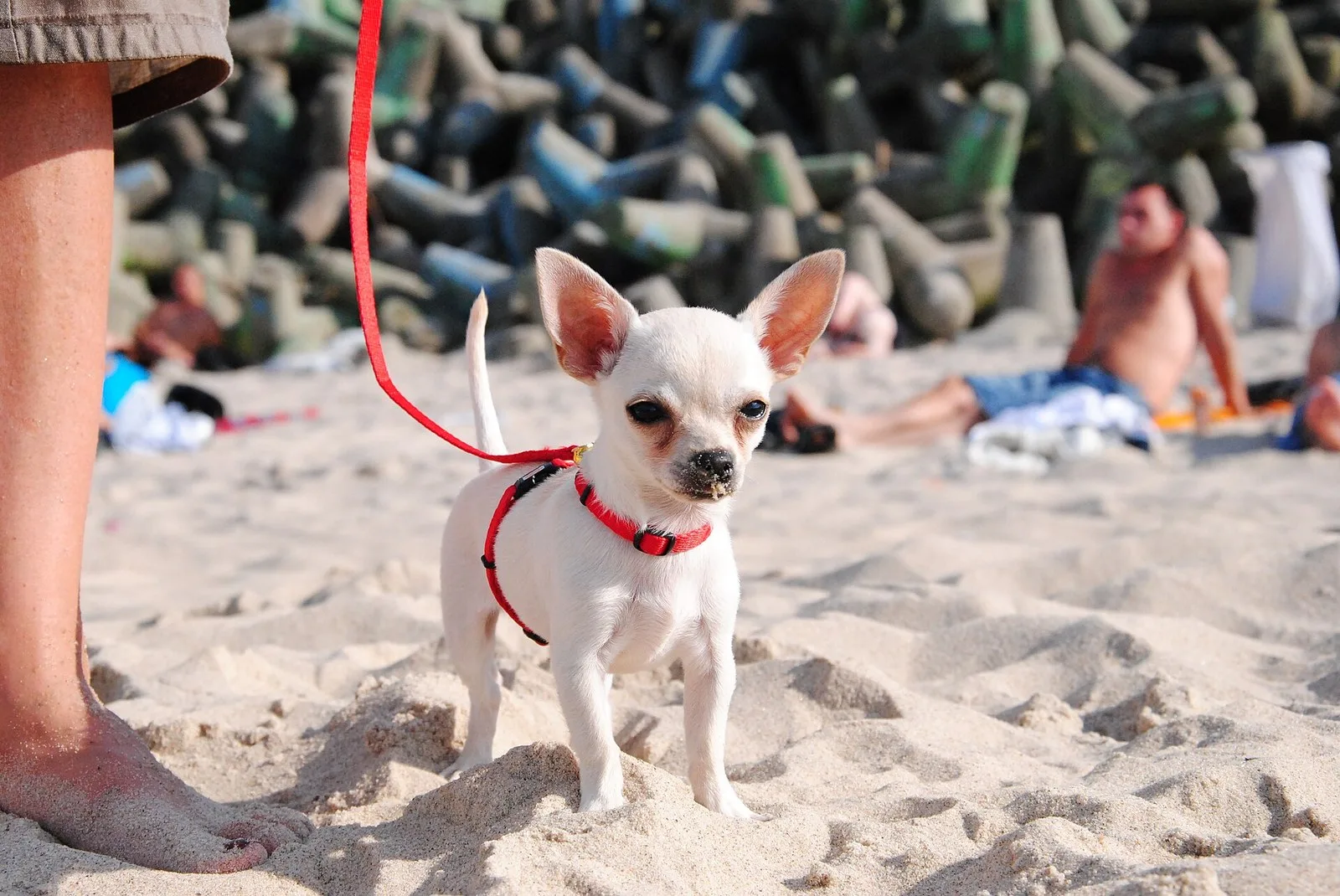
Featured photograph: Niewiadomek / Wikimedia Commons (Public domain), via Wikimedia Commons. It is an illustration and does not depict the animals described in this article.



No comments yet
Leave a comment