On 24 November 2016, the veterinary charity PDSA published the results of that year's Pet Fit Club, its national pet slimming programme, and among the podium finishers was a dog most people would not expect to find there. Tyty, a seven-year-old Chihuahua, had begun the six-month plan at 83% above his ideal weight.
He finished it having lost 29% of his bodyweight, enough for joint second place, according to the charity's results announcement. On a dog whose target weight was about three kilograms, those percentages describe a small problem in absolute terms and a serious one in every way that matters.
Quick answer: On 24 November 2016 the veterinary charity PDSA published the results of that year's Pet Fit Club, its national pet slimming programme, and among the podium finishers was a Chihuahua. Tyty, aged seven, began the six-month plan at 83% above his ideal weight and finished having lost 29% of his bodyweight, enough for joint second place. On a dog whose target weight was about three kilograms, those percentages describe a small problem in absolute terms and a large one in proportion.
What Pet Fit Club was
PDSA, the People's Dispensary for Sick Animals, ran Pet Fit Club as an annual competition in which selected overweight pets were put on a tailored six-month diet and exercise plan, supervised free of charge by the charity's vets and veterinary nurses. PDSA said 2016 was the competition's eleventh year.
Dogs Monthly reported on 28 April 2016 that the intake announced that spring numbered 13 pets with a combined weight of 46 stone 8lb, and quoted Nicola Martin, then PDSA's head of pet health and welfare, describing pet obesity as a serious issue affecting millions of UK pets. The charity's results release in November referred to seven finalists that year: a Labrador, a Chihuahua, a Bullmastiff, two cats and a rabbit.
How a three-kilogram dog reached five and a half
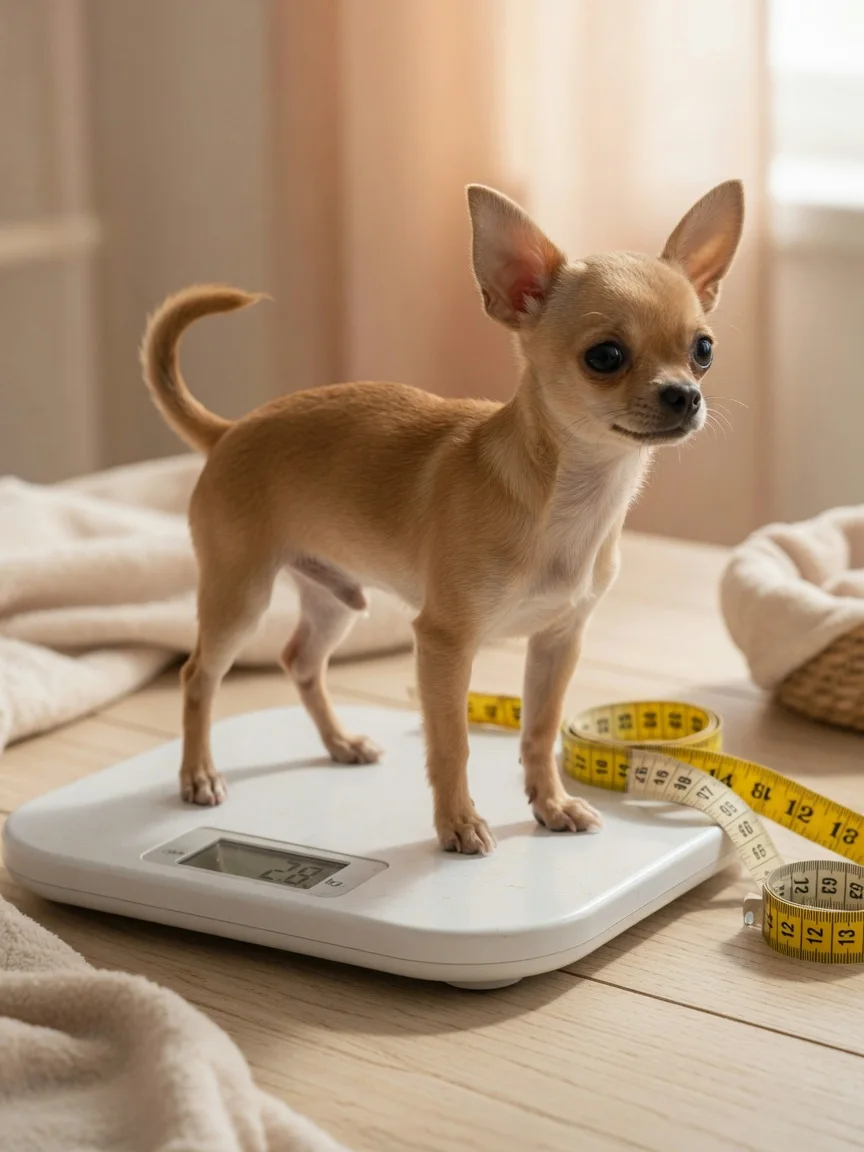
Tyty's ideal weight was put at around 3kg. Published accounts described his starting weight as close to a stone, and PDSA and local coverage agreed he was 83% above where he should have been, though an earlier report put the figure at almost 85%. The cause was not mysterious. PDSA said he had reached that size by bullying the other dogs in his household for food and taking sugary treats directly from his owners.
His owner, Julie Brennan, then 31, told the Helensburgh Advertiser during the programme that he had been given hotdogs and food from the table, that he would take food from other dogs' mouths and out of people's hands, and that he was reluctant to walk.
The arithmetic is the part worth keeping: an 83% overload on a 3kg dog is roughly 2.5kg of surplus, and the same proportion on an 80kg adult would be an extra 66kg. None of that is specific to the breed, but the margin for error is far narrower, which is the whole argument of our chihuahua weight management guide.
Six months of measured meals
The plan PDSA set was unremarkable, which is rather the point. Tyty's meals were portion controlled and fed separately from the household's other dogs so that he could not take theirs, treats were stopped, and he was walked about a mile a day, with a target of losing roughly half a kilogram a month.
Two months in, the Helensburgh Advertiser reported he had lost just under a kilogram. The two mechanisms doing the work are the ones owners find hardest: closing off the informal food supply, which our guide to stopping a chihuahua begging covers, and building a walk a small dog will actually complete, the subject of our chihuahua exercise guide.
The result
By the November announcement, Tyty weighed 3.9kg, having shed 1.6kg. That loss, 29% of his bodyweight, tied him with Kaspa, a Labrador from Cardiff, for joint second place. The title went to Oscar, a Spaniel from Wolverhampton owned by June Lawrence, then 78, who dropped from 21.6kg to 13.25kg, a loss of 8.35kg, or 39%.
In the paper's report on the results, Brennan said the change in him had been striking, and that he now jumped into the car with the family's other dogs. Rebecca Ashman, a PDSA vet quoted in the results release, said it was never too late to make changes that improve a pet's health and wellbeing, and advised owners with concerns about their pet's weight to speak to their own veterinary practice.
What the case says about weight in very small dogs
The competition framing dates the story; the veterinary substance does not. PDSA's guidance on canine obesity assesses body condition on a nine-point score rather than by weight alone, and lists arthritis, diabetes, breathing difficulty, ligament damage, some cancers, heatstroke and a reduced lifespan among the associated risks.
VCA Animal Hospitals defines a dog as overweight at 10 to 20% above ideal body weight and obese above 20%, recommends treats stay under 10% of daily calories, and notes that even moderate excess weight may reduce life expectancy by close to two years. PDSA's 2023 PAW Report recorded veterinary professionals estimating that 46% of UK dogs were overweight or obese.
At chihuahua scale, the useful checks between weigh-ins are the ones you can do at home: ribs findable under light pressure, a visible waist from above, an upward tuck behind the ribs from the side, and no thickening pad at the base of the tail. Extra weight also loads the joints and airways this breed already watches, from patellar luxation to the risks set out in our chihuahua diabetes guide.
Do not improvise a restriction plan on a dog this size. A few hundred grams is a large fraction of a three-kilogram body, rapid loss carries its own risks, and the safe route is a target weight, a measured ration and a weigh-in schedule agreed with your veterinarian, with the food side worked out against our guide to what chihuahuas can eat. Weight loss you did not plan is a different matter entirely and warrants an appointment rather than congratulations.
What remains unclear
Several details were never published precisely. No exact starting weight was given: coverage described Tyty as close to a stone, roughly 6.35kg, while the published finishing weight of 3.9kg and loss of 1.6kg point to about 5.5kg. The two figures for how far above ideal he sat, 83% and almost 85%, come from reports months apart. His location is recorded inconsistently, with PDSA describing him as from Glasgow and the Helensburgh Advertiser placing the family in Helensburgh, about 25 miles north west of the city.
The count of animals also shifts between the 13 announced in April and the seven finalists named in November, and the charity did not explain the difference in the material reviewed here. No later public update on whether Tyty kept the weight off appears in these sources, and as of July 2026 PDSA's pet weight campaigning runs under a Weigh Up banner rather than as Pet Fit Club.
Almost a decade on, the podium is the least interesting part of the record. What survives is a household that stopped feeding one dog from three directions at once, a measured bowl, a mile a day, and 1.6kg that came off over six months under supervision. Owners of very small dogs are rarely asked to find a stone. They are usually asked to find three hundred grams, which is harder to see, easier to deny, and considerably quicker to fix.


No comments yet
Leave a comment