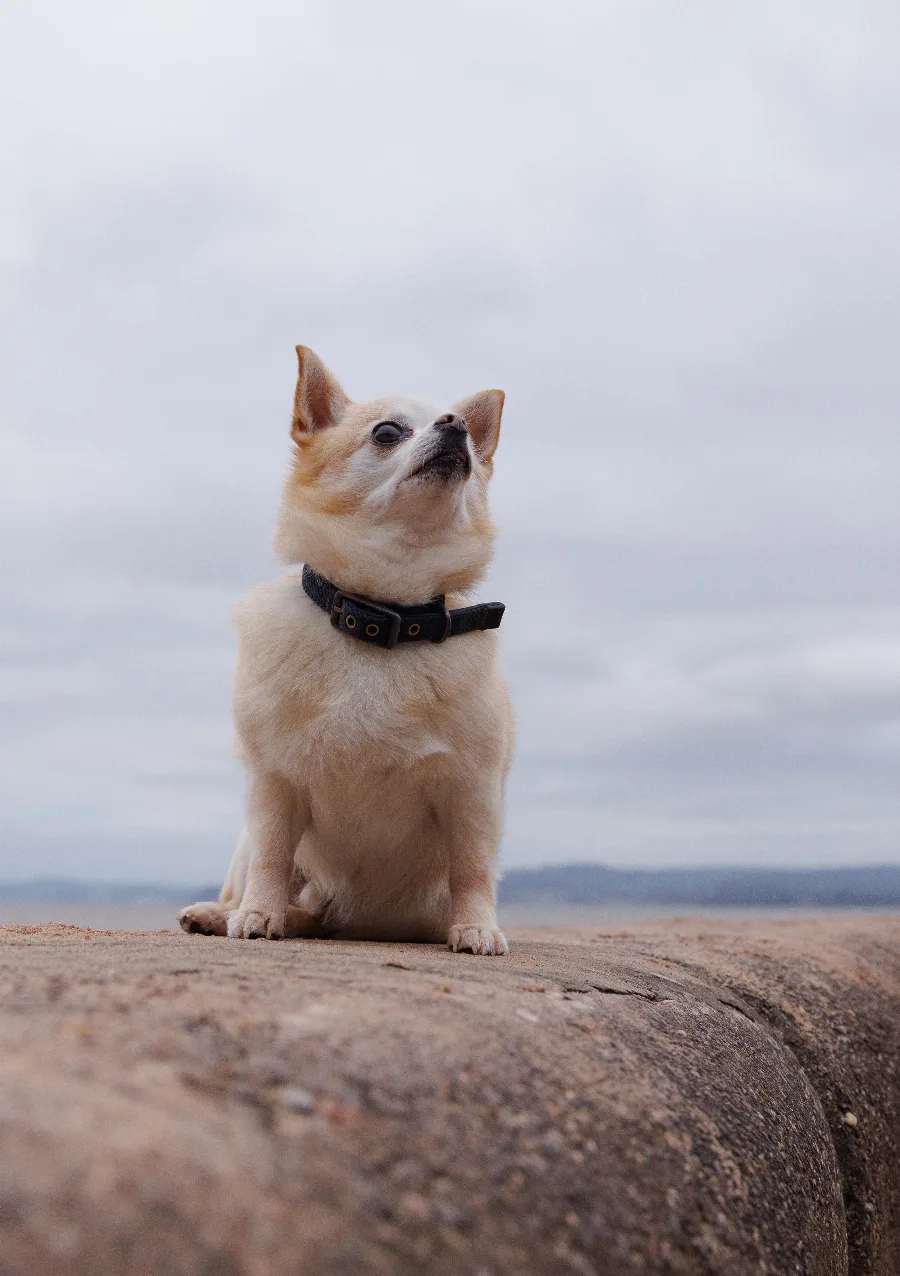
Here is the honest answer up front: chihuahuas are entirely trainable, moderately easy to train in practice, and chronically under-trained in the wild. The gap between what this breed can learn and what it is usually taught is wider than for any dog I can think of, and the gap has almost nothing to do with the dog. Once you understand the three places where training a chihuahua genuinely differs from training a labrador, the rest is standard, cheerful, treat-funded work.
Quick answer: Chihuahuas are entirely trainable, moderately easy to train in practice, and chronically under-trained in the wild, because a dog this small can be managed without training and so often never gets any. Potty training is the genuinely harder part, thanks to tiny bladders and cold-weather reluctance, and the fix is schedule density plus generous rewards. Start at any age, fade food lures early so the treat becomes a paycheck rather than a bribe, and train barking down to its useful core rather than to zero.
Where the bad reputation comes from
The stubborn-and-yappy reputation is mostly a record of skipped homework. Because a chihuahua is small enough to manage without training, many households never train: the dog that would have been taught to walk on leash gets carried, the jumping that would have been redirected gets laughed at, and the barking that would have been addressed gets absorbed for fifteen years.
The AKC's breed profile describes an alert, intelligent companion dog, and intelligence without a curriculum writes its own, a syllabus typically featuring the doorbell. Add the double standard our reactivity guide documents, where behavior nobody would accept from a shepherd is tolerated as tiny-dog comedy, and the breed ends up famous for problems that are downstream of us, not of them.
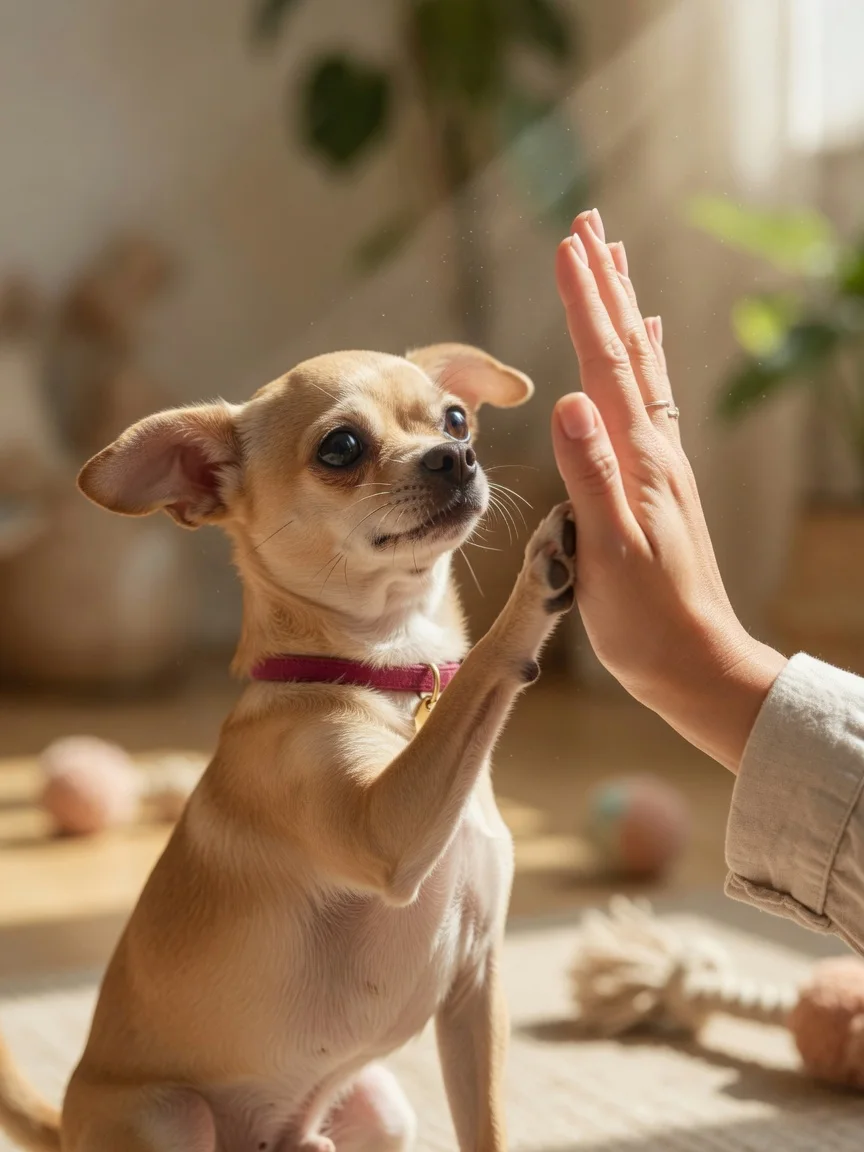
What is genuinely harder at four pounds
Three things, and none of them is intelligence. House-training runs slower. A chihuahua bladder is small, the world is cold, and accidents are easy to miss and therefore easy to accidentally rehearse; the fix is a tighter schedule and more generous payoffs, per our potty guide, not more time in the doghouse. The world is scarier. Everything is twenty times her size, so the confidence budget that a big puppy gets for free has to be built deliberately through the gradual, positive exposures in our socialization guide; an under-socialized chihuahua spends her training sessions worrying instead of learning.
Punishment backfires faster. Harsh corrections that a bigger, bolder dog might shrug off will convince a chihuahua that training itself is dangerous, which is one reason the American Veterinary Society of Animal Behavior's position statements come down firmly on reinforcement-based methods and against aversive ones. With this breed, the science and the practical experience point the same direction with unusual force.
What works: the short version
Reward-based training, in sessions sized to the dog. Two to five minutes, a few times a day, ending while she still wants more. Treats scaled to her arithmetic: a pea-sized dog earns rice-grain-sized pay, or the training budget wrecks the waistline our weight guide defends. A marker word or clicker to stamp the exact moment she earns it.
One skill at a time, starting with the fabulously useful four in our cues guide, then the leash work, then the household diplomacy: begging, jumping, and the barking that has its own full guide. Play is a legitimate classroom too; tug, fetch down a hallway, and find-the-treat games build the engagement every other lesson runs on, a point the ASPCA's behavior library makes throughout. None of this is exotic. It is the same modern training every breed gets, delivered in smaller coins.
The honest scorecard
Compared with the famously biddable breeds, a chihuahua brings less automatic eagerness to please and more of a running cost-benefit analysis; you can watch her run it. What she brings instead is a long memory, a deep attachment to her person that makes your attention itself a reward, per our bonding guide, and a fifteen-year runway to enjoy the results.
Owners who show up with small treats and small sessions reliably end up with a small dog who sits, comes, walks politely, and saves her opinions for genuine emergencies. The breed was never the obstacle. The size of the training plan was.
Frequently asked questions
Are chihuahuas hard to potty train?
Harder than average, honestly: tiny bladders, cold-weather reluctance, and easy-to-miss accidents slow the process. The fix is schedule density and generous rewards rather than punishment, and most chihuahuas get there in a few consistent weeks. The potty guide has the full playbook, including the indoor-option decision.
At what age should I start training a chihuahua?
Immediately, at any age. Puppies can learn a marker word and sit the week they come home, and the prime socialization window closes early, so gentle exposures start right away. Adult and senior rescues learn just as well; they simply arrive with a longer list of prior conclusions to renegotiate.
Why does my chihuahua ignore me unless I have a treat?
Because the pay schedule taught her that. Fade the lure early: cue first, reward after, and mix in life rewards such as couch access, door-opening, and play so compliance pays in more currencies than cheese. Random reinforcement, paying sometimes and warmly always, builds the habit that survives an empty pocket.
Can you train a chihuahua not to bark?
You can train the barking down to its useful core: alert once, then quiet on cue. That involves managing the triggers, rewarding silence, and teaching an incompatible behavior, all covered in the barking guide. What you cannot train away is the watchdog wiring itself, and most owners eventually count that as a feature.
So: easy to train? Easier than her reputation, harder than a retriever, and vastly easier than living fifteen years with the untrained version. Bring small treats, keep the sessions shorter than her attention span, and she will meet you at the exact spot where the cheese is kept.

No comments yet
Leave a comment