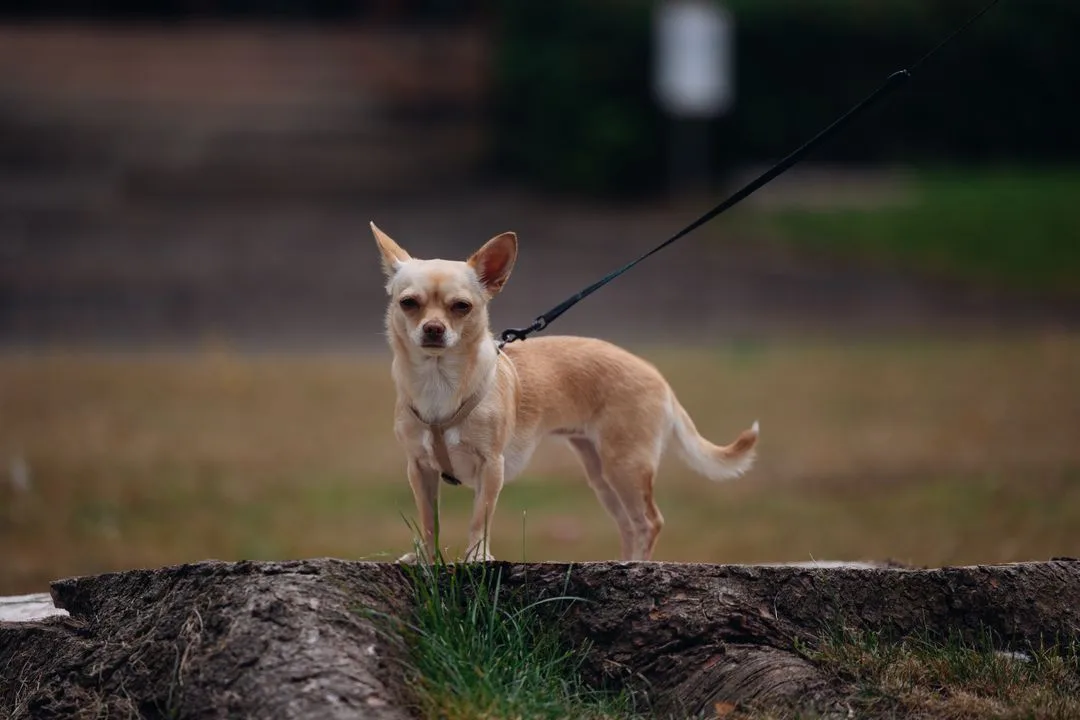
The sport's official name is conformation, and the word is doing precise work: dogs at a show are judged on how closely they conform to their breed's written standard, not on tricks, charm, or applause. The American Kennel Club describes the sport as the act of producing conformity, which sounds bureaucratic until you notice what it means for your entry fee: your chihuahua never really competes against the other dogs in the ring.
Every entrant is measured against the same imaginary perfect chihuahua, two pages of official prose, and the judge decides who stands closest to the description. So a beginner's first job is not learning to win. It is learning what the paper says.
Quick answer: The sport is called conformation, and the word is precise: dogs are judged on how closely they conform to their breed's written standard, not on tricks or charm. Two hard gates catch beginners. The AKC standard disqualifies any chihuahua over 6 pounds, with no rounding, and conformation requires intact dogs, so a spayed or neutered chihuahua cannot enter. Smooth and long coats are judged as separate varieties. A championship takes 15 points including two majors.
What the judge is actually judging
The official AKC standard, approved in 2008, asks for a graceful, swift-moving, compact little dog with a saucy expression: the well rounded apple dome skull, with or without molera, that our head-type guide unpacks; large erect ears that flare to the sides in repose; a level or scissors bite; a sickle tail; and any color at all, solid, marked, or splashed, which means no color is rarer or more valuable in the ring. Temperament is in the document too, and it is the best sentence in it: the standard requires terrier-like attitudes of self importance, confidence, and self-reliance.
Conformation is the one arena where the breed's famous ego is a scoring criterion. The exam itself is short. The dog stands posed, called stacking, while the judge goes over her with both hands; then she gaits, meaning moves around the ring on a light lead, so the judge can check the motion against the blueprint, firm topline, head carried high. A ribbon says her structure matched the standard that day, in that judge's opinion. It is not a health certificate, and no honest breeder will tell you otherwise.
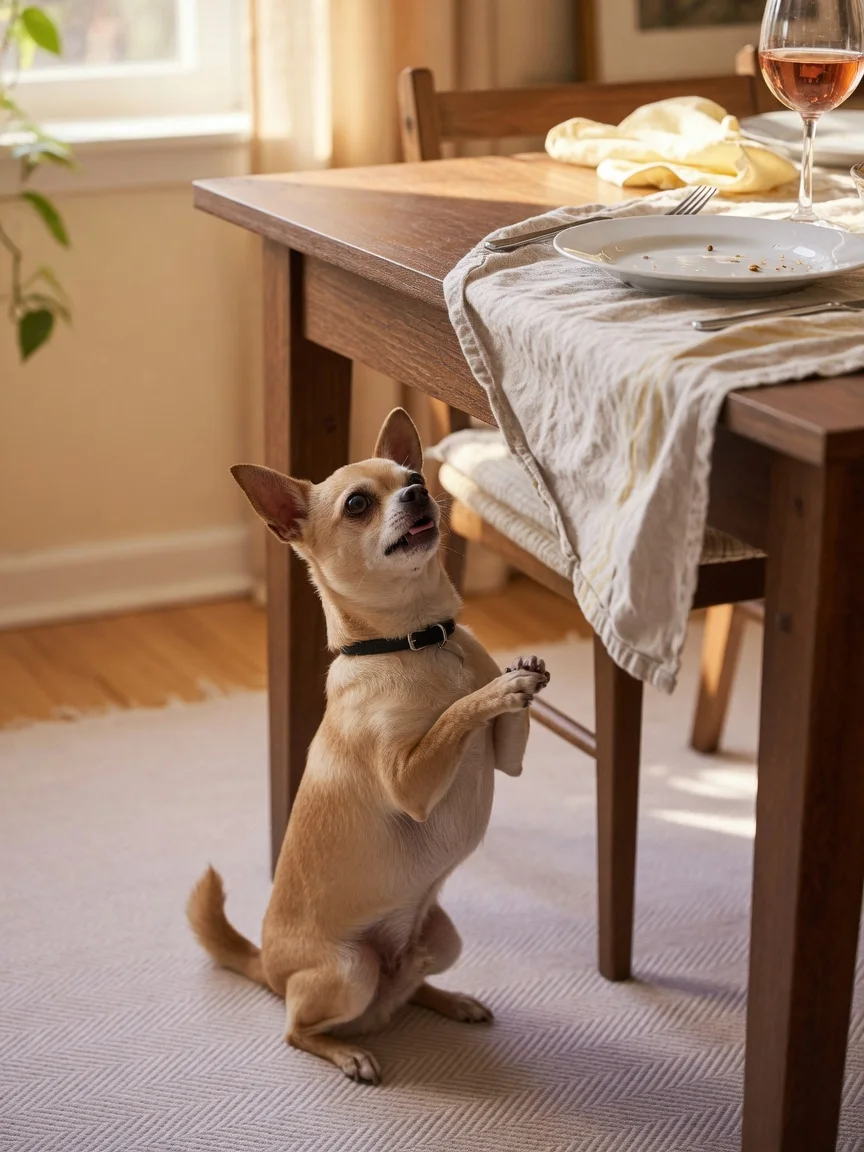
The eligibility fine print, including the six-pound rule
The AKC's own Conformation 101 lays out the entry rules: a dog must be AKC-registered, at least six months old, and not spayed or neutered, because the sport exists to evaluate breeding stock. That last rule surprises more first-timers than any other. Then come the breed's own disqualifications, and the chihuahua's list is short but famous: any dog over 6 pounds in weight, broken down or cropped ears, a docked tail or bobtail, and, in long coats only, a coat so thin it resembles bareness.
The standard recognizes exactly two varieties, smooth coat and long coat, identical under the fur, per our types guide, and shows judge them separately rather than against each other. Note what disqualification does not mean: a seven-pound chihuahua is outside the AKC ring and precisely as magnificent on the sofa, because pet quality is paperwork language, not a character assessment. It does hand show hopefuls one more reason to respect the scale, per our weight guide, since the six-pound ceiling applies on show day, not on average.
Training for a sport with no tricks in it
The ring asks for exactly three skills, none glamorous: stand still while a stranger examines every inch of you, move out in a straight line at the speed that flatters your gait, and do both inside a building packed with dogs.
That third requirement is really a socialization test, and the early window covered in our socialization guide matters more to a show career than anything in the grooming bag. Lead work is its own small art: show dogs travel on a thin show lead at a brisk trot, and the foundations are the same ones in our leash guide, minus the sniffing budget.
The AKC recommends conformation handling classes at local clubs, low-key weekly sessions where dogs practice being examined and owners practice not tripping over them; it also suggests attending a show without your dog first, which remains the cheapest education in the sport. Grooming, for once, favors the chihuahua owner. The standard states the breed should be groomed only to create a neat appearance, so the routine in our grooming guide, bath, nails, teeth, tidy feathering on a long coat, covers what other breeds achieve with a van of equipment.
Your first show, and the arithmetic of a championship
Ringside is where beginners start: watch the chihuahua judging, note how handlers stack and move their dogs, and ask questions after the breed is done, when hands are free and opinions are plentiful. The AKC's conformation pages count over 26,000 annual events and offer a New Exhibitor Mentor Program, so the on-ramp is wider than the sport's intimidating reputation suggests.
When you do enter, the arithmetic goes like this: a championship takes 15 points, a single show awards at most 5, and the total must include two majors, the 3, 4, or 5 point wins defined in the AKC's points schedule, earned under two different judges, plus at least one point under a third.
Translated: the system is deliberately built so that no dog finishes on one judge's taste or one lucky weekend. Budget your expectations to match. The first outings are tuition, the ribbon colors take a season to decode, and the exhibitors beating you in spring are usually the ones explaining entry forms to you by fall. In the UK the structure differs, and how chihuahuas compete at Crufts explains why smooth and long coats are judged as separate breeds there.
Frequently asked questions
Can my chihuahua compete if she weighs more than 6 pounds?
Not in AKC conformation: the official standard lists any dog over 6 pounds as a disqualification, with no rounding and no appeal to personality. That is a show rule, not a quality verdict, and sports that judge performance rather than structure have no interest in what the scale says.
Can a spayed or neutered chihuahua enter dog shows?
AKC conformation requires intact dogs, per the club's own beginner guidance, because the sport evaluates potential breeding stock; that is the entire logic of the ring. Events that score what a dog does, rather than what she might produce, do not share the rule.
Do smooth coats and long coats compete against each other?
No: the AKC standard describes one breed in two coat varieties, identical apart from the coat, and shows judge the varieties separately. The long coat carries the only coat disqualification, a coat so thin it resembles bareness; the smooth coat has none.
How long does it take to make a champion?
However long it takes to collect 15 points, including two majors under different judges and at least one point under a third. A show pays at most five points, and majors depend on how much competition turns up, so some dogs finish in months and many take seasons. The timetable is the sport's way of requiring more than one opinion.
Conformation at its best is a long conversation about the standard with ribbons attached, and the entry-level version costs a handling class, an entry fee, and a Saturday. Most dogs go home without the big rosette; nearly all go home better trained, better socialized, and owned by someone who accidentally memorized two pages of official prose. And take heart from the temperament clause. The standard demands self importance, confidence, and self-reliance. Your chihuahua has been in training for this her entire life.


No comments yet
Leave a comment